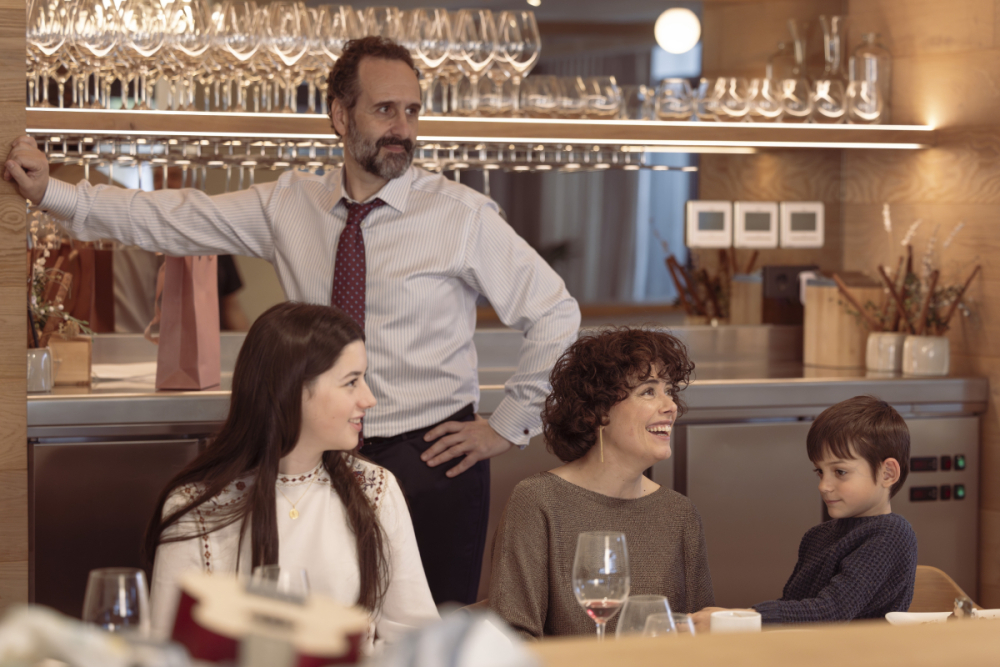
Kosara Mitic’s debut feature film, 17, is poised to make a significant impact with its world premiere at the Berlin International Film Festival, offering a profound exploration of adolescent trauma and the quiet resilience of female solidarity. The film delves into the harrowing experience of a 17-year-old protagonist, Sara, who grapples with a hidden secret that escalates dramatically when she witnesses the sexual assault of her friend, Lina, during a school trip. Mitic’s unflinching yet nuanced approach promises a visceral cinematic experience that challenges conventional portrayals of youth and trauma, marking her as a compelling new voice in European cinema.
A Deep Dive into Adolescent Vulnerability
The title 17 may suggest simplicity, yet Mitic’s film quickly dismantles any such notion, plunging viewers into the complex emotional landscape of adolescence where seemingly ordinary lives can unravel with devastating speed. The narrative centers on Sara, a young woman already burdened by an undisclosed secret, whose world is irrevocably altered by a traumatic event. The film’s synopsis highlights the core struggle: "The two girls try to break the cycle of casual violence," a pursuit that ultimately "seals an everlasting bond between them." This bond forms the emotional bedrock of a story that seeks to understand the profound impact of shared trauma and the unspoken mechanisms of support that emerge in its wake.
The choice of 17 as the title is symbolic, representing a pivotal age of self-discovery and vulnerability, where individuals are still forming their identities while simultaneously confronting adult-level challenges. Mitic’s film posits this age as a "breaking point," a period when the demand for emotional responsibility far outstrips the developing capacity to process complex events. This thematic focus resonates with contemporary discussions around youth mental health and the often-overlooked psychological burdens carried by young people.
Premiering at the Prestigious Berlin International Film Festival
17 is set to make its global debut within the "Perspectives" program of the esteemed Berlin International Film Festival on Wednesday, February 18. This particular section, launched in the previous year, is specifically designed to spotlight emerging cinematic talents and distinctive voices worthy of international recognition. The selection of 17 underscores the festival’s commitment to showcasing films that offer fresh perspectives and tackle challenging subjects with artistic integrity.
The Berlin International Film Festival, commonly known as the Berlinale, is one of the world’s leading film festivals, renowned for its diverse programming that spans art-house cinema, documentaries, and socially conscious films. Its "Perspectives" program serves as a vital platform for new directors, providing them with invaluable exposure on a global stage. For Kosara Mitic, a Berlinale Talents alumna, premiering her feature debut at such a prestigious event is a significant milestone, cementing her position as a promising international filmmaker. The festival’s historical emphasis on films with strong social and political themes makes 17, with its focus on trauma and resilience, a natural and timely fit.
The Creative Force Behind ‘17’
Kosara Mitic, a native of Skopje, North Macedonia, brings a wealth of experience from her earlier short films, including Drop by Sometime, Birthday, and The Red Room. Her participation in the Berlinale Talents program, a development initiative for emerging filmmakers, further honed her craft and provided a robust foundation for her feature debut. Mitic co-wrote the screenplay for 17 with Ognjen Svilicic, ensuring a cohesive and deeply personal narrative. The visual language of the film is crafted by cinematographer Naum Doksevski, with editing handled by Vladimir Pavlovski, promising a carefully constructed cinematic experience that aligns with Mitic’s vision.
The film boasts a talented ensemble cast, featuring Eva Kostic and Martina Danilovska in the lead roles, alongside Dame Joveski, Eva Stojchevska, and Petar Manic. The collaboration of these actors under Mitic’s direction aims to deliver authentic and compelling performances that capture the raw emotionality of the story. International distribution for 17 is being managed by Totem Films, a company known for its work with independent and auteur cinema, signaling confidence in the film’s global appeal. Production for 17 was led by Black Cat Production, in co-production with Art&Popcorn and December, highlighting a collaborative effort across multiple production entities, a common practice in European independent filmmaking that helps bring ambitious projects to fruition.
Mitic’s Artistic Philosophy: Silence and Observation
In an exclusive interview, Mitic shed light on the genesis of 17, revealing that the film originated not from a plot point, but from a fundamental question about adolescence. She articulated a profound interest in "the emotional aftermath of a single event and how it reverberates quietly through young lives." This emphasis on the "silence that follows" a traumatic incident distinguishes her approach. Mitic deliberately chose to avoid "sensationalizing trauma or turning it into a narrative spectacle," instead focusing on "the way young people internalize what happens to them, especially in environments where difficult experiences are quickly normalized or brushed aside." This artistic choice positions 17 as a film less concerned with the event itself and more with the profound burden of "carrying something you don’t fully understand."

Her storytelling methodology is characterized by a commitment to realism and restraint. Mitic expresses admiration for filmmakers who "trust stillness and ambiguity," allowing "tension to exist without underlining it." She champions "cinema that feels observational rather than manipulative, where the camera is present but not intrusive." For 17, this translated into a deliberate decision to remain "very close to the characters, almost in real time," enabling the audience to experience events alongside them rather than being guided from a detached perspective. This immersive technique, she explains, is what generates the film’s "visceral" quality; by never stepping outside the emotional space of the girls, even in moments of discomfort, the film achieves an authentic, raw portrayal of their experience. This commitment to an unvarnished reality, reflecting the "confusing and emotionally fragmented" nature of life at 17, is central to her artistic vision.
The Unspoken Power of Female Solidarity
A cornerstone of 17 is its exploration of female friendship and solidarity, portrayed with a depth and nuance often missing in mainstream cinema. Mitic underscores the significance of friendship during adolescence, describing it as "often the most profound relationship in your life," where essential lessons about "loyalty, intimacy, boundaries, and sometimes even courage" are learned. She deliberately sought to move beyond simplified portrayals of female bonds, rejecting narratives of rivalry or idealized closeness. Instead, Mitic was drawn to "something quieter — in the kind of solidarity that doesn’t need to be verbalized."
This "quieter solidarity" manifests through shared silences, mutual recognition of fear, and simply "standing next to someone." In the context of the film’s traumatic events, this bond transcends mere companionship, transforming into a potent "form of resilience." It doesn’t erase the pain or the memory of what happened, but it fundamentally alters "how the characters move forward." For Mitic, this profound connection between the girls serves as "the emotional core of 17," offering a powerful testament to the strength found in shared understanding and unspoken support.
Authentic Casting and Complex Characters
Mitic’s dedication to authenticity extended to the casting process, which she described as a "search for truth." Her objective was not to find actors who could merely "perform youths," but rather "young people who carry their own contradictions, their own silences." This meticulous approach involved extensive open calls and conversations, aiming to assemble a cast that felt like a genuine class, imbued with individual complexities.
Her perspective on the film’s male characters is particularly insightful. Mitic challenges the simplistic label of "horrible boys," stating, "I see their fragility, the pressure placed on them, the emotional illiteracy they inherit." She emphasized that her casting process sought "vulnerability," not villains. This nuanced view allows 17 to explore the societal factors and internal struggles that can contribute to harmful behaviors, moving beyond a two-dimensional good-versus-evil narrative. By creating a "space of trust" on set, Mitic empowered her young cast to "exist honestly in front of the camera," ensuring that every character, regardless of their role in the story, contributes to the film’s overarching commitment to truth and psychological depth.
Broader Implications and Cultural Resonance
The themes explored in 17 resonate deeply with contemporary societal concerns regarding youth trauma, mental health, and gender-based violence. By focusing on the "silence that follows" such incidents, the film contributes to a crucial dialogue about how societies, families, and educational institutions often fail to adequately address and support young victims. It highlights the importance of creating environments where difficult experiences can be openly discussed rather than normalized or brushed aside.
Mitic’s nuanced portrayal of female solidarity also carries significant cultural weight. In an era where authentic representation is increasingly valued, 17 offers a powerful counter-narrative to often superficial depictions of young women. It champions the idea that strength and healing can be found in the quiet, supportive bonds between individuals, without the need for grand gestures or dramatic resolutions. This perspective can inspire viewers to recognize and value the subtle acts of empathy and resilience that define many real-life experiences of trauma and recovery. The film also underscores the vital role of independent cinema from regions like North Macedonia in enriching the global cultural landscape with unique and urgent perspectives.
Looking Ahead: Mitic’s Future Explorations
Following the impactful debut of 17, Kosara Mitic is already charting her next cinematic endeavor, which promises to delve further into the complex interplay of silence and violence against women. Her upcoming feature will explore "the emotional violence of silence against women — the things left unsaid, the complicity of those who look away." This thematic continuation demonstrates Mitic’s commitment to unpacking unspoken truths and challenging societal complicity, building upon the foundational ideas established in 17.
Mitic is developing this new project carefully with Ognjen Svilicic, her co-writer on 17, indicating a sustained collaborative partnership. Their shared goal is to approach the story with "honesty, depth and respect without exploiting trauma," reinforcing Mitic’s ethical stance against sensationalism. This forward-looking commitment to exploring profound social issues through a lens of artistic integrity solidifies Mitic’s position as a director dedicated to nuanced storytelling and a powerful advocate for marginalized voices, ensuring that her contributions to contemporary cinema will continue to be both thought-provoking and deeply resonant.