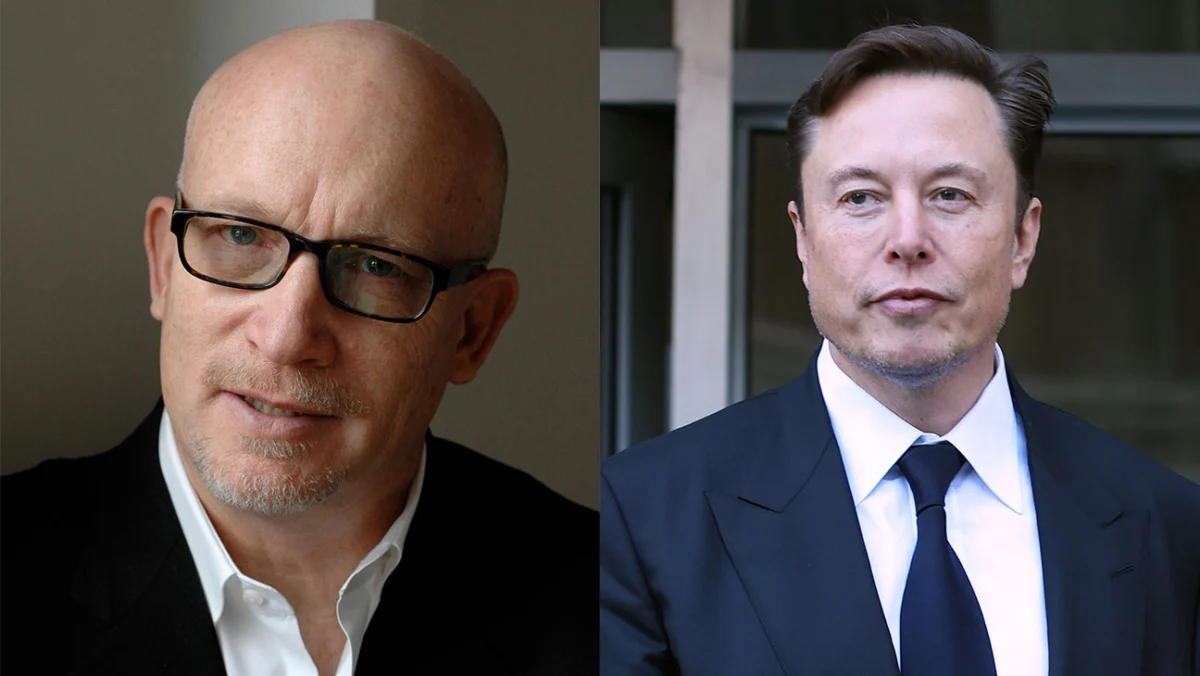
Acclaimed documentary filmmaker Alex Gibney recently disclosed that his extensive attempts to engage with Elon Musk for his new film, Musk, were met with complete silence, despite a subsequent legal threat from the tech billionaire’s legal team. Gibney, speaking during a keynote conversation at the Toronto International Film Festival (TIFF), emphasized his team’s rigorous fact-checking process and independent verification, asserting confidence in the veracity of the nearly four-hour-long documentary’s portrayal of Musk. This revelation comes amidst escalating tensions following the film’s world premiere, which triggered a swift and aggressive response from Musk’s representatives and the entrepreneur himself.
The Genesis of a Documentary and a Legal Challenge
Alex Gibney, an Academy Award-winning director known for his penetrating investigations into powerful figures and institutions, embarked on Musk to explore the life and influence of the polarizing tech magnate. The film delves into various facets of Musk’s empire, from his ventures in electric vehicles and space travel to his controversial acquisition of social media platform X (formerly Twitter) and his forays into artificial intelligence. Gibney’s previous works, such as Taxi to the Dark Side and Enron: The Smartest Guys in the Room, have established his reputation for fearless journalistic integrity, a benchmark highlighted by his production company, Jigsaw Productions, in response to the recent legal skirmish.
Following its world premiere at the Venice Film Festival, and prior to its North American debut at TIFF, the documentary quickly drew the ire of its subject. Attorney Alex Spiro, representing Elon Musk, dispatched a letter to Gibney and his production team, alleging factual misrepresentations within the film. Concurrently, Musk himself took to X, labeling the documentary a "boring… hit piece," a public denouncement that amplified the controversy surrounding the film’s release.
Unanswered Overtures and Unwavering Confidence
Gibney’s remarks in Toronto directly addressed the legal threat, clarifying that his team had made multiple formal outreaches to Musk prior to the film’s completion. "I reached out immediately… But he clearly wasn’t interested in talking. We made so many formal outreaches to him, and with the exception of his remarks on Twitter, we received nothing back," Gibney stated. This account underscores a recurring challenge for documentarians tackling high-profile, often controversial, subjects who prefer to control their own narratives.
Despite the legal pressure, Gibney expressed unwavering confidence in the film’s accuracy. He highlighted that Musk was "heavily lawyered and independently fact-checked," a standard procedure for his productions to ensure journalistic rigor against potential challenges. This commitment to verification is central to Gibney’s methodology, aiming to present a balanced yet critical examination of complex figures.
Broader Concerns: Media Consolidation and Tech Baron Influence
Beyond the immediate legal dispute, Gibney articulated profound concerns regarding the current landscape of media ownership and its potential impact on independent storytelling. He voiced particular apprehension about the film’s future distribution on HBO Max, especially given the ongoing takeover of Warner Bros. Discovery (WBD) by Paramount, a process he noted is influenced by "tech barons like Musk."
Gibney pointed to specific figures, such as Larry Ellison, who is cited in the film and is a known friend and investor in Musk’s acquisition of Twitter. He also mentioned David Ellison, Larry Ellison’s son, suggesting a pattern of leveraging influence to shape narratives. "I do worry about the storm clouds on the horizon and the fact that they (HBO) are in the midst of a takeover battle by Paramount. Larry Ellison… is one of Elon’s friends and one of the investors in his takeover of Twitter. And his son David Ellison has shown he’ll twist whatever facts are at his disposal in order to please the Capo dei Capi who happens to be the President of the United States," Gibney remarked, though the specific context of the "President of the United States" comment within the quote was not elaborated upon in relation to the Ellisons or Musk.
This concern extends beyond Musk the film, touching upon a broader societal issue. "It’s a great concern and the consolidation of the media and also the aggressive editorial takeover of the media by the tech barons is really deeply concerning," Gibney added. His statement reflects a growing anxiety among media professionals about how concentrated wealth and power, particularly from the technology sector, could stifle journalistic independence and dictate content.
First Amendment and "Free Speech Absolutism"
The legal threat against an Alex Gibney documentary also reignited discussions about freedom of speech and the rights of investigative journalists. Jigsaw Productions issued a robust statement affirming Gibney’s commitment to "in-depth, fact-driven explorations of influential figures and corporations." The statement underscored the "gold standard for fearless journalistic integrity" associated with Gibney’s work.
Crucially, Jigsaw Productions invoked the First Amendment, asserting that "The right to engage in open debate and fact-based examinations of powerful public figures is protected by the First Amendment – something that should be recognized and defended by all Americans, including the associates of Elon Musk, who has proclaimed himself to be a ‘free speech absolutist.’" This highlights a perceived irony in Musk’s position, where his legal actions against a critical documentary seem to contradict his self-proclaimed advocacy for unfettered expression. The confrontation sets a precedent for the limits of scrutiny powerful individuals are willing to tolerate, especially those who champion free speech in other contexts.
Allegations within the Elon Musk Documentary
The legal letter from Spiro specifically honed in on an alleged insinuation within the film that Musk utilized his Starlink satellite network to influence the 2024 presidential election, potentially to boost Donald Trump. While the details of this specific allegation in the film remain under wraps pending wider release, it points to the high-stakes political implications surrounding Musk’s technological ventures and their potential societal impact.
During his keynote, Gibney also elaborated on other significant criticisms leveled against Musk in the film. He discussed Musk’s role in the "DOGE purge," referring to the cryptocurrency Dogecoin, and its alleged impact on the independence and financing of USAID, the U.S. foreign aid agency. Gibney powerfully stated, "When you’re into hundreds of thousands of people who are killed by performative cruelty, it’s really a staggering moral stain on Elon Musk and the federal government," though the direct link between "DOGE purge" and "hundreds of thousands of people killed" was not fully elucidated in the provided context, suggesting a deeper narrative explored within the film itself.
Furthermore, Gibney delved into Musk’s alleged "exploitation of financial markets," citing instances of "stock manipulation" and the securing of "government handouts and energy credits." He characterized certain actions as those of a "con artist," stating, "You’ve got a con artist who has put in the White House another con artist, and they just keep running bigger and bigger cons, because there’s no Department of Justice or FBI to tell them to do otherwise." This highly critical assessment suggests a narrative in the film that positions Musk not just as a business titan but as a figure operating with questionable ethical boundaries, potentially with political implications.
The Broader Landscape of Gibney’s Work and Current Events
Gibney’s discussion at TIFF also extended beyond the immediate controversy surrounding Musk, offering a glimpse into his broader intellectual and humanitarian concerns. He spoke about his involvement as a producer for Edward Said: Between Worlds, a film about the late Palestinian scholar Edward Said, also screening at the festival. Gibney praised Said as a "compelling public intellectual at a time when there’s a dearth of public intellectuals who have engagement with such a sense of humanism."
Connecting this to current global events, Gibney added, "obviously this is one of the great global scandals of this moment, the genocide in Gaza and the horrific things that are happening on the West Bank." This contextualizes Gibney’s work within a framework of advocating for human rights and critical inquiry, suggesting that his documentary on Musk is part of a larger mission to scrutinize power and its impact on society. His filmography, which includes titles like The Last Gladiators, Mea Maxima Culpa: Silence in the House of God, The Armstrong Lie, and Citizen K, consistently demonstrates this commitment to uncovering difficult truths.
Looking Ahead: Distribution and Ongoing Discourse
Despite the legal threats and the broader concerns about media consolidation, Gibney remains cautiously optimistic about the film’s trajectory. He expects Musk to land on HBO Max later this year or early next year, following its theatrical release by Bleecker Street in October. "So far, so good," he concluded, acknowledging the challenges but also the resilience of the documentary filmmaking process.
The legal challenge against the Alex Gibney documentary underscores the increasing friction between powerful public figures and the media seeking to hold them accountable. As Musk prepares for its wider release, it will undoubtedly fuel further public debate, not only about Elon Musk’s multifaceted persona but also about the enduring importance of independent journalism and the right to critically examine those who wield significant influence over global affairs. The saga of the Elon Musk documentary serves as a stark reminder of the pressures faced by filmmakers and journalists in an era where information, power, and media ownership are increasingly intertwined.