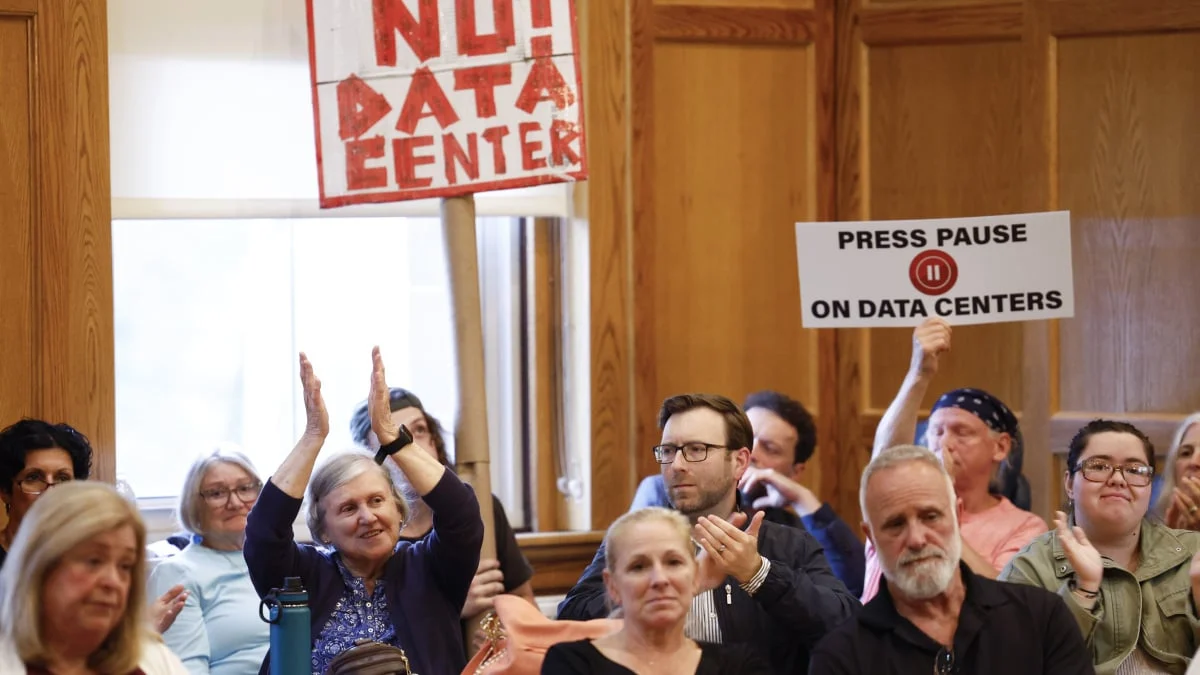
While the rapid expansion of artificial intelligence infrastructure has sparked a nationwide legislative backlash, there is currently no permanent ban on data center construction in any of the 50 states. As of mid-September 2026, the legislative landscape is defined not by total prohibitions but by a surge of temporary moratoriums and restrictive permitting requirements. New York remains the only state to have enacted a statewide pause on specific types of facilities, creating a singular precedent in an increasingly volatile regulatory environment.
Public opposition to the physical footprint of the digital economy has reached a critical threshold, driven by concerns over energy consumption, noise pollution, and the long-term societal impacts of generative AI. A recent New York Times/Sienna survey revealed that 61 percent of Americans now oppose the construction of new data centers in their communities. This shift in sentiment follows high-profile warnings from technology executives regarding AI-driven job displacement and the environmental toll of maintaining massive server farms.
The tension between technological progress and local preservation has moved from municipal zoning boards to state capitals. While the list of every U.S. state that bans data centers currently remains at zero, 16 states have introduced legislation aimed at pausing or severely restricting new developments. These legislative efforts span the political spectrum, appearing in both Democratic-leaning states and conservative strongholds, signaling a rare moment of bipartisan concern regarding industrial-scale computing.
The Significance of New York’s Hyperscale Moratorium
New York serves as the primary case study for state-level intervention in the technology sector. In June 2026, the state legislature passed AB 10141 and SB 9144, which established a one-year freeze on permits for new hyperscale data centers. The legislation specifically targets facilities with a peak demand of one megawatt or more, coupling the permit freeze with rigorous new energy efficiency standards that many industry analysts describe as the strictest in the nation.
Governor Kathy Hochul reinforced this legislative action with an executive order in July, formally launching the first statewide moratorium of its kind in the United States. The move was framed as a necessary step to protect the state’s electrical grid and ensure that the transition to green energy is not derailed by the massive power requirements of AI processing. The New York model is now being scrutinized by other governors who are facing similar pressure from environmental groups and residential advocates.
However, the New York moratorium has faced significant criticism from federal officials. The Trump administration has categorized such measures as "anti-innovation," suggesting that states may lack the legal authority to regulate the infrastructure of a critical national industry. This burgeoning conflict between state sovereignty and federal technology policy is expected to reach the courts if the New York moratorium is extended beyond its initial one-year term.
Legislative Friction and Every U.S. State That Bans Data Centers in Progress
In the Mid-Atlantic, Delaware and Maryland have emerged as key battlegrounds for data center regulation. Delaware’s SB 353 proposes a moratorium on permits for large-scale facilities until at least January 2027. The bill, which is currently under committee review, reflects growing anxiety over the state’s ability to meet its climate goals while hosting power-hungry server farms. In Maryland, HB 120 attempted to enact a similar construction pause earlier this year, though the measure ultimately failed to clear the committee stage due to concerns over lost tax revenue.
The Southern United States, traditionally a region that welcomes industrial development through tax incentives, is also seeing a shift in policy. Georgia’s HB 1059 seeks to forbid local governments from issuing permits for new data centers until December 2028. This represents one of the longest proposed pauses in the country, reflecting the immense strain that existing data center hubs in the Atlanta metro area have placed on the regional power grid.
South Carolina has followed a similar path with H 5526, a bill that would halt local approvals until the state legislature establishes a comprehensive oversight and approval process. Proponents of the bill argue that the current piecemeal approach to zoning allows technology companies to bypass environmental safeguards. By centralizing the approval process, South Carolina lawmakers aim to gain more leverage in negotiations over infrastructure costs and resource allocation.
Grid Reliability and Every U.S. State That Bans Data Centers in the Atlantic Hub
Virginia, which hosts the world’s largest concentration of data centers in "Data Center Alley," is currently navigating a complex legislative transition. HB 1515 was introduced to put a moratorium on the final approval of new facilities, permits, or rezoning requests until specific grid interconnection requirements are met. The bill suggests a pause until July 2028, or until the regional utility provider can guarantee that residential service will not be compromised by industrial demand.
The Virginia House Rules subcommittee recently voted to carry this legislation over into the 2027 session. This delay reflects the economic stakes involved; Northern Virginia’s economy is deeply intertwined with the data center industry, yet the physical limits of the electrical grid have become impossible for lawmakers to ignore. The outcome of the Virginia debate is widely seen as a bellwether for the rest of the country.
In New Jersey, AB 5482 was introduced to implement a six-month moratorium on all data center approvals and tax incentives. While shorter in duration than the New York or Georgia proposals, the New Jersey bill highlights a growing desire among lawmakers to hit the "reset button" on how these facilities are incentivized. Critics of the current system argue that states are providing hundreds of millions of dollars in tax breaks to companies that create relatively few long-term jobs while consuming vast amounts of public resources.
Failed Initiatives and the Economic Counter-Argument
Not every attempt to restrict the industry has been successful. In Maine, LD 307 gained bipartisan support in both chambers of the legislature, seeking a moratorium until November 2027. However, Governor Janet Mills vetoed the bill in April 2026. Her administration argued that the legislation was too broad and failed to provide necessary exemptions for specific, pre-existing projects that were deemed vital to the state’s economic development plans.
Similar failures occurred in the Midwest and the West. Minnesota’s HB 4888 and SB 4298 sought to ban new permits until a comprehensive report on development impacts could be completed by the Public Utility Commission. Both bills failed to pass during the most recent session. In South Dakota, SB 232, which proposed a moratorium through June 2027, also met defeat. These failures are often attributed to intensive lobbying efforts by the tech sector and the promise of immediate construction jobs.
Oklahoma’s SB 1488, which sought a moratorium until 2029, and Wisconsin’s SB 1061, which proposed 14 strict conditions for any new facility, both failed to gain sufficient traction. The Wisconsin bill was particularly notable for its attempt to prohibit the shifting of energy and water costs from data centers to residential customers. Although the bill did not pass, the language regarding "cost-shifting" has begun to appear in new legislative drafts in other states.
Environmental Impact and Every U.S. State That Bans Data Centers Strategy
The primary drivers behind the movement to ban or pause data centers are the environmental and social externalities that these facilities produce. Beyond the massive electrical load, data centers require millions of gallons of water for cooling purposes. In states like Vermont, where S 205 seeks a moratorium until 2030, the protection of local watersheds has become a central theme of the legislative debate.
Noise pollution has also emerged as a significant point of contention. Social media platforms have been flooded with videos from residents living near AI data centers, documenting the constant, high-frequency hum produced by industrial cooling fans. This "acoustic blight" has turned local communities against projects that were initially pitched as quiet, low-impact neighbors. Pennsylvania’s SB 1359 and HB 2533 specifically address these concerns by seeking a three-year moratorium and granting municipalities the explicit power to prohibit data centers based on noise and environmental impact studies.
As AI models grow in complexity, the hardware required to train them generates more heat, necessitating even more aggressive cooling solutions. This cycle of resource consumption has led many state lawmakers to conclude that the current pace of construction is unsustainable. The push for a moratorium is often framed not as a permanent rejection of technology, but as a necessary cooling-off period to allow for the development of more efficient infrastructure standards.
The Future of AI Infrastructure and State Authority
The evolving map of every U.S. state that bans data centers—or attempts to—suggests a future where the technology industry must negotiate on a state-by-state basis rather than relying on a uniform national expansion. The Michigan legislation (HB 5594 and HB 5595), which seeks to stop local governments and public service commissions from issuing permits until April 2027, indicates that states are looking to strip local municipalities of their approval power to ensure a more controlled, statewide strategy.
The clash between state-level environmental goals and the federal government’s desire for AI supremacy is likely to intensify. If more states follow New York’s lead and enact successful moratoriums, the tech industry may be forced to look toward international markets or undersea facilities to meet their computing needs. For now, the "list of zero" remains technically accurate regarding permanent bans, but the legal reality for data center developers has never been more restrictive.
As 2027 approaches, the expiration of several proposed and active moratoriums will force a new round of legislative decisions. Lawmakers will have to decide whether to allow construction to resume under new, stricter guidelines or to transition these temporary pauses into the permanent bans that many community activists are now demanding. The balance of power between the digital economy and the physical resources of the American landscape remains in a state of profound uncertainty.