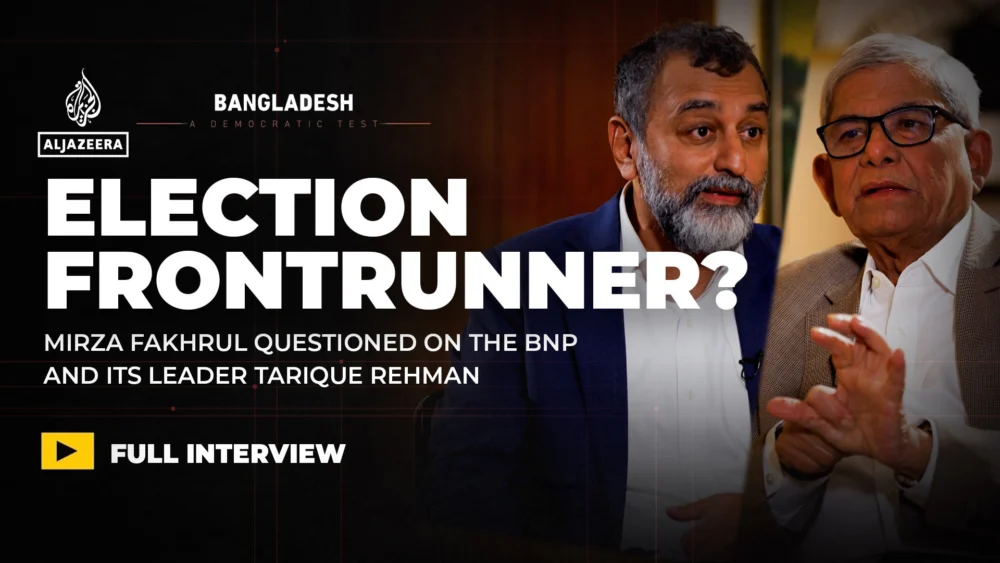
Bangladesh stands at a critical juncture, poised for a historic election following a period of significant political upheaval that saw the ousting of Prime Minister Sheikh Hasina and the marginalization of the Awami League, propelling the Bangladesh Nationalist Party (BNP) to the forefront of the political landscape after years in opposition. The upcoming electoral contest is framed by questions surrounding the BNP’s capacity to represent genuine political change, particularly concerning the future direction envisioned by its de facto leader, Tarique Rahman.
The political climate in Bangladesh has been volatile, with the nation grappling with the aftermath of the 2024 events that reshaped the ruling establishment. The Awami League, a dominant force for an extended period, has seen its influence curtailed, creating a vacuum that the BNP appears poised to fill. This shift in the political hierarchy has intensified scrutiny on the BNP’s platform and its leadership’s long-term objectives for the country.
At the heart of this scrutiny lies the vision of Tarique Rahman, a figure whose leadership style and policy proposals have been subjects of intense debate. As the senior vice-chairman of the BNP, Rahman operates from exile, yet his influence over the party’s strategy and its message to the electorate remains profound. His purported blueprint for Bangladesh’s future is a focal point for voters and political observers alike, as they seek to understand the potential policy shifts and governance paradigms the BNP might introduce.
The Legacy and Influence of Tarique Rahman
Tarique Rahman, the son of former Prime Minister Khaleda Zia and BNP founder Ziaur Rahman, has been a central figure in the party’s affairs for decades. His political trajectory, however, has been marked by controversy, including corruption charges and allegations of political violence. Despite these challenges, he has consolidated his position within the BNP, effectively steering the party’s direction from abroad.
His vision for Bangladesh is often communicated through the pronouncements of party officials and his direct supporters. These messages typically emphasize a departure from the current governance model, promising a more inclusive and democratic system. However, the specifics of this vision, particularly in terms of economic policy, foreign relations, and institutional reforms, remain subjects of interpretation and require deeper examination.
The BNP, under Rahman’s implicit guidance, has articulated a platform that aims to address what it describes as the failures of the incumbent government. This includes promises of restoring democratic institutions, ensuring the rule of law, and fostering economic growth that benefits a wider segment of the population. The challenge for the party is to translate these broad aspirations into concrete policy proposals that resonate with the electorate and allay concerns about past controversies associated with its leadership.
Navigating the Political Landscape: A Conversation with Mirza Fakhrul Alamgir
In an effort to illuminate Tarique Rahman’s vision for Bangladesh, Sreenivasan Jain engaged in a significant interview with Mirza Fakhrul Alamgir, the Secretary-General of the Bangladesh Nationalist Party. This conversation aimed to probe the core tenets of Rahman’s proposed leadership and the BNP’s commitment to enacting meaningful political change. The exchange sought to elicit clarity on the party’s future direction and its response to the evolving political dynamics within the nation.
Mirza Fakhrul Alamgir, a seasoned politician and a key spokesperson for the BNP, presented the party’s perspective on its electoral prospects and its agenda for national development. His responses were crucial in offering insights into how Tarique Rahman’s overarching goals translate into actionable policies and governance principles. The interview was designed to go beyond rhetoric and delve into the practical implications of the BNP’s potential return to power.
The dialogue between Jain and Alamgir touched upon several critical areas, including the BNP’s stance on democratic reforms, its economic development strategy, and its approach to national security and foreign policy. The Secretary-General elaborated on the party’s commitment to accountability, transparency, and the empowerment of citizens, framing these as central pillars of Tarique Rahman’s envisioned Bangladesh.
Tarique Rahman’s Policy Blueprints: Promises and Perceptions
The narrative surrounding Tarique Rahman’s vision for Bangladesh often centers on a promise of renewal and a break from what critics describe as authoritarian tendencies. Supporters point to his emphasis on participatory democracy and the restoration of checks and balances within the government. This includes pledges to strengthen the judiciary, ensure the independence of electoral commissions, and protect freedom of the press.
On the economic front, the vision reportedly includes a focus on inclusive growth, poverty reduction, and the creation of employment opportunities for the burgeoning youth population. Specific proposals are said to involve measures to stimulate investment, both domestic and foreign, and to ensure equitable distribution of national wealth. The BNP under Rahman’s influence has also spoken about bolstering the agricultural sector and promoting industrial development.
However, a significant challenge for the BNP lies in dispelling lingering doubts about the party’s past governance record and the integrity of its leadership. Allegations of corruption and political patronage have cast a shadow, and the party faces the task of convincing voters that a new era of clean governance is achievable. The effectiveness of Tarique Rahman’s vision hinges on its ability to inspire confidence and demonstrate a tangible path towards a more prosperous and democratic Bangladesh.
The Road to Elections: Public Sentiment and Political Stakes
As Bangladesh approaches its next general election, the public’s mood and expectations are crucial determinants of the political outcome. Years of political polarization and socio-economic challenges have created a demand for decisive leadership and a clear vision for the future. The BNP, with Tarique Rahman at the helm of its strategic direction, is positioning itself as the primary alternative to the current ruling establishment.
The electoral contest is not merely about choosing a government; it is about shaping the trajectory of Bangladesh’s development and its democratic future. The aspirations articulated by Tarique Rahman and the BNP resonate with segments of the population disillusioned with the status quo. Yet, the historical context and the controversies surrounding the party’s leadership continue to be significant factors influencing voter perceptions.
The upcoming elections will therefore be a critical test for the BNP’s ability to translate its vision into electoral success. It will also be a referendum on whether the electorate believes Tarique Rahman’s leadership, even from afar, offers a credible path towards the desired change. The outcomes will have far-reaching consequences for the nation’s political stability, economic progress, and its standing on the global stage.
Broader Implications and Future Trajectories
The political transition in Bangladesh, marked by the potential ascendancy of the BNP, carries significant implications for regional stability and international relations. The country’s strategic location and its growing economic importance mean that any shift in its political leadership will be closely watched by neighboring countries and global powers.
Tarique Rahman’s vision, as presented by his party, suggests a potential recalibration of Bangladesh’s foreign policy and its engagement with international partners. The specifics of this approach, particularly concerning trade relations, security cooperation, and regional partnerships, will be keenly observed. The BNP has historically emphasized a non-aligned foreign policy, and its future actions will reveal the extent to which this principle will guide its external relations.
Furthermore, the internal dynamics of Bangladesh’s democracy are at stake. The BNP’s commitment to strengthening democratic institutions, ensuring judicial independence, and upholding human rights will be paramount in shaping the country’s governance landscape. The success of Tarique Rahman’s vision will ultimately be measured by its ability to foster a more inclusive, just, and prosperous society for all Bangladeshis, navigating the complex challenges that lie ahead. The path forward is contingent on the party’s capacity to articulate a compelling and credible roadmap for national progress.