MGM+’s latest eight-part limited series, American Hostage, arrives with a compelling true-crime premise, a star-studded cast led by Jon Hamm and Giovanni Ribisi, and the creative minds of Shawn Ryan and Eileen Myers behind it, yet ultimately struggles to deliver on its significant initial promise, according to critical assessments. The drama, adapted from a podcast, delves into a notorious 1977 Indianapolis hostage crisis, aiming to explore themes of media power, public distrust, and the elusive American Dream, but critics suggest it becomes an over-extended narrative that frequently loses its focus.
The Genesis of ‘American Hostage’
The series draws its inspiration from the real-life 1977 Indianapolis hostage situation involving Tony Kiritsis and his former business associate, Dick Hall, a story that previously captivated listeners of the American Hostage podcast from Criminal Content. This harrowing event also formed the basis for Gus Van Sant’s upcoming 2025 film, Dead Man’s Wire, indicating the enduring fascination with its complex human drama and societal implications. The creators, Shawn Ryan, known for his work on critically acclaimed shows like The Shield, and Eileen Myers, a co-creator of The Night Agent, brought a strong pedigree to the project, raising expectations for a nuanced and impactful adaptation.
The narrative is firmly rooted in the late 1970s, a period marked by profound societal shifts in America. The Watergate scandal had eroded public trust in institutions, the counterculture movement challenged traditional norms, and economic anxieties fueled a sense of disillusionment. This backdrop provides fertile ground for a story about an individual railing against a perceived "rigged system," and the media’s evolving role in such crises. The series initially promises to leverage this historical context to reflect contemporary societal frustrations, drawing parallels between Kiritsis’s rage and modern expressions of anti-establishment sentiment.
A High-Stakes Premise: The Indianapolis Hostage Crisis
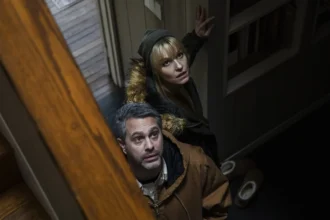
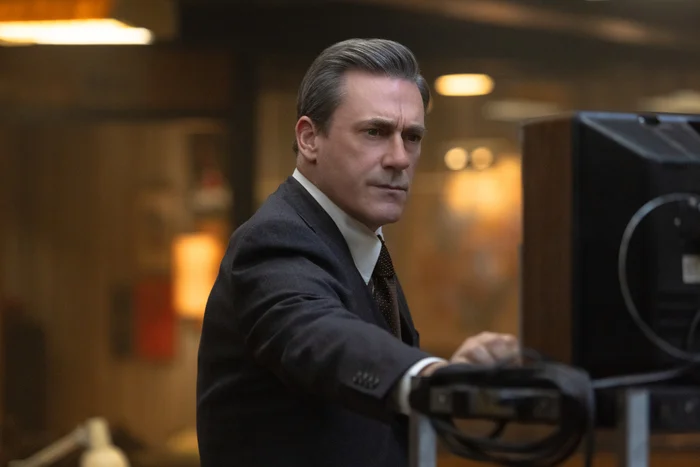
At the heart of American Hostage is Fred Heckman, portrayed with a likably understated gravitas by Jon Hamm. Heckman is an Indianapolis news radio legend, a man at a crossroads in his career, weighing a lucrative offer from CBS Radio in New York after 22 years as "the most trusted voice in news." His seemingly stable life with his supportive wife, Barbara (Mireille Enos), and three children, is abruptly shattered when he becomes inextricably linked to the city’s biggest story.
Giovanni Ribisi delivers a convincingly overstated performance as Tony Kiritsis, a former used car salesman consumed by a grievance over a mortgage deal. Kiritsis believes he was swindled out of a 17-acre plot of land he envisioned as the site for a shopping destination anchored by a steakhouse, a tangible symbol of his pursuit of the American Dream. In a desperate act, he takes Dick Hall (Kristoffer Polaha), an executive at the mortgage office, hostage. Kiritsis’s method is chillingly direct: he affixes a shotgun to Hall’s head, connected to a "dead man’s switch," ensuring the gun would fire if he were killed or incapacitated. His demands are simple yet profound: an apology, immunity, and the chance to reclaim his dream.
Crucially, Kiritsis insists on speaking only to Fred Heckman, forcing the radio personality into an unprecedented role as a direct conduit to the hostage-taker. This connection immediately reignites Heckman’s dormant journalistic instincts but also thrusts him into a profound ethical dilemma, a conflict keenly observed by his skeptical co-worker, Ben Hairston (William Jackson Harper). As local police navigate rumors of departmental misdeeds and federal authorities contemplate more extreme measures, the situation escalates, turning Kiritsis into a temporary folk hero for some, echoing similar figures in other notorious hostage situations of the era.
The Narrative’s Fragmented Trajectory
American Hostage begins with considerable dramatic momentum, building tension around the central captor-captive dynamic and the media’s involvement. The series initially excels in depicting the mechanics of 1970s radio—the phone-call transfers, impromptu recordings, and the nervous energy surrounding live broadcasts—evoking a sense of technological fascination reminiscent of dramas like September 5. Early episodes hint at a thoughtful exploration of journalistic ethics, government interference in news-gathering, and the fine line between reporting and participating in a story. The show also makes effective use of split-screens in its initial run, a stylistic flourish that helps to wordlessly develop characters and build tension.
However, critical consensus suggests that the series struggles to maintain this promising start. After peaking in its middle episodes, the narrative reportedly becomes unfocused and over-extended, leading to a sense of exhaustion over its eight-episode run. A significant point of contention for reviewers is the series’ decision to shift its narrative focus. While characters like Ben Hairston, presented as the show’s moral compass, and aspiring reporter Ginny (June Laporte), intended as its heart, offer compelling perspectives, their storylines are eventually sidelined. Instead, the narrative reportedly gravitates back towards Fred Heckman, but without enough fresh material or compelling internal conflict to sustain interest.
One particularly criticized episode, a fragmented, flashback-looping sixth installment, is cited as a point where the series’ storytelling falters significantly, reducing characters to interchangeable "daddy issues" and losing the specificity that made earlier interactions potent. This narrative drift ultimately leaves many storylines unresolved, including the unexpectedly compelling friendship that develops between Barbara Heckman (Mireille Enos) and Ibby (Kat Cunning), Dick Hall’s wife. Despite strong performances from Enos and Cunning, their characters are left in limbo, contributing to a sense of unfulfilled potential across the board.
Unpacking Thematic Ambitions and Production Strengths
The series makes a concerted effort to connect Kiritsis’s actions to a broader cultural zeitgeist, particularly the pervasive distrust of authority that permeated American society post-Watergate. The show posits Kiritsis as an extreme, albeit understandable, manifestation of rage against a perceived rigged system, drawing parallels to other figures of the era who became symbols of anti-establishment defiance. Giovanni Ribisi’s portrayal of Kiritsis avoids sanitization, presenting him as a complex individual—a "mess of a man" with operatic tendencies, yet also a good neighbor and brother whose dream of an inclusive restaurant is universally appealing. This nuanced characterization is effectively contrasted with Kristoffer Polaha’s low-key resignation as the captive Dick Hall, whose seemingly perfect life is subtly revealed to be otherwise.
Beyond the lead performances, the ensemble cast garners praise. William Jackson Harper’s sarcastic indignation as Ben and June Laporte’s earnestness as Ginny are highlighted as strong points, despite their characters’ eventual marginalization. Adam Arkin, who also directed several episodes, makes a memorable appearance as a shady lawyer, while Jonathan Tucker, Mark McKinney, Joe Cobden, and Fred Ewanuick also contribute notable supporting turns. The production design by Caroline Hanania receives particular commendation for its world-building, transforming sets like the radio offices and Tony’s dingy apartment into dynamic, lived-in spaces that defy claustrophobia. These elements underscore the significant talent and effort invested in the series’ creation.
Critical Reception and Industry Implications
The overarching sentiment in the critical community is one of disappointment over missed opportunities. While American Hostage benefits from a great true story and an exceptional cast, its execution ultimately falters. The series’ inability to sustain its thematic depth, coupled with its fragmented narrative choices and the abandonment of compelling subplots, undermines its initial promise. Critics suggest that the story, while inherently fascinating, may not have warranted an eight-episode arc, or at least not the specific narrative path it chose.
The critical reception for American Hostage serves as a reminder of the inherent challenges in adapting complex true stories into long-form drama, particularly when balancing historical accuracy with narrative engagement and thematic exploration. Despite the efforts of its talented creators, cast, and crew, the series reportedly loses its creative energy and focus, leaving viewers with a sense that a truly impactful and provocative story was left largely unexplored. It leaves a lingering question for MGM+ and the industry about how best to translate compelling source material into a sustained and satisfying viewing experience, especially when dealing with the nuanced ethical and psychological dimensions of real-life events.