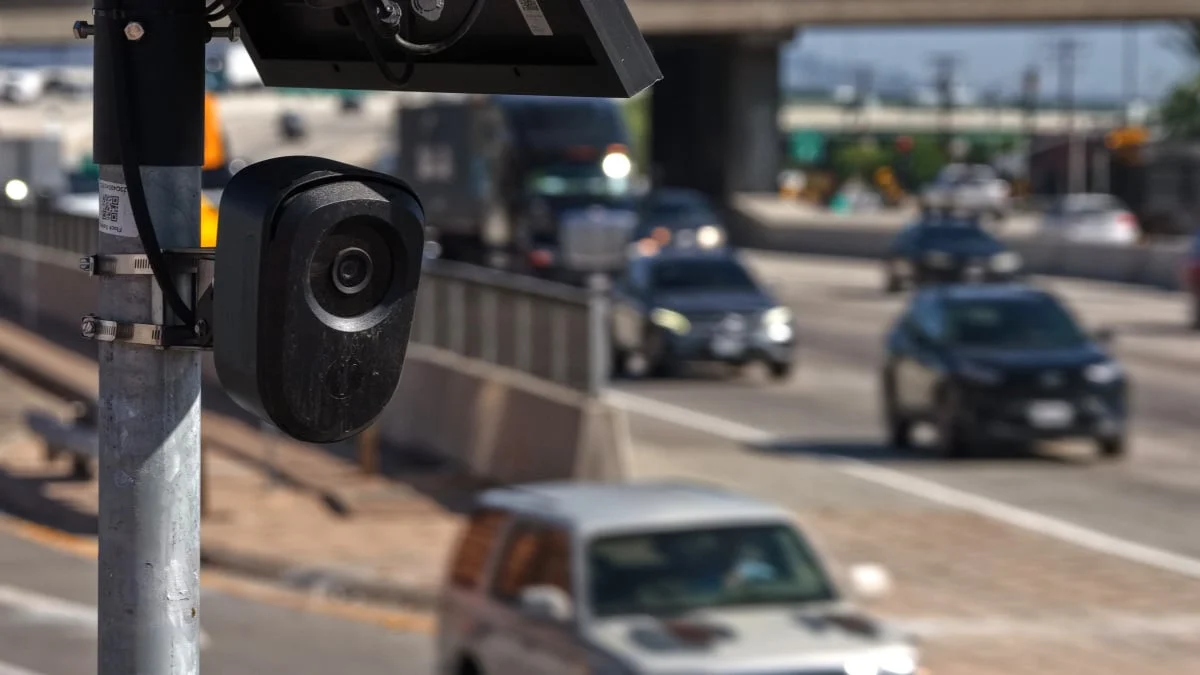
Flock Safety, a prominent provider of automated license plate recognition technology, has initiated a voluntary buyout program for its workforce as the company navigates a period of significant regulatory and public opposition. The Atlanta-based surveillance firm informed its staff on Friday of a "generous" severance package intended for employees who choose to depart the organization. This move is seen as a strategic effort to reduce headcount without resorting to involuntary layoffs, which sources familiar with the company’s internal operations suggest might otherwise be necessary for the 1,500-person workforce.
The decision to offer these buyouts comes at a critical juncture for the company, which has seen its AI-powered surveillance cameras become a focal point for privacy advocates and skeptical legislators. Internal communications distributed to the staff emphasized that the program is designed to treat employees with transparency and respect while providing them with "greater agency" over their professional futures. The company has indicated that it intends to grant the buyout requests to the majority of employees who apply, though the final selection remains at the discretion of management.
Eligible employees who opt for the buyout are reportedly being offered substantial compensation packages. According to internal documents, these packages include several months of healthcare coverage and cash payments that can reach tens of thousands of dollars, depending on the worker’s tenure and role. Furthermore, departing employees will be granted a two-year window to exercise their stock options, a provision that is notably more flexible than the standard 90-day window typically found in many technology sector contracts.
The timeline for the transition is structured to conclude by the end of October. Employees have been given a deadline of October 2 to submit their applications for the voluntary separation program. The company expects to notify those whose applications have been accepted by October 9, with a final departure date set for October 29. This rapid turnaround suggests an urgency within the company to realign its financial commitments and workforce size in response to shifting market and political conditions.
Terms of the Flock Voluntary Buyouts and Internal Shifts
The implementation of the Flock offers workers voluntary buyouts reflects a broader trend within the technology industry where companies are seeking to "right-size" after periods of aggressive expansion. Flock Safety has grown rapidly over the last several years, fueled by hundreds of millions of dollars in venture capital and a growing list of contracts with municipal police departments and neighborhood associations. However, the costs associated with maintaining a massive hardware footprint across thousands of American cities appear to be catching up with the firm’s bottom line.
By opting for a voluntary approach, Flock is attempting to maintain its corporate culture and avoid the negative publicity often associated with large-scale layoffs. The inclusion of extended stock option exercise periods is particularly significant, as it suggests the company still believes in its long-term valuation despite current headwinds. This allows departing employees to potentially benefit from a future initial public offering or acquisition, even after they have left the payroll.
However, the necessity of the program underscores the volatility of the surveillance market. While Flock has successfully marketed its "Falcon" cameras as essential tools for solving crimes like carjackings and retail theft, the high overhead of installing, maintaining, and providing data storage for these units requires constant capital. As state and local governments begin to scrutinize the efficacy and legality of these systems, the predictable revenue streams the company once relied upon are facing new threats.
Rising Public Resistance and Camera Vandalism
The backdrop to these internal corporate changes is a growing wave of public discontent. Across the United States, a grassroots movement against "persistent surveillance" has led to direct action against Flock’s hardware. In several jurisdictions, civilians have taken to damaging or disabling the cameras, viewing them as an infringement on the right to anonymous travel and a precursor to a "Big Brother" style of governance.
Vandalism has become a recurring operational cost for the company. Reports from various municipalities indicate that cameras have been spray-painted, tilted away from traffic, or physically removed from their mounting poles. This physical backlash is often organized through social media platforms where activists share the locations of new installations and discuss methods for neutralizing the technology.
This resistance is not limited to fringe groups. Civil liberties organizations, such as the American Civil Liberties Union (ACLU), have consistently criticized the company’s data-sharing practices. They argue that the massive database of vehicle movements created by Flock allows for the retroactive tracking of any individual without a warrant. This "dragnet" approach to policing is currently the subject of several legal challenges and legislative debates aimed at limiting how long license plate data can be stored and who can access it.
State-Level Legal Hurdles and Funding Blocks
The most significant threats to the company’s growth, and perhaps the primary drivers behind the decision to offer voluntary buyouts, are the recent actions taken by state officials. In Texas, the state government has moved to block funding for AI-driven surveillance cameras, citing concerns over privacy and the lack of clear regulatory frameworks. This move has stalled several planned expansions in major Texas metropolitan areas, cutting off a vital source of revenue for the company.
Similarly, Florida has taken an even more aggressive stance. State transportation officials recently ordered the removal of Flock license plate readers from state-maintained highways. The rationale provided was that the cameras were installed without proper permits and that the data collection violated state-level privacy protections. The removal of these units not only represents a loss of service contracts but also necessitates expensive physical de-installation processes.
These state-level interventions create a "chilling effect" for other municipalities that were considering adopting the technology. Local city councils, once eager to implement high-tech solutions to combat crime, are now pausing to evaluate the potential for legal liability and the risk of being forced to dismantle systems they have already paid for. This regulatory uncertainty makes it difficult for Flock to project future earnings, leading to the current need for workforce reductions.
The Economic Pressures on Surveillance Firms
The surveillance industry is currently facing a "perfect storm" of economic pressures. High interest rates have made venture capital more expensive and harder to secure, forcing startups to prioritize profitability over raw growth. For a company like Flock, which manages a vast physical network of solar-powered cameras and audio sensors, the operational expenses are enormous.
The Flock offers workers voluntary buyouts strategy is a direct response to this "new normal" in the tech economy. Investors are no longer satisfied with companies that simply accumulate data or sign up new users; they are demanding sustainable business models. If Flock cannot continue to expand into new states like Texas and Florida, it must find ways to reduce its "burn rate" to ensure its long-term survival.
Furthermore, competition in the automated license plate recognition (ALPR) space is intensifying. Legacy defense contractors and newer, leaner startups are vying for the same municipal budgets. Some competitors offer lower-cost hardware or more localized data storage options that appeal to privacy-conscious city councils. To remain competitive, Flock may need to pivot its product strategy, a transition that often requires a different mix of talent and a smaller, more specialized workforce.
Privacy Advocacy and the ALPR Debate
At the heart of the controversy surrounding Flock is the debate over the balance between public safety and individual privacy. Flock’s marketing emphasizes its role in "eliminating crime," citing numerous instances where its cameras helped police recover stolen vehicles or locate missing persons. For many law enforcement agencies, the technology is a "force multiplier" that allows them to do more with fewer officers on the street.
However, privacy advocates point out that the technology does not just capture the license plates of criminals; it captures everyone. The "hot list" feature, which alerts police when a specific vehicle is spotted, is just one part of the system. The larger issue is the historical database that allows police to see everywhere a specific car has been over the past 30 days. Critics argue that this level of surveillance can be used to monitor political protesters, individuals seeking reproductive healthcare, or marginalized communities.
This debate has moved from the realm of theory into the halls of government. Several cities have passed "Surveillance Oversight Ordinances" that require public hearings and city council approval before any new surveillance technology can be deployed. These ordinances have slowed the rollout of Flock cameras and, in some cases, led to the outright rejection of the technology. The friction between the company’s business goals and these democratic oversight mechanisms is a primary factor in the company’s current restructuring.
Future Outlook for Flock Safety and the Surveillance Industry
As the October 29 departure date for employees who accepted the buyout approaches, the industry will be watching closely to see how Flock Safety evolves. The reduction in staff likely signals a shift from an aggressive "growth at all costs" phase to a more defensive "sustainability" phase. The company will need to focus on defending its existing contracts and navigating the complex legal landscapes of the states where it still operates.
The broader surveillance industry is also likely to feel the ripples of this development. If a market leader like Flock is forced to offer voluntary buyouts and pull back from major markets due to public and political backlash, other firms may reconsider their own expansion plans. We may see a shift toward more transparent data practices or a focus on "privacy-by-design" features as companies attempt to appease both regulators and the public.
Ultimately, the situation at Flock serves as a case study in the challenges facing modern technology firms that operate at the intersection of public infrastructure and private data. While the "generous" severance packages may ease the transition for departing workers, the underlying tensions between surveillance technology and civil liberties remain unresolved. The coming months will determine whether Flock can successfully navigate these headwinds or if the current backlash marks the beginning of a larger retreat for the ALPR industry in the United States.