Harlem rapper Cam’ron has detailed the reasons behind his decision to file a lawsuit against fellow artist J. Cole, stemming from a stalled collaboration and unfulfilled promises for features and interviews. The legal action, according to Cam’ron, was a last resort to gain Cole’s attention and enforce a sense of accountability in their professional dealings.
The Genesis of the Legal Dispute: A Broken Promise
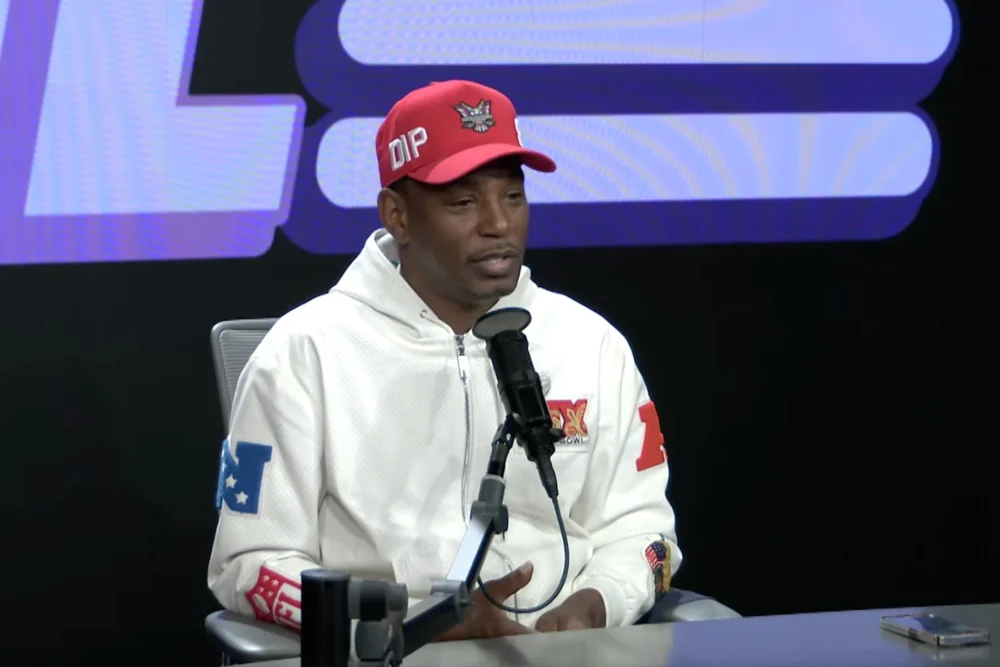
Cam’ron, whose real name is Cameron Ezike Giles, shared his perspective on the contentious situation during a recent episode of his show, "Talk With Flee." He emphasized that resorting to legal measures was not his initial preference, but rather a necessary step after feeling repeatedly "given the runaround" by the North Carolina rapper. The core of the disagreement appears to center on an unfulfilled reciprocal arrangement for musical features and media appearances.
"I never ever wanted to do anything as far as a lawsuit was concerned," Cam’ron stated, clarifying his stance. He explained that the lawsuit was primarily intended to capture J. Cole’s attention and highlight a perceived breach of professional integrity. While acknowledging the need for fair compensation, Cam’ron underscored the importance of fulfilling one’s commitments, stating, "Being a man is keeping your word."
A History of Reciprocity and Unmet Expectations
The rapper recounted a history of prompt action on his part when J. Cole sought his assistance. He cited an instance where J. Cole required an introduction for his 2021 album, The Off-Season, with a tight 24-hour deadline. Cam’ron stated he was able to deliver the requested material swiftly by calling in his engineer and working from his home studio.
Following this successful collaboration, Cam’ron mentioned he informed J. Cole that he might require a verse for a future project. J. Cole reportedly agreed to this arrangement. Subsequently, Cam’ron contributed his verse to the track "Ready ’24," a collaboration that materialized quickly. He described meeting with J. Cole and rapper Cordae at a New York City studio and completing his part within a mere 20 minutes.
However, when Cam’ron sought to collect on the reciprocal favor – specifically, a verse from J. Cole – the situation reportedly took a turn. Cam’ron alluded to J. Cole offering vague excuses, humorously comparing them to astrological alignments, such as "the chakra ain’t right" or the need for "the moon gotta align with the stars."
Escalating Demands and Delayed Commitments
Cam’ron expressed his frustration with the prolonged delays and evasiveness. He reminded J. Cole of his own prompt deliveries, including a 48-hour turnaround for one request and an immediate contribution upon arrival in New York for another. When J. Cole indicated he preferred to record in person rather than send his record, Cam’ron complied, only to find his own request for a verse subsequently unmet.
The situation further complicated when Cam’ron shifted his request from a musical feature to an interview for one of his talk show platforms. J. Cole reportedly agreed to this as well, but once again, the commitment was not honored. Cam’ron described being told that Cole was not ready to discuss certain topics, particularly in the context of the highly publicized rap feud between Kendrick Lamar and Drake, without having his own project to promote.
"I can’t do it now because I don’t feel like talking about that right now," Cam’ron recalled J. Cole saying. Cam’ron countered, offering to conduct the interview without addressing the contentious subject. Cole, however, maintained his position, stating, "Nah, I can’t do no interview and not talk about it."
The Cycle of Postponement and the Lawsuit’s Purpose
The dialogue then devolved into a series of postponements for the interview. J. Cole initially suggested February as a definite timeframe. However, when February arrived, Cam’ron’s attempts to schedule the interview were met with further delays, with J. Cole reportedly citing ongoing work and the need for more time.
It was this pattern of broken promises and perceived disrespect that ultimately led Cam’ron to pursue legal action. He reiterated that his primary objective was not financial gain, but to impress upon J. Cole the principle of accountability. "It was just more to get his attention," Cam’ron explained. He believes that in the professional realm, especially among artists who have built careers on their word, maintaining integrity is paramount.
The Broader Implications of the Dispute
The legal action between two prominent figures in hip-hop highlights ongoing tensions and expectations within the industry regarding collaborations, features, and promotional obligations. The rap landscape often operates on a complex web of favors and mutual respect, and when these dynamics falter, the consequences can extend beyond the artists themselves.
The lawsuit also brings attention to the business side of music, where agreements, whether formal or informal, carry weight. Cam’ron’s insistence on "keeping your word" resonates with a segment of the hip-hop community that values loyalty and straightforward dealings.
J. Cole’s Upcoming Release and Potential for Resolution
Coincidentally, J. Cole’s highly anticipated seventh studio album, The Fall-Off, is slated for release on Friday, February 6. This imminent release may present an opportune moment for resolution. With a new project on the horizon, J. Cole might be more inclined to address outstanding commitments and potentially engage with Cam’ron, perhaps offering the interview he previously declined.
Representatives for both Cam’ron and J. Cole were reportedly contacted by Billboard for comment on the situation, indicating the seriousness and public interest surrounding this dispute. The outcome of the lawsuit and any potential reconciliation between the two artists will undoubtedly be watched closely by fans and industry insiders alike.
The legal battle underscores a fundamental principle that Cam’ron champions: that in the cutthroat world of entertainment, professionalism and integrity are not just ideals, but essential components of a lasting career. The resolution of this case could serve as a case study on how such disputes are managed within the hip-hop community, where reputation and word-of-mouth carry significant currency.