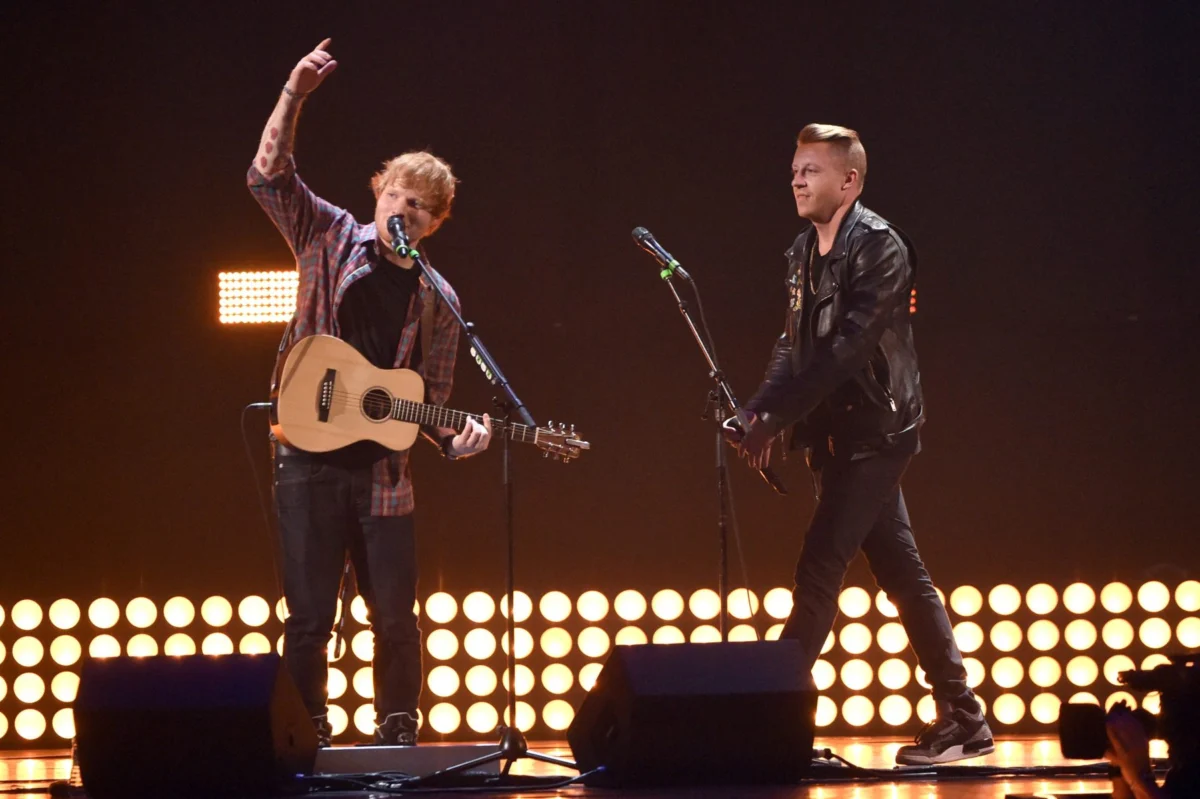
Rapper Macklemore’s outspoken support for Palestinians has ignited a significant controversy surrounding the U.S. leg of Ed Sheeran’s Loop Tour, leading to his abrupt removal as an opening act. The incident has drawn widespread attention, highlighting the intersection of music, political activism, and international conflict, and has prompted reactions from various figures within the music industry and beyond.
Longstanding Friendship and Musical Collaboration
Macklemore and Ed Sheeran have maintained a friendship for over a decade, underscoring the surprise and impact of the tour controversy. Their shared history includes a musical collaboration in 2015, when they, along with Ryan Lewis, released the song "Growing Up." The previous year, in 2014, Macklemore joined Sheeran on stage at the iHeartRadio Music Festival to perform Macklemore’s hit song "Same Love," a powerful anthem for marriage equality. This established rapport made Macklemore’s subsequent removal from the tour a particularly notable development.
The Catalyst: Onstage Pro-Palestinian Stance
The controversy escalated when Macklemore used his platform during a performance to advocate for Palestine. Specifically, he called for a "free Palestine" and performed "Hind’s Hall," a politically charged track released in May 2024. The song directly addresses the ongoing conflict in Gaza, with Macklemore asserting that Israel has been committing genocide against Palestinians since the Hamas attacks of October 2023.
At the time of Macklemore’s performance, the death toll in Gaza, according to the Palestinian Ministry of Health, had surpassed 73,000. While the United Nations has acknowledged actions that could be considered genocidal, Israel and its allies, including the United States, have denied these accusations. Macklemore’s explicit condemnation of Israeli actions and his support for Palestine directly clashed with the sensibilities of some stakeholders, ultimately leading to his dismissal from the tour.
Ed Sheeran’s Loop Tour: A Platform for Controversy
The U.S. leg of Ed Sheeran’s Loop Tour, intended to showcase his global musical appeal, inadvertently became a focal point for discussions surrounding the Israeli-Palestinian conflict. The decision to remove Macklemore sent ripples through the music community, prompting a variety of responses and interpretations regarding artistic freedom, the role of musicians in political discourse, and the pressures faced by artists with strong public stances.
Key Developments and Reactions
The fallout from Macklemore’s removal has been multifaceted, involving statements from the artists themselves, other tour participants, and prominent figures associated with the venues.
- Macklemore’s Statement: Following his removal, Macklemore released a statement expressing his commitment to his beliefs. He acknowledged that his performance was a deliberate act of solidarity and that he understood the potential consequences. He emphasized his belief in human rights and his intention to continue speaking out against what he perceives as injustice.
- Ed Sheeran’s Response: Ed Sheeran, known for his generally apolitical public persona, has navigated the situation with a degree of caution. While he has not publicly condemned Macklemore’s stance, his team reportedly made the decision to remove the rapper from the tour. Sheeran’s approach appears to be an attempt to maintain the tour’s focus on music while acknowledging the complexities of the situation.
- Reactions from Other Artists: The controversy has also drawn commentary from other opening acts and artists associated with the tour. Finneas, a Grammy-winning artist and producer, and Lukas Graham, a Danish band, are among those who have been part of the Loop Tour’s lineup. Their public statements, or lack thereof, have been closely watched as indicators of the broader sentiment within the touring ensemble.
- Venue Owner’s Involvement: Robert Kraft, the owner of Gillette Stadium, where one of the affected tour dates was scheduled, has also become a figure in the discussion. Kraft, who has significant ties to both the sports and business communities, has faced scrutiny regarding his own stance on the conflict and his potential influence on decisions related to the tour’s programming. His involvement highlights the financial and political dimensions that can intersect with major entertainment events.
Broader Implications and Analysis
The Ed Sheeran and Macklemore ‘Free Palestine’ tour controversy is emblematic of a larger trend where artists are increasingly using their platforms to address sociopolitical issues. This incident raises several critical questions about the responsibilities and challenges faced by public figures in the current global climate.
- Artistic Freedom vs. Commercial Pressure: The situation underscores the tension between an artist’s right to express their views and the commercial realities of large-scale tours. Promoters and venue owners may face pressure from various groups, leading to decisions that can impact artistic programming. The incident prompts a debate on where the line should be drawn between artistic expression and potential business repercussions.
- The Role of Musicians in Political Discourse: Musicians have a long history of engaging with social and political causes. However, the heightened polarization surrounding international conflicts means that such engagements can lead to significant backlash. Macklemore’s experience suggests that artists who take strong stances on deeply divisive issues, particularly those involving human rights and international relations, risk alienating segments of their audience and facing professional consequences.
- Navigating Complex Geopolitical Issues: The Israeli-Palestinian conflict is a deeply complex and emotionally charged issue with a long history. Artists attempting to engage with it often find themselves navigating a minefield of differing perspectives and accusations of bias. Macklemore’s direct confrontation with the concept of genocide, while resonating with some, has also been met with strong opposition from others who view his statements as misinformed or inflammatory.
Public Impact and Industry Response
The controversy has undoubtedly sparked conversations among fans and the general public. Social media platforms have been abuzz with discussions, with supporters of Macklemore defending his right to speak out and critics condemning his message. This public discourse reflects the diverse viewpoints on the conflict itself and the role of artists in addressing it.
The incident also serves as a case study for the music industry, highlighting the potential risks and rewards associated with artists taking firm political stances. It may influence how future tour collaborations are structured and how artists approach politically sensitive topics in their public performances. The potential for significant backlash could lead some artists to exercise more caution, while others might be emboldened to use their platforms more assertively.
Looking Ahead: Continued Dialogue and Potential for Future Developments
As the situation continues to unfold, the focus remains on how these artists and the wider industry will respond. The Ed Sheeran and Macklemore ‘Free Palestine’ tour controversy is not just an isolated incident but a reflection of broader societal trends and the evolving relationship between art, activism, and global politics. Future developments may include further statements from involved parties, potential shifts in how artists approach political engagement, and ongoing public debate about the intersection of music and activism. The incident serves as a potent reminder of the power of music to both entertain and provoke, especially when intertwined with pressing global issues.