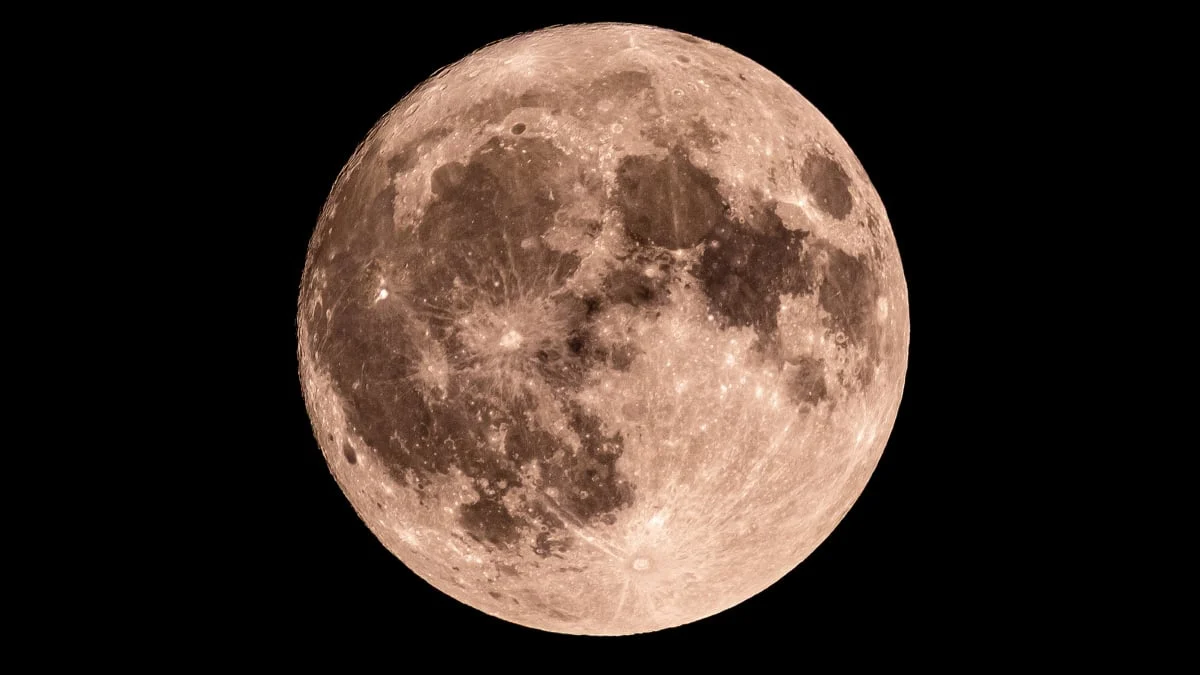
The lunar cycle reaches a critical transition point on Monday, Sept. 21, 2026, as the Moon enters a prominent waxing gibbous phase with approximately 72% of its Earth-facing surface illuminated by the Sun. This specific phase marks the period between the First Quarter and the Full Moon, offering a high-contrast view of the lunar topography that is particularly favorable for amateur astronomers and casual observers alike.
According to data provided by NASA’s lunar observation trackers, the Moon’s current position in its orbit provides a distinct perspective on several major geological features. Because the Moon is waxing—meaning the illuminated portion is growing larger each night—the "terminator line," or the boundary between the light and dark sides, moves across the lunar surface, casting long shadows that make craters and mountain ranges appear more three-dimensional than they do during a Full Moon.
Visibility and Landmarks for September 21, 2026
For those observing the sky with the naked eye on the evening of Sept. 21, 2026, several large-scale features remain clearly visible despite the lack of magnification. The Mare Tranquillitatis, also known as the Sea of Tranquility, is one of the most recognizable dark basaltic plains on the lunar surface. Nearby, the Mare Serenitatis, or Sea of Serenity, provides another vast expanse of ancient volcanic floor that creates the "Man in the Moon" imagery familiar to most cultures.
The Tycho Crater, located in the southern lunar highlands, is another standout feature for naked-eye observers during this 72% illumination phase. Known for its brilliant ray system—long streaks of ejected material that radiate across the lunar surface—Tycho is one of the youngest major craters on the Moon. During a waxing gibbous phase, the brightness of these rays begins to intensify as the Sun climbs higher in the lunar sky.
Enhancing the Experience with Binoculars and Telescopes
While the naked eye provides a broad overview, standard 10×50 or 7×50 binoculars significantly expand the level of detail visible on the lunar surface. On Sept. 21, 2026, the Clavius Crater will be a primary target for binocular users. As one of the largest crater formations on the Moon, its floor is dotted with smaller, younger craters that form a distinctive curving chain, visible even with modest magnification.
The Archimedes Crater, situated on the eastern edge of the Mare Imbrium, and the lunar Alps Mountains (Montes Alpes) are also prime targets for binocular observation during this phase. The Alps Mountains stretch for over 150 miles and feature peaks that rise thousands of feet above the surrounding plains. The play of light and shadow along these ridges on Sept. 21 will provide a stark illustration of the Moon’s rugged geography.
For those utilizing high-powered telescopes, the waxing gibbous phase offers a rare opportunity to inspect historic landing sites and complex geological rilles. The Apollo 14 landing spot in the Fra Mauro highlands becomes an area of interest as the Sun rises over the region. Additionally, the Descartes Highlands—the site of the Apollo 16 mission—and the Rima Hyginus, a massive linear rille or volcanic trench, will be positioned perfectly for high-resolution viewing.
Understanding the Mechanics of the Lunar Cycle
The phenomenon of the Moon phase today explained relies on the synodic month, which is the 29.5-day period it takes for the Moon to cycle through all its phases. This cycle is a result of the Moon’s orbit around Earth and the changing geometry between the Earth, the Moon, and the Sun. As the Moon travels, the amount of its illuminated hemisphere that is visible from our vantage point changes daily.
The transition from a New Moon to a Full Moon involves four distinct waxing stages. It begins with the New Moon, where the lunar disk is positioned between the Earth and the Sun, rendering it invisible. This is followed by the Waxing Crescent, where a thin sliver of light appears on the right side in the Northern Hemisphere. The First Quarter follows, showing exactly half of the Moon illuminated, leading finally to the Waxing Gibbous phase seen on Sept. 21, 2026.
Following the Full Moon, the cycle reverses through the waning phases. The Waning Gibbous sees the illumination begin to recede from the right side, followed by the Third Quarter (or Last Quarter), and finally the Waning Crescent. This eternal cycle has governed human timekeeping, agricultural planning, and maritime navigation for millennia.
The Path Toward the September Full Moon
The current waxing gibbous phase is the final precursor to the Full Moon, which is scheduled to occur on September 26, 2026. In many cultures, the Full Moon in September is referred to as the Harvest Moon, as it is the Full Moon closest to the autumnal equinox. Historically, this Moon provided extra light during the evening hours, allowing farmers to work late into the night to bring in crops before the first frost.
As the Moon progresses toward the 100% illumination mark over the five days following Sept. 21, the shadows that currently define the craters and mountains will begin to disappear. By the time the Full Moon arrives, the Sun will be shining directly down on the lunar surface from Earth’s perspective, washing out the topographical relief but making the different mineral compositions and "seas" appear more vibrant in color and tone.
The Role of NASA and Modern Lunar Exploration
The ability to provide precise data such as the Moon phase today explained is a result of decades of satellite monitoring and mathematical modeling by agencies like NASA. The Lunar Reconnaissance Orbiter (LRO), which has been orbiting the Moon since 2009, continues to provide high-resolution imagery and topographical maps that allow scientists to predict exactly what observers will see from Earth on any given date.
In 2026, public interest in the Moon is expected to be at a modern high due to the Artemis program. NASA’s initiative to return humans to the lunar surface, specifically the lunar South Pole, has revitalized global interest in lunar geography. By identifying craters like Tycho or landing sites like those of the Apollo missions on Sept. 21, the public engages with the same terrain that the next generation of astronauts will soon explore in person.
Astronomical Context of late 2026
The lunar observation on September 21, 2026, sits within a broader window of significant astronomical activity. Just over a month prior, on August 12, 2026, a total solar eclipse will have crossed parts of the Arctic, Greenland, Iceland, Spain, and Portugal. This major celestial event often sparks a lingering interest in the lunar cycle, as the Moon is the primary actor in solar eclipses.
Furthermore, the atmospheric conditions in late September often provide "stable air" in many parts of the Northern Hemisphere, which reduces the "twinkling" or distortion of celestial objects. This makes the Sept. 21 observation an ideal time for high-magnification photography and detailed sketching of the lunar surface.
Social and Educational Impact of Lunar Observation
The accessibility of the Moon makes it a unique tool for science education and public engagement. Unlike deep-space objects like nebulae or distant galaxies, the Moon does not require expensive equipment to enjoy. Educational institutions and local astronomy clubs often use dates like Sept. 21, 2026—when the Moon is high in the sky and significantly bright—to host "star parties" or public viewing events.
The psychological and cultural impact of the Moon remains a significant force in modern society. From influencing tidal patterns that dictate maritime trade to serving as a cornerstone of various religious calendars, the lunar phase is more than just an astronomical data point. It is a shared global experience that connects modern technology with ancient human history.
Preparing for the September 21 Viewing
To get the most out of the Sept. 21, 2026, lunar phase, observers are encouraged to find a location away from heavy light pollution, though the Moon is bright enough to be seen clearly even from major urban centers. Viewing is best started shortly after sunset when the Moon is high in the sky, as looking through less of the Earth’s atmosphere provides a sharper image.
As the Waxing Gibbous Moon hangs in the sky at 72% illumination, it serves as a reminder of the precision of our solar system. Whether viewed through a multi-thousand-dollar telescope or with the naked eye from a backyard, the features visible on this night—from the Sea of Tranquility to the heights of the Alps Mountains—offer a window into the violent and fascinating history of our closest celestial neighbor.