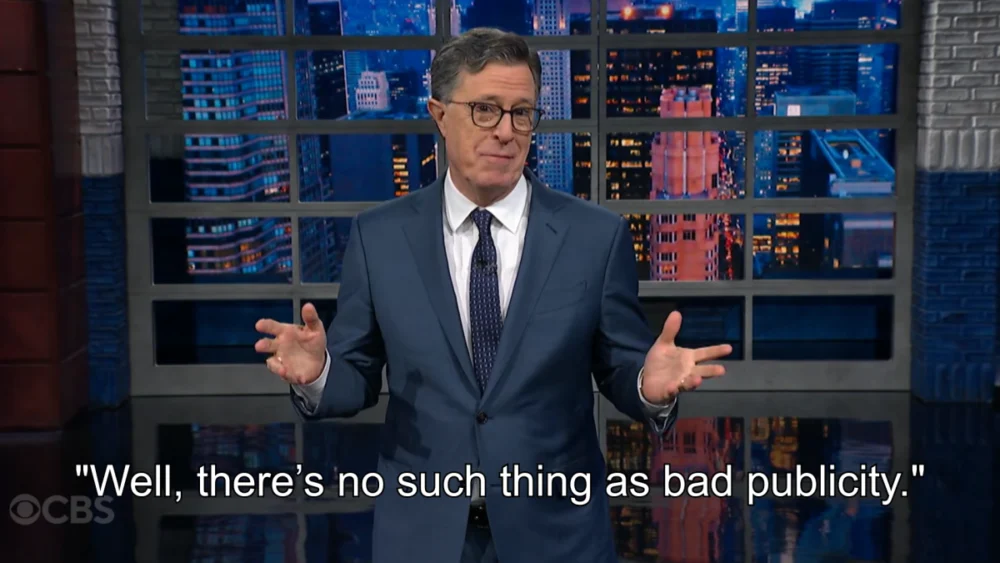
Stephen Colbert addressed his appearance in the latest batch of unsealed documents related to the Jeffrey Epstein investigation during a recent broadcast of The Late Show, clarifying the context of his name’s inclusion in the records. The documents, which have been released in successive waves following a 2015 civil lawsuit, contain thousands of pages of depositions, emails, and investigative leads concerning the late financier and convicted sex offender. Colbert’s reaction followed a similar clarification from fellow comedian and former Daily Show host Jon Stewart, whose name also surfaced in the same cache of materials.
The mention of the late-night host does not suggest any personal connection to Epstein’s criminal activities or presence on the financier’s private island. According to the unsealed emails, an associate of Epstein had recommended that the financier watch a specific segment from The Colbert Report, Colbert’s previous satirical news program on Comedy Central. The segment in question involved Colbert’s famous "Civics 101" explanation of Super PACs and campaign finance laws, a topic that gained significant traction during the 2012 election cycle.
During his monologue, Colbert utilized his characteristic humor to address the situation, noting the irony of being adjacent to such a high-profile criminal investigation. He joked about the nature of publicity, suggesting that even a mention in a federal document dump could be spun for marketing purposes. The host’s direct address was seen by media analysts as a strategic move to preempt social media misinformation, which often conflates any name appearing in the files with criminal culpability.
Stephen Colbert Reacts to Being Mentioned in Epstein Files During Late Show Monologue
The specific nature of the mention involves a 2011 email exchange between individuals in Epstein’s orbit. In the correspondence, the sender suggested that Colbert’s breakdown of the "Citizens United" Supreme Court decision was the most effective explanation of modern political fundraising. Colbert noted that while the recommendation was technically a compliment to his writing staff’s ability to simplify complex legal issues, the source of the praise was unwelcome.
"Well, there’s no such thing as bad publicity," Colbert told his audience, before jokingly proposing a new billboard for his show in Times Square. The mock advertisement read: "The Late Show: It’s really funny — think Jeffrey will enjoy watching!" The audience reaction was a mix of laughter and groans, reflecting the dark nature of the underlying subject matter.
Colbert further detailed that he was not the only cultural figure mentioned in a peripheral or bizarre context within the documents. He highlighted that the files also contained references to fictional characters and literary comparisons made by Epstein himself. This revelation allowed Colbert to pivot to one of his well-known personal passions: the works of J.R.R. Tolkien.
The Tolkien Connection and Satirical Defense
As a self-described "giant Tolkien nerd," Colbert expressed particular indignation over the fact that Epstein’s files mentioned characters from The Lord of the Rings. The documents reportedly show that Epstein at one point compared himself to the wizard Gandalf and referenced the hobbit Bilbo Baggins. For Colbert, this was an overstep that warranted a sharper satirical rebuke.
"These files contain the names of folks even more important to me than me," Colbert said during the broadcast. "Epstein also name-dropped Bilbo Baggins, and at one point he compared himself to Gandalf. All right, that is disgusting." He concluded the segment by invoking a fictional quote from "Gandalf the Grey" to dismiss the late financier, using blunt language that he joked "sounds prettier in Elvish."
By framing the reaction around his love for fantasy literature, Colbert managed to diminish the perceived weight of his name appearing in the files. Analysts suggest that this approach helps demystify the "Epstein List," which has become a central fixture in modern conspiracy theories. By highlighting the absurdity of the mentions—ranging from campaign finance satire to Middle-earth—the host underscored the reality that many names in the documents are there for incidental reasons.
Public Scrutiny After Stephen Colbert Reacts to Being Mentioned in Epstein Files
The release of these documents in early 2026 is part of a continuing legal process to unmask the associates and activities of Jeffrey Epstein, who died in a federal jail cell in 2019. The documents stem from a defamation lawsuit filed by Virginia Giuffre against Ghislaine Maxwell, Epstein’s longtime associate who was convicted of sex trafficking in 2021. While many names in the files belong to victims or high-level associates, others appear simply because they were mentioned in passing or were the subject of casual conversation.
The phenomenon of "the list" has created a difficult environment for public figures. In the hours following the document release, social media platforms were flooded with partial screenshots and out-of-context quotes. For figures like Colbert and Jon Stewart, whose names appeared in the context of their professional work being discussed by others, the challenge lies in the speed at which misinformation spreads.

Stewart’s mention was similarly innocuous, involving a suggestion that Epstein watch a segment from The Daily Show. Both hosts have had to navigate the reality that their cultural reach during the 2010s was so broad that even figures in Epstein’s circle were consumers of their content. The public reaction to Colbert’s response has been largely supportive, with many viewers appreciating the transparency and the refusal to let the mention go unaddressed.
The Broader Context of the Epstein Document Release
The unsealing of these records has been a multi-year process overseen by the U.S. District Court for the Southern District of New York. Judge Loretta Preska has been responsible for reviewing thousands of pages to determine which names should be redacted to protect the privacy of victims and which should be made public due to their relevance to the case or the public interest.
The 2026 batch of files is particularly voluminous, covering the period between 2008 and 2015. This era coincides with the height of Colbert’s influence on The Colbert Report, where his "Better Know a District" and Super PAC segments were staple parts of the political conversation. Legal experts point out that Epstein often sought to associate himself with intellectual and cultural elites, often "name-dropping" celebrities to bolster his own perceived status.
This "proximity by association" has caused significant reputational anxiety across Hollywood and Washington D.C. However, legal analysts distinguish between "Doe" entries—individuals who may have participated in or witnessed crimes—and individuals mentioned in tangential emails. Colbert’s inclusion falls firmly into the latter category, as there is no evidence suggesting he ever met or communicated with Epstein.
Impact on Late-Night Commentary and Celebrity Accountability
The way Stephen Colbert reacts to being mentioned in Epstein files serves as a case study in crisis management for the modern era. Rather than issuing a dry statement through a publicist, Colbert chose to address the issue on his own platform, using the very medium that landed him in the files: political satire. This allowed him to control the narrative and provide the necessary context to his audience.
The incident also highlights the enduring public obsession with the Epstein case. Despite the deaths of principal figures and the convictions of others, the "files" continue to represent a significant point of cultural and political friction. For late-night hosts, who often act as the "moral compass" or "explainer-in-chief" for their audiences, being caught in the orbit of such a scandal requires a delicate balance of humor and seriousness.
The consequences of these document releases extend beyond celebrity gossip. They continue to provide investigators and journalists with leads regarding the financial and social networks that allowed Epstein to operate for decades. While the mentions of Colbert and Stewart are legally insignificant, they serve as a reminder of how pervasive Epstein’s attempts to embed himself in the upper echelons of society truly were.
Ongoing Legal and Social Implications
As more documents are unsealed, it is expected that more public figures will find themselves in similar positions to Colbert. The legal community continues to debate the ethics of releasing names that have no criminal connection to the case, citing the "digital scarlet letter" that often follows such mentions. However, the court has generally leaned toward transparency, arguing that the public’s right to know the full scope of the Epstein network outweighs individual privacy concerns in many instances.
In the days following the broadcast, The Late Show has seen a spike in digital engagement, particularly regarding the segment where Colbert addresses the files. This suggests that the public values directness when celebrities are confronted with controversial associations, however indirect they may be. The "Super PAC" video mentioned in the Epstein files has also seen a resurgence in views, as curious internet users look for the content that was being discussed in the 2011 emails.
The situation underscores the reality of the digital age: no record is truly private, and the context of a mention is often lost in the shuffle of viral headlines. By addressing the files head-on, Colbert has effectively closed the chapter on his involvement, turning a potential PR liability into a moment of comedic clarity.
As the investigation into the full extent of Epstein’s influence continues, the distinction between those who were part of his world and those who were merely "mentioned" remains a critical boundary for both the legal system and the court of public opinion. For now, Colbert’s response stands as a definitive rejection of any association, punctuated by a reminder that even in the darkest of federal files, there is room for a joke about campaign finance and wizards.