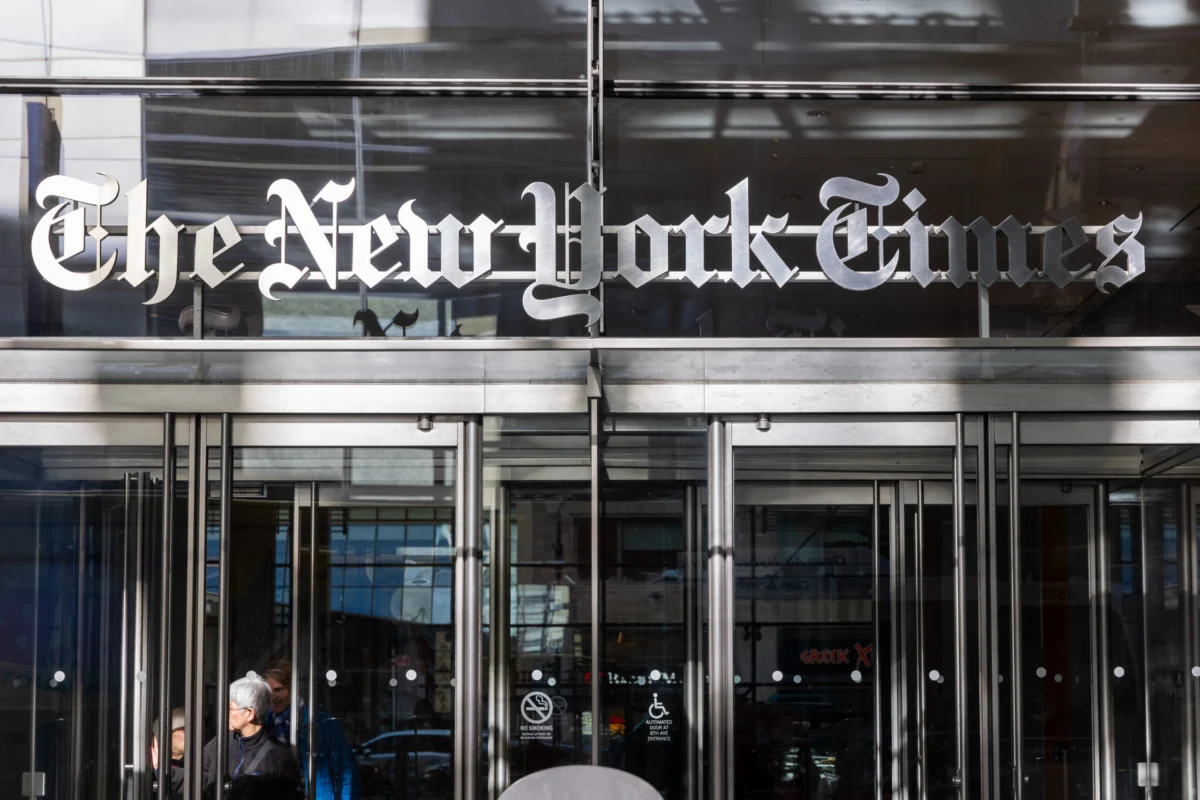
The New York Times Company is facing a significant legal challenge, as Florida’s Attorney General has initiated a lawsuit on behalf of shareholders, accusing the media giant’s board of directors of failing to exercise proper oversight of editorial standards, particularly concerning its coverage of the conflict in Gaza, leading to claims of anti-Israel bias. The petition, filed in New York state court, seeks access to internal corporate documents, alleging that the publication’s credibility has been undermined by a perceived lack of journalistic integrity.
Legal Action Unfolds
The lawsuit, lodged on Wednesday, demands what is known as a “books and records” inspection, a legal maneuver allowing shareholders to investigate potential corporate mismanagement. Florida Attorney General James Uthmeier, representing shareholders, stated that the petition aims to uncover an alleged absence of journalistic standards that have been "weaponized within the company to serve the personal agendas of unchecked editors." At a press conference announcing the legal action, Uthmeier emphasized the paramount importance of credibility for a news organization, noting that The New York Times itself acknowledges its brand and reputation as its most vital assets to investors.
The Times’ Defense Against Claims of Anti-Israel Bias
In response to the lawsuit, a spokesperson for The New York Times firmly rejected the allegations, stating that the petition "has no merit and was brought for an improper purpose." The spokesperson further elaborated, characterizing the legal action as "a transparent attempt to exert agenda-driven pressure against an independent media organization, level false allegations of bias and chill journalism protected by the First Amendment." This defense highlights the delicate balance between corporate governance and the constitutional protections afforded to the press in the United States.
Allegations of Systemic Failure and Whistleblower Testimony
The core of the shareholders’ complaint centers on the assertion that The New York Times board of directors lacks an effective mechanism for addressing complaints regarding violations of the company’s established standards for accuracy, sourcing, corrections, and bias. The legal filing leans heavily on the testimony of an unnamed employee who worked at the publication for approximately a decade. This individual reportedly raised concerns about compliance with editorial standards beginning in 2019, consistently alleging antisemitism and bias against Israel.
According to the lawsuit, the whistleblower lodged complaints with human resources and other departments on at least 15 occasions. In a particularly damning claim, the lawsuit alleges that the newsroom employee was told by an HR representative, "If you don’t like our values here, maybe you should go find a place whose values align with yours." The filing asserts that the employee exhausted all available internal channels to report these alleged standards violations, underscoring the perceived systemic nature of the issue.
The Weight of Editorial Standards and Public Scrutiny
Shareholders supporting the legal action have pointed to specific instances of what they consider problematic reporting, citing articles about the Israel-Hamas war that were later corrected. One example highlighted was a headline that initially stated Gaza deaths surpassed "Any Arab Loss in Wars in Past 40 Years," a claim that was subsequently revised. Such corrections, while a standard part of journalistic practice, are being presented by the plaintiffs as evidence of underlying issues with editorial oversight and a pattern of anti-Israel bias.
This legal maneuver follows a previous attempt by Attorney General Uthmeier in August to obtain board-level records from The New York Times concerning procedures related to editorial standards compliance, corrections practice, and defamation exposure. The Times, at that time, declined to produce any of the requested documents, leading directly to the current lawsuit demanding their release.
Shareholder Oversight and Corporate Governance
A "books and records" demand is a significant tool in corporate governance, allowing shareholders to inspect a company’s internal documents to investigate potential wrongdoing or mismanagement by the board or management. For a publicly traded entity like The New York Times Company, the board of directors has a fiduciary duty to its shareholders, which includes ensuring the company operates in a manner that protects its assets and reputation. The lawsuit argues that a failure to maintain robust journalistic standards, particularly when it leads to allegations of bias, constitutes a breach of this duty, as it directly impacts the company’s most valuable assets: its brand and credibility.
Florida’s Attorney General’s involvement underscores the state’s interest, potentially linked to state pension funds that hold shares in The New York Times Company. The legal theory posits that if the board knowingly allowed editorial standards to lapse or be compromised, leading to a loss of credibility, this could negatively impact shareholder value. The lawsuit seeks to demonstrate that the board has been derelict in its oversight responsibilities, a claim vehemently denied by the newspaper.
Broader Context: Media and the Middle East Conflict
The Israel-Hamas war has proven to be one of the most challenging and sensitive conflicts for news organizations to cover, leading to intense scrutiny from all sides. Media outlets globally have faced accusations of bias, with critics often alleging either an anti-Israel or anti-Palestinian slant. The New York Times, as one of the world’s most influential newspapers, is frequently at the center of such debates. The current lawsuit highlights the increasing pressure on news organizations to navigate complex geopolitical narratives while upholding their commitment to impartiality and accuracy, particularly in a highly polarized information environment.
The allegations of anti-Israel bias come at a time when public trust in media is a persistent concern, and accusations of "fake news" or "agenda-driven reporting" are common. For a venerable institution like The New York Times, maintaining public trust is paramount, and any legal challenge that questions its editorial integrity carries significant reputational risks.
A History of Scrutiny: The New York Times’ Reputation
The New York Times has long held a unique position as America’s "newspaper of record," known for its comprehensive reporting and Pulitzer-winning journalism. However, its long history is not without periods of intense scrutiny regarding its journalistic practices. Past controversies, such as the Jayson Blair plagiarism scandal in 2003 or the Judith Miller reporting on Iraq’s weapons of mass destruction in 2004, have underscored the immense pressure on the institution to uphold its internal standards. Each episode serves as a reminder of the fragility of journalistic credibility and the constant need for vigilant editorial oversight. The current lawsuit, though different in nature, taps into this historical narrative of defending the integrity of the newsroom against external and internal pressures.
Recent Legal Setbacks and Financial Implications
Adding to the pressure on The New York Times, the lawsuit also draws attention to a recent legal setback. Last month, the newspaper lost a defamation trial in Alabama, where a jury found the company defamed a college basketball player by falsely stating he was at the scene of a fatal shooting. The initial award of $9.25 million was later reduced to $4.75 million. This incident, while unrelated to the current claims of anti-Israel bias, bolsters the shareholders’ argument that the company has experienced tangible financial and reputational consequences stemming from alleged lapses in its editorial standards and practices. It provides a concrete example of how journalistic errors can translate into significant liabilities, reinforcing the argument for stricter board oversight.
The Stakes for Journalistic Independence
This legal battle represents a critical juncture for both The New York Times and the broader media landscape. The Times’ defense hinges on the principle of journalistic independence, arguing that the lawsuit is an attempt to "chill journalism protected by the First Amendment." This protection is vital for a free press, allowing news organizations to report without undue influence or fear of retribution. However, the plaintiffs argue that this independence does not absolve a corporate board of its fiduciary duties to shareholders, especially when alleged editorial failings could harm the company’s financial standing and public trust.
The outcome of this "books and records" demand could set a precedent for how far shareholders can delve into the editorial decision-making processes of news organizations. It raises complex questions about the limits of corporate governance over the creative and journalistic functions of a media company, and where the line is drawn between legitimate oversight and attempts to influence editorial content.
Potential Ramifications and Next Steps
Should the court grant the shareholders’ demand for internal documents, it could open The New York Times to extensive discovery, potentially revealing internal communications and decision-making processes related to its Gaza coverage and editorial standards. Such a development could significantly impact the company’s public image and potentially lead to a full-blown shareholder derivative lawsuit, where shareholders sue on behalf of the corporation against its own directors for alleged breaches of duty.
Conversely, if the court sides with The New York Times, it would be seen as a reaffirmation of the protections afforded to journalistic independence under the First Amendment, pushing back against what the company views as politically motivated attempts to interfere with its reporting. The legal proceedings are expected to be closely watched by media organizations, legal experts, and advocates for press freedom, as the case unfolds in New York state court. This confrontation highlights the ongoing tension between financial accountability and the essential role of an independent press in a democratic society.