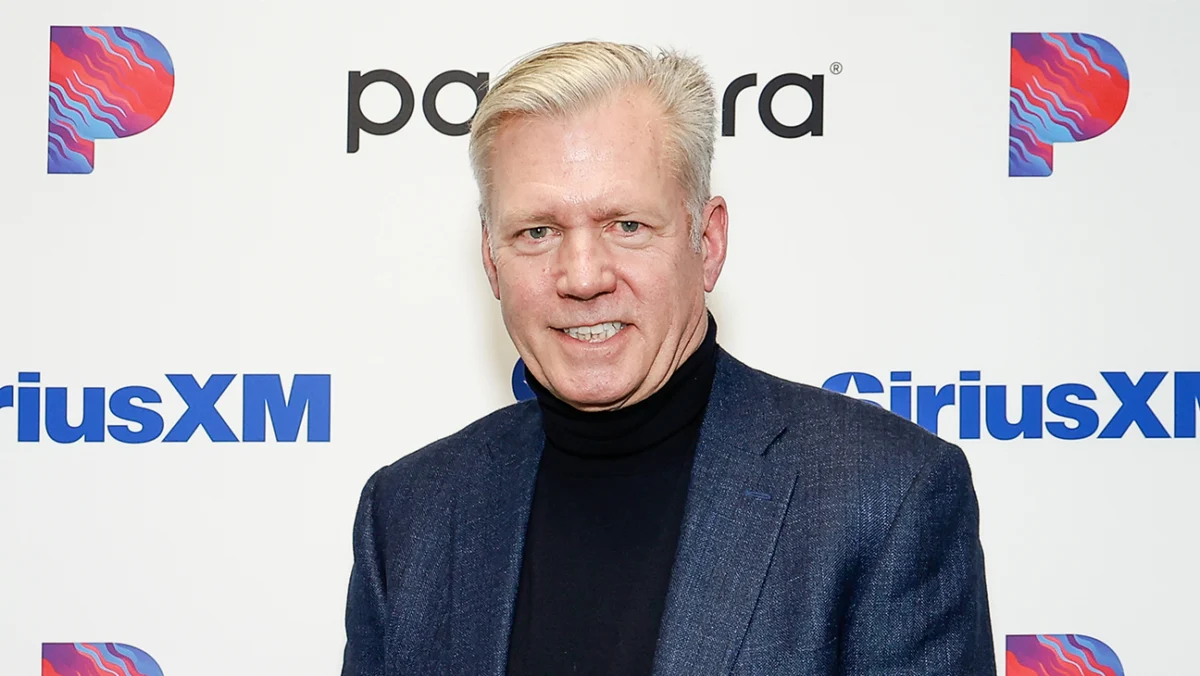
Former To Catch a Predator host Chris Hansen has delivered a scathing review of A24’s new unauthorized dramatization of his life, Primetime, labeling the Robert Pattinson-led film “overly dramatic,” “detached from reality,” and a “fever dream.” Hansen, whose highly anticipated reaction followed a Thursday night screening in New York City, assigned Pattinson’s portrayal of him a disappointing “D” grade, expressing profound dissatisfaction with the movie’s accuracy and thematic direction.
Hansen’s unfiltered critique was broadcast during a segment of his video podcast, Have a Seat with Chris Hansen, where he detailed his experience after exiting a Times Square AMC theater. The film, which debuted in U.S. cinemas on Friday, immerses viewers in the year 2006, chronicling a fictionalized Hansen as the To Catch a Predator segment on NBC’s Dateline evolves into a standalone primetime series. The original program garnered significant attention and controversy for its unique approach to journalism, involving collaborations with law enforcement and the watchdog organization Perverted Justice to apprehend adult men who believed they were meeting minors for illicit sexual encounters online. These sting operations frequently culminated in arrests, yet they also sparked heated debates regarding journalistic ethics and potential violations of entrapment laws.
The Genesis of To Catch a Predator
The To Catch a Predator phenomenon began as a segment on NBC’s long-running newsmagazine Dateline. Spearheaded by Chris Hansen, the investigative series quickly captivated a national audience, drawing millions of viewers with its dramatic confrontations and the seemingly straightforward pursuit of justice against alleged child predators. Hansen’s signature phrase, "Why don’t you have a seat right over there?", became a pop culture touchstone, often parodied but also deeply ingrained in the public consciousness regarding online safety.
The show’s format involved setting up decoy profiles on online chat rooms, posing as underage individuals. Once a suspect agreed to meet, they were lured to a "sting house" where Hansen and a camera crew would confront them, often with law enforcement waiting nearby. This innovative, yet ethically fraught, method blurred the lines between journalism and active law enforcement, prompting widespread discussion about the responsibilities of news organizations and the boundaries of investigative reporting. While proponents lauded the series for exposing a dark underbelly of online activity and potentially preventing harm to children, critics raised serious concerns about the show’s methodology, particularly the potential for entrapment and the sensationalized nature of the arrests.
A Filmmaker’s Vision Meets Lived Experience
Lance Oppenheim, the director of Primetime, reportedly conceived the film after receiving a personalized Cameo video from Hansen himself. However, Hansen indicated on his podcast that Oppenheim had conveyed to a mutual friend that the film was intended as "something to the effect of, ‘a love letter to Chris Hansen, and it gets a little weird in the storytelling.’" Hansen’s post-screening comments suggest a significant divergence from this initial sentiment, highlighting a fundamental clash between artistic interpretation and the subject’s lived reality.
Prior to viewing Primetime, Hansen had already voiced his apprehension to The Hollywood Reporter, revealing that A24, the renowned independent film studio behind the project, had not contacted him or the original production team for input or to explain the film’s premise. He speculated that the filmmakers aimed to create something "much darker and way more dramatic" than his experiences, an assessment he now firmly believes to be accurate.
Discrepancies and Distortions: Hansen’s Core Grievances
Hansen enumerated several key inaccuracies in the fictionalized account of his life presented in Primetime. He specifically cited scenes involving prominent media figures like Jeff Zucker and Stone Phillips, insisting these events "never happened." More broadly, he asserted that "absolutely nothing in the film was close to reality," challenging the foundational narrative constructed by Oppenheim and the screenwriters.
A significant point of contention for Hansen revolved around his character’s portrayal as a ratings-obsessed journalist, a depiction he vehemently refutes. He emphasized that his primary motivation was always the protection of children, not the pursuit of viewership numbers. His "biggest gripe," as he described it, was the film’s depiction of him as an aloof parent, which he claims is a stark misrepresentation of his relationship with his children. This personal attack on his character seemed to resonate most deeply, underscoring the emotional toll of having his life fictionalized without his consent or input.
Regarding Robert Pattinson’s performance, Hansen offered little praise. "He’s got work to do," Hansen remarked, adding with a touch of irony, "I’m kind of the only guy that counts for this, right?" This comment encapsulates Hansen’s belief that as the real-life figure, his perspective on the accuracy of the portrayal holds unique weight, especially when the fictionalized version deviates so sharply from his own understanding of events.
The Ethics of Unauthorized Biopics and Media Portrayals
The controversy surrounding Primetime reignites long-standing debates within the entertainment industry about the ethics of creating unauthorized biographical films. Filmmakers often invoke artistic license and creative freedom, asserting their right to interpret and dramatize real events and individuals. However, subjects of such films frequently argue for accuracy and respect for their personal experiences, especially when the portrayal casts them in a negative light or distorts significant life events.
A24, known for its critically acclaimed yet often unconventional and gritty films, has a history of pushing boundaries. Their involvement with Primetime suggests a deliberate choice to explore the darker, more complex facets of the To Catch a Predator narrative, perhaps leaning into the psychological toll or the ethical ambiguities that surrounded Hansen’s work. This approach, while consistent with A24’s brand, directly clashes with Hansen’s desire for a factual and respectful portrayal of what he views as a positive public service.
Hansen articulated this clash explicitly, stating, "I think it’s an insult to the thousands of men and women who work hard every day to protect children from predators. They’ve turned something that is very positive, very challenging and not without risk into what is essentially a horror film." This powerful statement underscores his belief that the film trivializes the serious nature of child protection efforts and distorts the motivations of those involved.
The Director’s Motives and the Clash of Narratives
Hansen did not shy away from questioning Lance Oppenheim’s motivations directly. "You have to question the motives of not coming forward and talking to me or anybody I’ve worked closely with over the years," Hansen posited. He continued, asserting that the filmmakers "didn’t want to hear that Chris Hansen is a good guy. They didn’t want to hear that this work is important. This director had a dark image of what he wanted to do. He wanted to create a horror-like film with interesting photography, and didn’t want to hear anything else."
This accusation suggests a pre-conceived narrative on the part of the director, one that prioritized a specific aesthetic and thematic agenda over factual fidelity or the perspectives of the real-life individuals involved. The inherent tension between a director’s artistic vision and the subject’s perceived truth is a common friction point in biographical storytelling, but it becomes particularly acute when the subject feels misrepresented and disrespected.
Broader Implications and Hansen’s Ongoing Work
The release of Primetime and Hansen’s vociferous reaction will undoubtedly fuel public discourse on the legacy of To Catch a Predator and the role of sensationalized media. The original series, despite its controversies, indelibly shaped public awareness regarding online dangers and the prevalence of child exploitation. Hansen’’s continued work in this field, now through his own Takedown with Chris Hansen series and his TruBlu streaming network, demonstrates his unwavering commitment to the cause.
Coincidentally, on the same day Primetime opened, Hansen’s TruBlu network released the trailer for I’m Chris Hansen, a documentary centered around the host. This timing sets up a fascinating juxtaposition: two vastly different narratives about the same public figure, one an unauthorized, dramatized account by a major indie studio, and the other a self-produced documentary offering Hansen’s own perspective. This dual release provides audiences with an opportunity to compare and contrast these interpretations, and to consider the complexities of truth, memory, and media representation.
As Primetime enters the public sphere, its reception will likely be colored by Hansen’s vocal disapproval. The film will not only be judged on its artistic merit but also on how successfully it navigates the ethical tightrope of fictionalizing a living public figure whose work remains deeply relevant and often controversial. The ensuing debate will highlight the enduring power of media to shape public perception, and the persistent challenge of reconciling artistic freedom with the demands of biographical accuracy and personal respect.