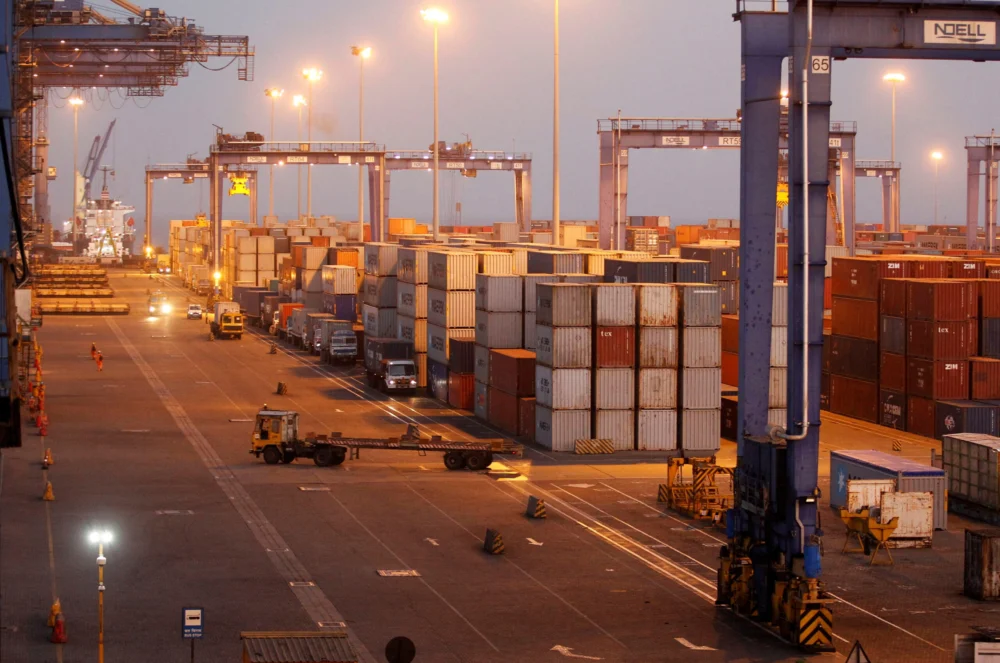
Mumbai, India – A significant increase in import tariffs by Mexico, implemented on January 1, is delivering a punishing blow to Indian businesses already reeling from recent U.S. trade actions. The new Mexican duties, affecting over 1,400 products from non-free trade agreement nations, including India, are being described by industry leaders as a "double whammy" that threatens to unravel years of export market development.
Pankaj Chadha, a 65-year-old steel manufacturer operating a plant in Mumbai for four decades, exemplifies the widespread concern. His company, which historically relied heavily on exports, saw its sales to the United States and Mexico, valued at approximately $5 million and $8 million respectively, effectively halved following the imposition of these new tariffs. "I have lost 50 percent of my business in Mexico and the US since the tariffs came into effect," Chadha stated. "It is a severe blow to my business as I was focusing on Mexico after the US tariffs, but the future looks bleak there also now."
The U.S. had previously imposed a 25 percent tariff on Indian goods in August, later adding another 25 percent penalty attributed to India’s continued purchases of Russian oil. This move by the U.S. administration was cited as a punitive measure for indirectly funding Russia’s ongoing conflict in Ukraine. The cascading effect of these U.S. tariffs had already begun to impact various Indian export sectors, from diamond cutting and shrimp farming to carpet manufacturing.
Now, the Mexican government’s decision to implement tariffs ranging from 5 percent to 50 percent on a broad spectrum of goods from countries like India, Brazil, China, South Korea, Russia, Indonesia, and Thailand presents a fresh and formidable challenge. Mexico maintains a network of free trade agreements (FTAs) with over 50 nations, including the United States, Canada, Japan, and numerous countries across the European Union, Asia-Pacific, and Latin America.
Mexico’s Stated Rationale and Industry Counterarguments
Mexico’s official justification for the tariff hikes centers on the objective of stimulating domestic production, addressing persistent trade imbalances, and safeguarding its national workforce. The North American nation asserts that these measures are designed to bolster its own industries and ensure fair competition within its borders.
However, many in the Indian business community view Mexico’s actions through a different lens. They posit that the tariffs are a strategic maneuver to preemptively shield itself from potential U.S. repercussions related to trans-shipment and supply-chain diversion tactics. Such practices, often employed by countries facing high U.S. tariffs, could draw scrutiny from Washington, particularly as the United States engages in the upcoming review of the United States-Mexico-Canada Agreement (USMCA). This potential alignment with U.S. sensitivities suggests a geopolitical calculation behind Mexico’s trade policy.
The abruptness and scale of these tariff increases have generated significant apprehension within India’s export-oriented manufacturing sector, which has invested heavily in building robust supply chains over several years. The uncertainty surrounding future market access is a primary concern for businesses that have become accustomed to established trade routes and partnerships.
Disparate Impact: U.S. vs. Mexican Tariffs
Pankaj Chadha further elaborated on the differential impact of the two sets of tariffs. He described the Mexican measures as more disheartening than those imposed by the U.S., especially considering recent indications that U.S. President Donald Trump might lower some tariffs to 18 percent. While the timeline for these potential U.S. reductions remains unclear, Chadha highlighted a critical distinction: "The U.S. tariffs were also imposed on our competitors," he noted. "But Mexican tariffs are uneven as they have been implemented on only non-FTA nations, which has put us at a complete disadvantage with our competitors, who have an FTA with Mexico."
This discriminatory application of tariffs creates a stark competitive imbalance, favoring nations with existing trade agreements with Mexico and leaving countries like India significantly exposed. The preferential treatment for FTA partners means that competitors can continue to trade with Mexico on more favorable terms, further marginalizing Indian exporters.
Indian Government’s Response and Industry Mitigation Efforts
In an effort to cushion the blow to its export-focused industries, the Indian government announced measures within its annual budget, presented on February 1. These measures allow manufacturing units operating in Special Economic Zones (SEZs) to sell a limited portion of their output to domestic buyers at concessional duty rates. This initiative aims to provide an alternative sales channel for companies that have experienced a significant drop in export demand due to punitive tariffs.
The move is specifically designed to address the reduced demand for products such as textiles and leather goods, which are subject to high import tariffs. By facilitating domestic sales, the government hopes to partially offset the losses incurred from the decline in international trade.
Trade Landscape: India and Mexico in Figures
Data for 2024, the most recent full-year figures available, indicate that India exported goods valued at $5.6 billion to Mexico. The primary categories of these exports included vehicles and their components, followed by electronic equipment. In the same period, India imported $4.07 billion worth of goods from Mexico, with oil and mineral fuels constituting the largest share of these imports.
Sector-Specific Tariff Impacts
The steel sector in India is facing the brunt of Mexico’s new tariff regime, with export duties escalating to a steep 50 percent. The automobile and auto components sector has also been hit hard, with tariffs now standing at 35 percent. This segment is particularly sensitive, as many auto components are destined for vehicles ultimately exported to the U.S. market.
Even labor-intensive sectors such as garments and ceramics will face tariffs ranging from 25 percent to 35 percent. The plastic, aluminum, and chemical industries are also affected, with tariffs spanning from 5 percent to 50 percent, depending on the specific product category.
International Reactions and India’s Diplomatic Stance
Mexico’s decision has drawn sharp criticism from various affected nations and industry groups. China, a major trading partner of Mexico and a country also facing significant U.S. tariffs, has formally lodged a protest, raising concerns about potential increases in consumer prices and disruptions to global supply chains.
India, while expressing its displeasure, has adopted a measured diplomatic approach. The Indian government has issued a warning of "appropriate action for the unilateral" tariff hike by Mexico, signaling its intent to explore all available avenues to address the situation.
Strategic Outlook: Diversification and Global Trade Rules
Ajay Srivastava, founder of the Global Trade Research Initiative (GTRI), suggests that India is likely to pivot towards greater export diversification rather than engaging in protracted bilateral disputes over these tariffs. He views the Mexican tariff hike as a stark indicator of the eroding stability of global trade rules.
The automobile sector, which has established a strong presence in the Mexican market, has been significantly impacted. Indian automobile companies reported exports of passenger vehicles worth approximately $938.35 million and motorcycles valued at $390.25 million in the financial year ending March 31, 2025. Vinnie Mehta, director-general of the Automotive Component Manufacturers Association of India (ACMA), highlighted that the 35 percent tariff on auto components, crucial for vehicles exported to the U.S., further exacerbates the challenge. Last year, India’s auto component exports to Mexico totaled $835 million.
Mehta acknowledged the dual pressure: "Undoubtedly, the exports are clearly suffering due to the tariffs by the US, and the addition of Mexico has created a new challenge. The visible impact would be clear after the end of the second fiscal cycle in March," he commented.
Shifting Gears: Domestic Demand and Future Trade Agreements
Despite the export headwinds, the Indian automobile industry is also looking inward, pinning hopes on robust domestic demand. This strategy is supported by a recent reduction in India’s Goods and Services Tax (GST) from 28 percent to 18 percent, a government initiative aimed at mitigating the impact of the U.S. tariffs.
Industry bodies have actively petitioned the government to pursue a preferential trade agreement (PTA) with Mexico. Such an agreement could provide much-needed tariff relief and restore a more competitive trading environment for Indian businesses.
Ajay Sahai, director-general of the Federation of Indian Export Organisations (FIEO), views the tariff hikes as an impetus for the industry to bolster domestic demand and explore new markets. "The tariffs have proved that excessive dependence on single or two countries could be harmful," Sahai stated. "And diversification is the only solution for survival and market expansion." This sentiment underscores a broader strategic imperative for Indian businesses to reduce their reliance on specific export destinations and build a more resilient global trade footprint.