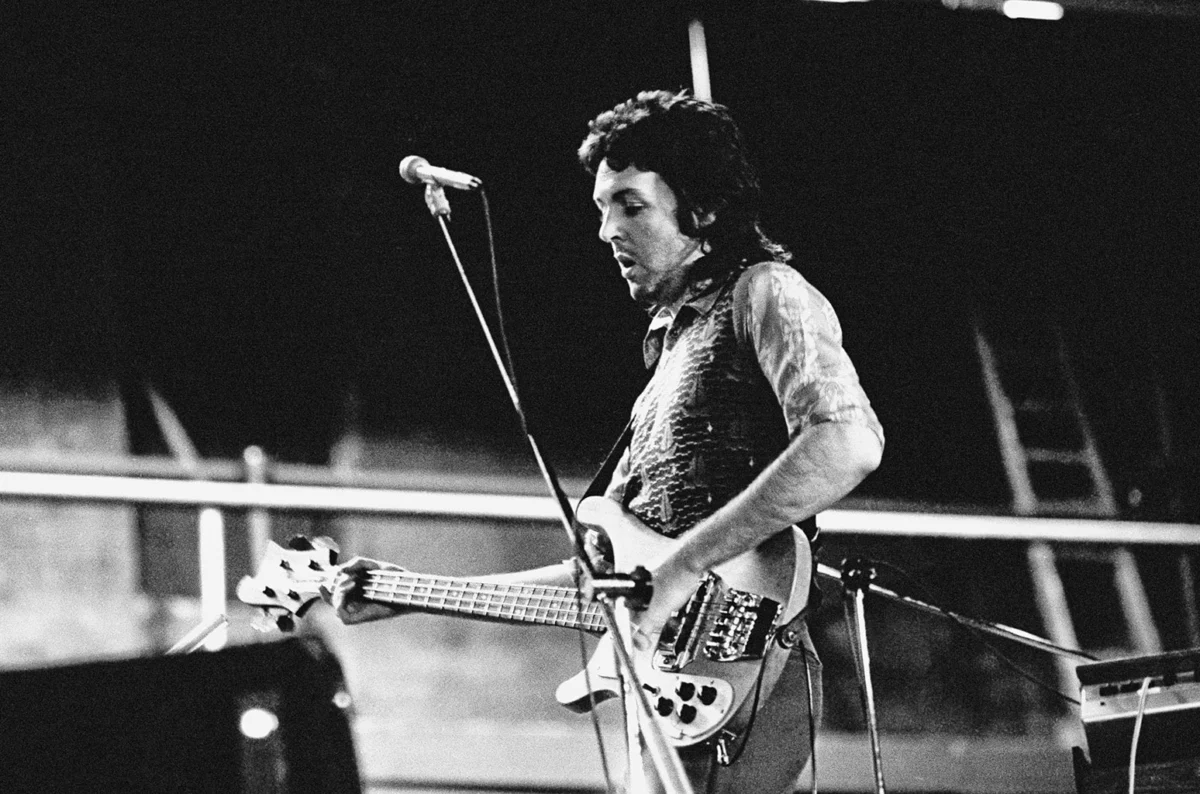
Academy Award-winning filmmaker Morgan Neville’s forthcoming documentary, Man on the Run, delves into the profound question of artistic identity and reinvention following unprecedented success, focusing on the pivotal post-Beatles era of Paul McCartney. The film, set to explore the period between roughly 1968 and 1980, aims to illuminate McCartney’s challenging transition from global phenomenon with The Beatles to a solo artist and, subsequently, the charismatic leader of his new band, Wings. Neville promises a treasure trove of never-before-seen footage, offering intimate glimpses into McCartney, his family, and the nascent stages of Wings.
Navigating the Aftermath of Global Stardom
The documentary captures McCartney at his isolated Scottish farm, grappling with the immense freedom and uncertainty that followed The Beatles’ dissolution. This seismic shift, initiated by John Lennon, left McCartney and the world at large navigating uncharted territory. Man on the Run meticulously chronicles McCartney’s arduous journey back to the pinnacle of live performance, from intimate settings to headlining arenas across America. The film does not shy away from the critical reception of his solo work, the tragic murder of John Lennon, a brief but harrowing stint in a Japanese prison, and the complex legal battle of suing his former bandmates.
A Tapestry of Voices and Archival Memories
To paint a comprehensive portrait of this transformative decade, Man on the Run features interviews with a constellation of significant figures. Stella and Mary McCartney, Mick Jagger, Denny Laine, Laurence Juber, Chrissie Hynde, and Joe English all contribute their perspectives. Crucially, Linda McCartney, who passed away in 1998, plays a vital role through a rich collection of archival footage, voice-overs, and photographs, offering her unique insights into their shared experiences.
The documentary, currently available on Amazon Prime, recently received a screening at the Academy Museum in Los Angeles. The event was followed by an engaging Q+A session with Paul McCartney and Morgan Neville, expertly moderated by filmmaker Judd Apatow. A condensed version of their conversation sheds further light on the film’s themes and McCartney’s reflections on this defining chapter of his career.
The Specter of the Beatles and the Birth of Wings
During the Q&A, Apatow posed a direct question to McCartney: upon hearing the suggestion of a Wings documentary, did he approach the prospect with enthusiasm or apprehension? McCartney responded with a surprising fondness for the period, stating, "No, I like that period. Well, you know, now it’s a fond memory." He elaborated on the profound disorientation that followed The Beatles’ breakup. "What do you do after the Beatles? The Beatles break up. That’s been your only job you’ve ever had, and then you don’t have it anymore. It’s like you got sacked." Wings, he explained, was born out of this necessity to "figure it out." He acknowledged the "madcap" nature of the band’s early days but reiterated his positive sentiment towards that era.
The Allen Klein Controversy and the Legal Gauntlet
McCartney also touched upon a significant internal conflict that plagued The Beatles during their final years: the involvement of businessman Allen Klein. McCartney was the sole member who vehemently opposed Klein, whom he believed was defrauding the band. "There was this business guy, Allen Klein, who was basically stealing from the Beatles, and I was the only one who thought that," McCartney revealed. He described Klein’s deceptive tactics, promising the world but delivering little, and how this created a rift within the band.
"It was me against the other guys, and that was the worst thing," McCartney lamented. Unlike creative disagreements, which could be resolved through compromise, this was a matter of significant financial integrity. The potential loss of their accumulated earnings to Klein was a grave concern, forcing McCartney into a difficult position.
The Unthinkable Decision to Sue
The situation escalated to the point where McCartney was compelled to take legal action. However, Klein was not directly involved in the Beatles’ contractual agreements. McCartney’s lawyers, including Linda McCartney’s father and brother, advised him that the only recourse was to sue The Beatles themselves. This presented an agonizing dilemma. "I said, ‘Well, I can’t.’ This went on for months," McCartney recounted. He feared the public backlash and the personal toll of taking legal action against his closest friends. Ultimately, he felt he had no other choice but to proceed, a decision that marked a profound and painful turning point.
The Terror of Solitude and the Quest for a New Sound
The immense pressure of forging a solo career after unparalleled success was palpable. McCartney admitted, "Yeah, I think just being on my own was very scary because I’d always had the union of the group." The challenge was not merely to continue making music, but to forge a distinct path. "That was the trick, because I thought, ‘Well, I could just write some more kind of Beatles-y songs, and we could imitate it. We’d be like a Beatles cover band.’" This desire to avoid imitation underscored his commitment to artistic evolution.
The Critical Backlash and the Redemption of Ram
The album Ram, released in 1971, has since been hailed as a classic and a precursor to certain indie and home-recording aesthetics. However, its initial reception was far from celebratory. McCartney expressed his disappointment with the critical panning, stating, "Yeah, I think so. I thought we’d got something special, and the critics didn’t." He confessed to internalizing the criticism, leading to years of doubt about the album’s merit. "For years, I thought it wasn’t a very good album." A pivotal moment of reevaluation came when a nephew declared Ram his favorite, prompting McCartney to rediscover its strengths and reclaim his appreciation for the work.
The Complex Relationship with John Lennon
The documentary also touches upon the often-complex and sometimes contentious relationship between McCartney and John Lennon. When asked why the perceived joyfulness of McCartney’s post-Beatles work might have irked Lennon, McCartney offered a nuanced perspective. "It’s just one of those things. I mean, I loved John and love him to this day and always will." He emphasized their lifelong bond, forged since their teenage years, which allowed him to view Lennon’s sometimes erratic behavior with a degree of understanding.
McCartney described Lennon as a "mad guy I knew," a figure he deeply admired for his wit and perceived coolness. However, he also acknowledged Lennon’s capacity for "idiot" behavior and suggested that Lennon’s turbulent life experiences might have contributed to his sometimes volatile nature. Despite their differences, McCartney maintained a profound and enduring affection for his former bandmate.
The Spontaneous Genesis of Wings
The inspiration for forming Wings struck McCartney during a seemingly ordinary evening. While watching Johnny Cash perform with a band that included Carl Perkins and other admired country musicians, McCartney was struck by the simplicity and power of the ensemble. "I just thought, ‘Wow, Johnny’s just put together a band. What a great idea!’" he recalled. He turned to Linda and proposed the idea: "Do you want to? Should we start a band? Do you want to be in it?"
Despite Linda’s lack of formal musical training, McCartney drew parallels to their own early days in The Beatles, where they learned as they went. "Well, neither did we in the Beatles. We didn’t know anything," he reasoned. The shared journey of learning and growing together became a cornerstone of their musical partnership. McCartney also addressed the criticism Linda faced for her involvement in the band, dismissing it as irrelevant and focusing on their shared creative endeavor.
The Unforeseen Magic of the Wings Sound
Reflecting on the vocal harmonies within Wings, particularly the blend of his voice with Linda’s and Denny Laine’s, McCartney expressed a newfound appreciation. "I listen to it now and think, ‘Wow.’" He specifically highlighted Linda’s vocal contributions as adding a "very interesting flavor," noting the technical skill required to sing in key without modern auto-tune technology. The blend, he asserted, was "very good."
McCartney drew another parallel to The Beatles’ trajectory, explaining that Wings, like his earlier band, improved through dedication and practice. "Eventually, we did what the Beatles did: We got better. We stuck at it and got really good in the end." Their persistence culminated in the ability to sell out major venues in America and deliver compelling live performances, a testament to their hard work and artistic growth. Man on the Run thus serves as a comprehensive exploration of a period marked by profound personal and professional challenges, ultimately showcasing McCartney’s resilience, adaptability, and enduring commitment to his musical journey.