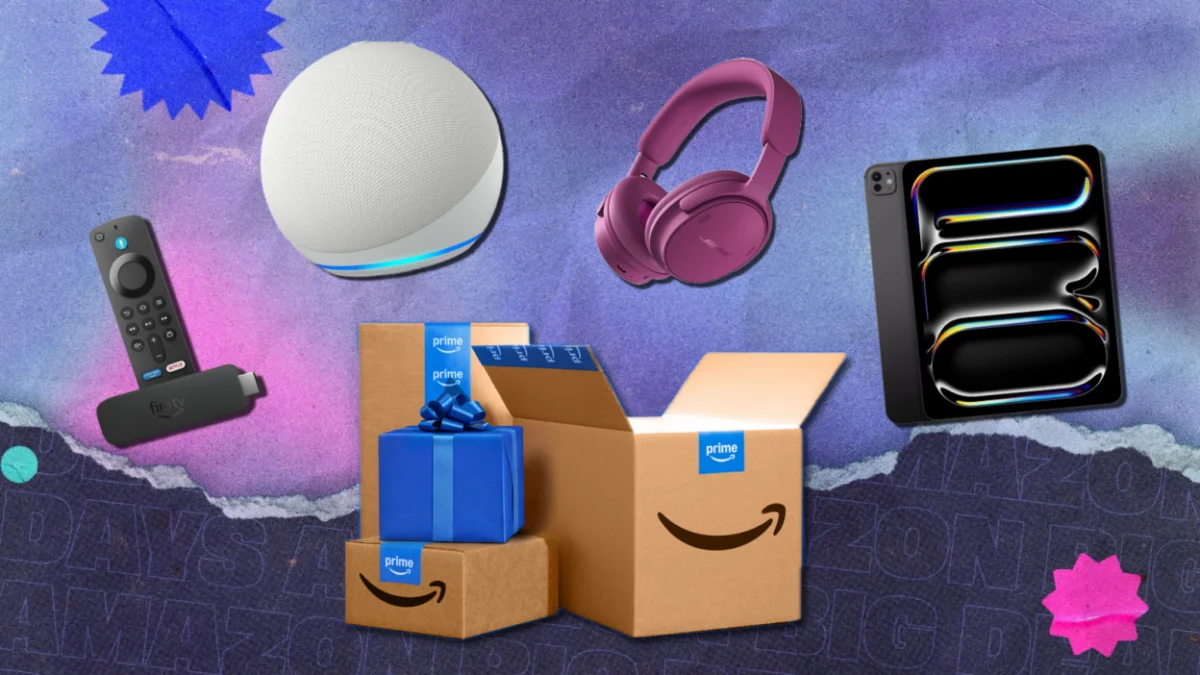
Amazon has officially confirmed that its mid-autumn shopping event, Prime Big Deal Days, will return for its fifth consecutive year, beginning at 3:01 a.m. ET on Tuesday, Oct. 6, 2026. The 48-hour event serves as the retail giant’s secondary major sales period, positioned strategically between the flagship July Prime Day and the traditional Black Friday and Cyber Monday corridor. Market analysts view the announcement as a critical marker for the commencement of the 2026 holiday shopping season, signaling a continued shift toward early-quarter discounting in the e-commerce sector.

The event, often colloquially referred to as "October Prime Day," is scheduled to conclude at 11:59 p.m. PT on Wednesday, Oct. 7, which translates to 3:01 a.m. ET on Thursday, Oct. 8. During this window, Amazon intends to release new discounts as frequently as every five minutes, targeting high-demand categories including consumer electronics, home appliances, and seasonal apparel. The company has indicated that while the event is exclusive to Prime members, the breadth of the discounts is designed to rival those typically seen during the post-Thanksgiving sales period.
The Strategic Timing of Prime Big Deal Days
The decision to anchor a major sales event in early October is a calculated move by Amazon to capture consumer budgets before the traditional November rush. By launching Prime Big Deal Days on Oct. 6, the company effectively extends the holiday shopping season to nearly two full months. This "holiday creep" has become a standard industry practice, allowing retailers to mitigate the logistical strain on fulfillment centers and delivery networks that often occurs in late December.

Industry experts note that this timing also serves as a defensive maneuver against competitors. By setting the pace in early October, Amazon forces other major retailers like Walmart, Target, and Best Buy to accelerate their own promotional calendars. This creates a highly competitive environment where price matching and early-bird specials become the norm rather than the exception. For the 2026 season, the October event is expected to play a pivotal role in determining quarterly earnings for the retail sector at large.
Navigating the 48-Hour Sales Window
The structure of Prime Big Deal Days follows the successful template established by previous iterations of the event. The sale is divided into several tiers of discounting, including "Lightning Deals" which are available for a very limited duration or until stock is depleted. Because of the rapid turnover of these offers, Amazon has encouraged the use of its mobile application to track specific items and receive push notifications when prices drop.

While many core discounts will remain active throughout the full 48-hour period, inventory management remains a primary concern for high-ticket items. Historical data from previous October events suggests that popular electronics, particularly those from the Apple ecosystem and Amazon’s proprietary device lines, often see stock exhaustion within the first twelve hours. Consequently, the 3:01 a.m. ET start time has become a focal point for dedicated shoppers looking to secure the most significant price reductions on limited-inventory goods.
Product Categories and Anticipated Discounts
Internal projections and early promotional materials suggest that the 2026 Prime Big Deal Days will emphasize high-performance technology and smart home integration. Amazon-branded devices, including the Echo smart speaker series, Fire TV sticks, and Kindle e-readers, are expected to see some of the deepest price cuts of the year. Historically, these proprietary products serve as "loss leaders," intended to bring more users into the Amazon ecosystem rather than generating immediate high margins.

Beyond first-party hardware, the event is expected to feature substantial markdowns on premium noise-canceling headphones from brands like Bose and Sony, as well as the latest iPad Pro and MacBook models. The consumer electronics sector remains the most watched category, but home goods—specifically robot vacuums, air fryers, and high-end coffee makers—are also predicted to be major drivers of volume. Additionally, early-season toy sales and winter apparel are being positioned as key components of the 2026 promotional mix.
The Competitive Response: Walmart, Target, and Best Buy
Amazon’s announcement has historically triggered a ripple effect across the retail landscape. In response to the Oct. 6 start date, major competitors are expected to launch their own "deal days" or "circle weeks." Walmart has traditionally countered with its "Walmart Deals" events, which often do not require a paid membership, unlike Amazon Prime. Target is similarly expected to leverage its Target Circle loyalty program to offer competing discounts on home essentials and exclusive toy brands.

This multi-retailer competition benefits the consumer through price transparency. Comparison shopping has become more sophisticated with the use of third-party price-tracking tools like CamelCamelCamel and Honey, which allow buyers to verify if an "October Prime Day" price is truly the lowest historical offering or merely a minor fluctuation. Analysts suggest that the 2026 season will see an increased emphasis on "value-added" bundles, where retailers include gift cards or extended warranties to differentiate their offers from Amazon’s raw price cuts.
Economic Implications of Early Holiday Discounting
The 2026 economic climate provides a complex backdrop for this year’s Prime Big Deal Days. With consumer spending habits showing increased sensitivity to inflation and interest rates, the October event serves as an essential barometer for the health of the retail economy. Economists will be closely monitoring the volume of discretionary spending during the first week of October to forecast overall fourth-quarter performance.

The shift toward early discounting also reflects a change in consumer psychology. Shoppers are increasingly wary of the supply chain disruptions and shipping delays that have occasionally plagued the late-December window in recent years. By securing gifts and high-value items in October, consumers are essentially buying "logistical peace of mind." For Amazon, the event provides a steady stream of data that helps the company optimize its inventory levels for the final weeks of the year.
Membership Dynamics and the Prime Ecosystem
A central goal of the Prime Big Deal Days event is the acquisition and retention of Amazon Prime subscribers. The exclusivity of the sale reinforces the value proposition of the annual membership fee. To capitalize on the influx of traffic, Amazon often pairs the event with promotional trials, offering 30-day free memberships to new or returning users. This strategy is designed to convert seasonal shoppers into long-term subscribers who utilize other Prime services, such as Prime Video, Audible, and Kindle Unlimited.

In the 2026 iteration, Amazon is expected to bundle digital service trials with physical product purchases. For instance, early deals have already surfaced offering Audible Standard subscriptions for less than one dollar per month, alongside credits for digital content. These "ecosystem plays" are vital for Amazon as it seeks to maintain its dominant market share in the face of rising competition from specialized e-commerce platforms and the resurgence of brick-and-mortar retail experiences.
Fulfillment and Logistics: Preparing for the Surge
Behind the digital storefront, Amazon’s logistics network is preparing for one of its busiest 48-hour periods of the year. The company has invested heavily in automation and robotics within its fulfillment centers to handle the anticipated spike in order volume. In 2026, the integration of AI-driven sorting systems is expected to further reduce the time between a customer clicking "buy" and the package leaving the warehouse.

The "Last Mile" delivery network also faces a significant test during the October event. Amazon’s fleet of delivery vans and independent contractors will be operating at peak capacity to fulfill the "One-Day" and "Same-Day" delivery promises that are a hallmark of the Prime service. The success of Prime Big Deal Days depends as much on these logistical operations as it does on the depth of the discounts themselves. Any significant delays during this period could dampen consumer confidence heading into the Black Friday window.
Consumer Strategy and Price Verification
As the start of the event approaches, consumer advocacy groups are advising shoppers to exercise diligence. While Prime Big Deal Days features legitimate "best-of-year" prices on many items, not every discount represents a unique opportunity. Shoppers are encouraged to build "Wish Lists" in advance to monitor price fluctuations and to remain wary of "anchor pricing," where a retailer lists a high "original price" that the item rarely sells for in reality.

The use of independent price-history tools is considered essential for high-value electronics and appliances. By checking the historical price floor of a product, consumers can determine if the October discount is a genuine bargain or if a better price is likely to emerge during the traditional Black Friday sales. Despite these caveats, the sheer scale of Prime Big Deal Days makes it an unavoidable event for those looking to manage their 2026 holiday budgets effectively.
With the countdown to 3:01 a.m. ET on Oct. 6 underway, the retail industry is braced for a high-volume start to the fourth quarter. The success of Amazon’s Prime Big Deal Days will not only set the tone for the company’s year-end financial results but will also serve as a definitive guide to the trends and consumer behaviors that will define the 2026 holiday season.