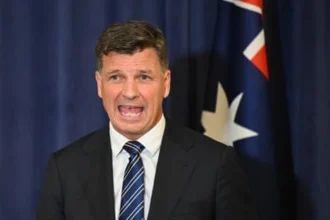
Polish Prime Minister Donald Tusk issued a resolute defense of his government’s efforts to implement an overhaul of Poland’s constitutional court during a televised address on Saturday, signaling a refusal to back down from a high-stakes confrontation with the country’s conservative opposition. Speaking to the nation following a night of civil unrest and police intervention at the tribunal’s headquarters, Tusk characterized the judicial restructuring as a non-negotiable necessity for the restoration of democratic norms. The prime minister’s stance comes as Poland remains gripped by a constitutional crisis that has pitted the executive branch against the highest levels of the judiciary and the presidency.
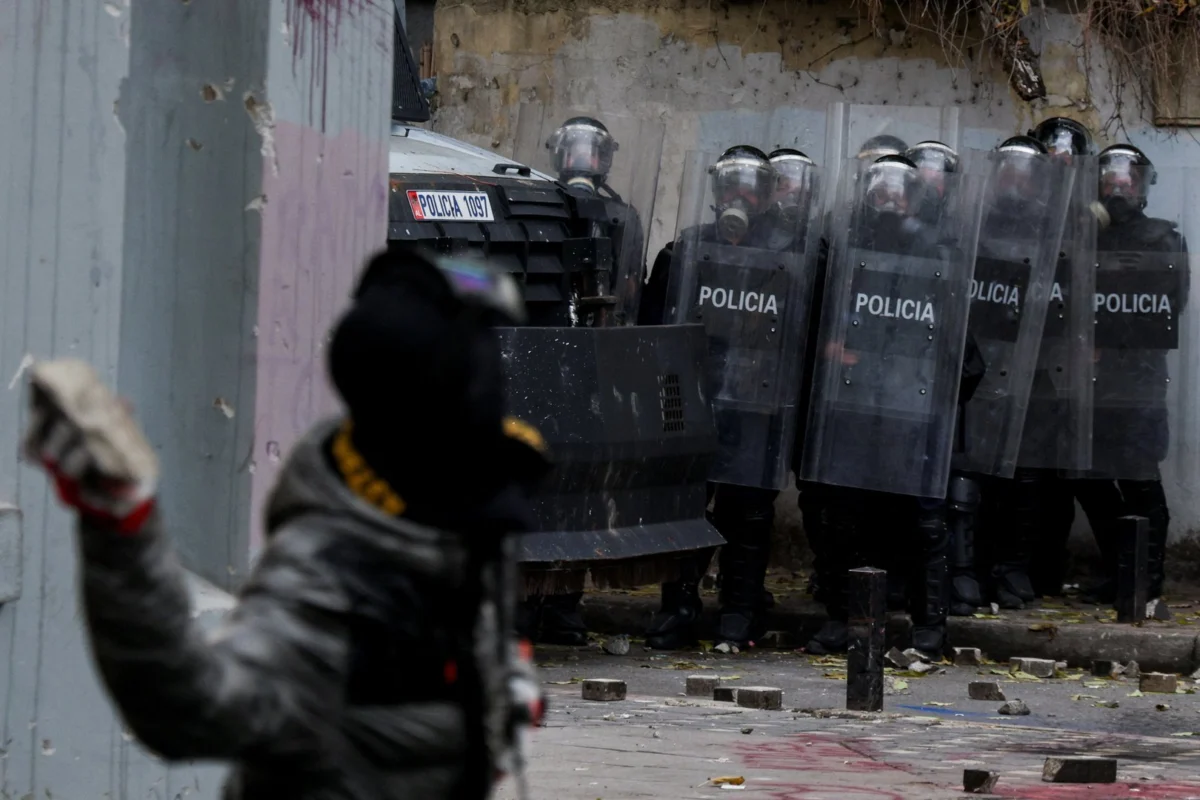
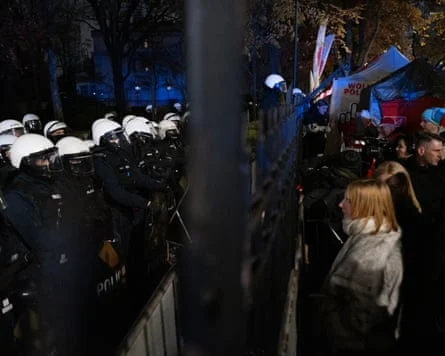
The current standoff reached a breaking point on Friday when a group of government-aligned judges moved to seize procedural control of the Constitutional Tribunal. This maneuver included the suspension of the court’s chief judge and deputy, both of whom were appointed during the previous administration led by the Law and Justice (PiS) party. The move sparked immediate backlash, leading to overnight protests where riot police were deployed to form a cordon around the court building in Warsaw to prevent demonstrators and opposition politicians from interfering with the proceedings.
Tusk’s prime-time address was marked by a defiant tone, as he asserted that "in certain matters, there can be no compromise." He argued that the tribunal had been fundamentally compromised during the eight-year rule of the PiS party, transforming it from an independent arbiter of law into a political tool. According to the prime minister, the current overhaul of Poland’s constitutional court is not a political vendetta but a surgical requirement to fix a "crippled" institution that has been at the center of international legal disputes for more than a decade.
The Escalation of the Judicial Crisis and the Overhaul of Poland’s Constitutional Court
The friction between the Tusk administration and the PiS-aligned judicial structure is rooted in a long history of institutional capture. Since returning to power in late 2023 at the head of a broad pro-European coalition, Tusk has prioritized the dismantling of judicial reforms enacted by his predecessors. These reforms had previously led to the European Union freezing billions of dollars in funding over concerns that Poland was backsliding on the rule of law. While Tusk has successfully thawed relations with Brussels, the domestic implementation of his legal agenda has faced a wall of institutional resistance.
Central to this resistance is President Karol Nawrocki, an ally of the former PiS government who wields significant veto powers. Earlier this year, the presidency and the parliament entered a stalemate when Nawrocki refused to swear in five judges who had been approved by the new legislative majority. This executive-legislative gridlock has left the Constitutional Tribunal in a state of functional paralysis, with two competing factions of judges claiming legitimacy.
The events of Friday night served as a physical manifestation of this legal war. As government-backed judges attempted to reorganize the court’s leadership, conservative supporters gathered outside the building, decrying the move as an illegal power grab. The tension escalated when President Nawrocki himself arrived at the court, reportedly forcing his entry into the building to intervene in the internal dispute. Tusk sharply criticized this move in his address, stating that in a democratic state, no politician—including the president—has the authority to enter a court to issue orders or intimidate judges.
A Decade of Institutional Paralysis and the Struggle for Reform
To understand the intensity of the current overhaul of Poland’s constitutional court, one must look back to 2015, when the PiS party first took power. Shortly after their election, the then-government changed the laws governing the tribunal and appointed several "double judges" to seats that the previous parliament had already filled. This ignited a years-long conflict with the European Court of Human Rights and the European Court of Justice, both of which issued multiple rulings declaring that the Polish tribunal was no longer an "independent and impartial tribunal established by law."
Prime Minister Tusk alluded to these international rulings during his Saturday speech, reinforcing his argument that the court in its current form is a legal fiction. He used a vivid metaphor to describe the opposition’s outcry, comparing their protests to "a thief snatching an elderly woman’s handbag, running off, and when he is caught, he screams that he is subjected to violence." This rhetoric highlights the deep-seated animosity between the two political camps, which show no signs of finding common ground.
The foreign minister, Radosław Sikorski, echoed Tusk’s sentiments while acknowledging the optics of the situation. Sikorski admitted that the deployment of riot police and the forced suspension of judges were "not elegant" measures. However, he maintained that the alternative was far worse: allowing the "unconstitutional transformation of Poland into a presidential republic" where the executive branch is shielded from judicial oversight by a loyalist court.

The Geopolitical Dimension and Russian Rhetoric
The domestic dispute has taken on an international dimension, with Tusk linking the opposition’s actions to broader geopolitical threats. In his address, the prime minister claimed that the forces seeking to "destroy democracy and the rule of law" in Poland often find ideological support among pro-Russian actors. He specifically pointed to comments made by Russia’s former president, Dmitry Medvedev, who had recently criticized the Tusk government’s judicial moves as a "constitutional coup" and accused Warsaw of "hounding conservatives."
Tusk’s decision to highlight Medvedev’s comments is a strategic move to frame the overhaul of Poland’s constitutional court as a matter of national security. By associating the PiS party’s rhetoric with that of the Kremlin, Tusk is appealing to a Polish public that is deeply wary of Russian influence. "And everything is clear," Tusk remarked after citing the Russian official, suggesting that the opposition’s tactics align with the interests of a foreign adversary seeking to destabilize the Polish state.
This narrative of external interference adds a layer of urgency to the government’s actions. Tusk emphasized that the government has a fundamental duty to ensure the security and operational conditions of the court. He vowed to fulfill that duty regardless of the pressure from the streets or the presidency, framing the survival of the Polish state as being dependent on the success of these judicial corrections.
Legal Controversy and the Path to the 2025 Elections
Despite the government’s insistence on the necessity of the overhaul of Poland’s constitutional court, the legal community remains deeply divided over the methods being employed. The Helsinki Foundation for Human Rights, a prominent watchdog group, issued a statement on Saturday expressing concern over the procedural maneuvers used to suspend the PiS-appointed judges. The foundation described the legal basis for the temporary suspension as "questionable" and warned that such tactics might undermine the very goal of restoring the court’s credibility.
Legal experts argue that while the tribunal’s current composition is undoubtedly flawed, using executive-backed procedural "gambits" to bypass established laws could set a dangerous precedent. This creates a paradox for the Tusk administration: to restore the rule of law, they are engaging in actions that some observers believe strain the limits of the constitution. The government, however, argues that extraordinary times require extraordinary measures to break a decade of institutional capture.
This legal and political battle is expected to serve as the primary battleground for the upcoming parliamentary elections next year. Current polling indicates a razor-thin margin between Tusk’s Civic Coalition and the nationalist right. The outcome of the struggle over the Constitutional Tribunal will likely influence voter perception of whether Tusk is a "restorer of democracy" or, as his opponents claim, a leader who is "setting Poland ablaze" with authoritarian tactics.
Public Impact and the Future of Polish Democracy
The ongoing overhaul of Poland’s constitutional court has direct implications for the Polish public, as the tribunal holds the power to strike down legislation on everything from reproductive rights and media freedom to economic policy. For years, the court’s rulings have been a source of social division, most notably in 2020 when it issued a near-total ban on abortion, sparking the largest protests in the country’s post-communist history.
As the Tusk government attempts to reconfigure the bench, the stability of the entire legal system hangs in the balance. If the court’s rulings are viewed as illegitimate by one side of the political spectrum or the other, it could lead to a "legal dualism" where different state institutions follow different sets of laws. This uncertainty threatens to complicate the business environment and erode public trust in the judiciary.
As of Sunday, the situation remains fluid. While President Nawrocki has attempted to initiate cross-party talks to resolve the impasse, no breakthrough has been reported. The rhetoric from the opposition remains incendiary, with senior PiS aides labeling Tusk a "pathological liar." For now, the riot police remain stationed outside the Constitutional Tribunal, a stark symbol of a nation struggling to reconcile its democratic aspirations with a deeply polarized political reality. The Tusk administration’s next steps will determine whether this overhaul leads to a stabilized judiciary or a deeper descent into constitutional chaos.