The Federal Communications Commission (FCC) has issued a public notice that is raising alarms among media watchdogs and legal experts, who fear it could lead to a chilling effect on political discourse and curtail free speech rights. The notice, released in late January, addresses long-standing interpretations of the Communications Act of 1934 regarding equal access for political candidates on broadcast television, particularly concerning daytime and late-night shows that have historically blended news and entertainment.
At the heart of the FCC’s intervention is the assertion that interview segments on all daytime and late-night programming are not automatically exempt from the "equal opportunities" requirement, a rule mandating that if a broadcaster gives airtime to one political candidate, they must offer equal time to all other legally qualified candidates for the same office. This clarification challenges a prevailing industry understanding that many popular talk shows and comedy programs were considered "bona fide news interview" programs, thereby exempting them from this obligation.
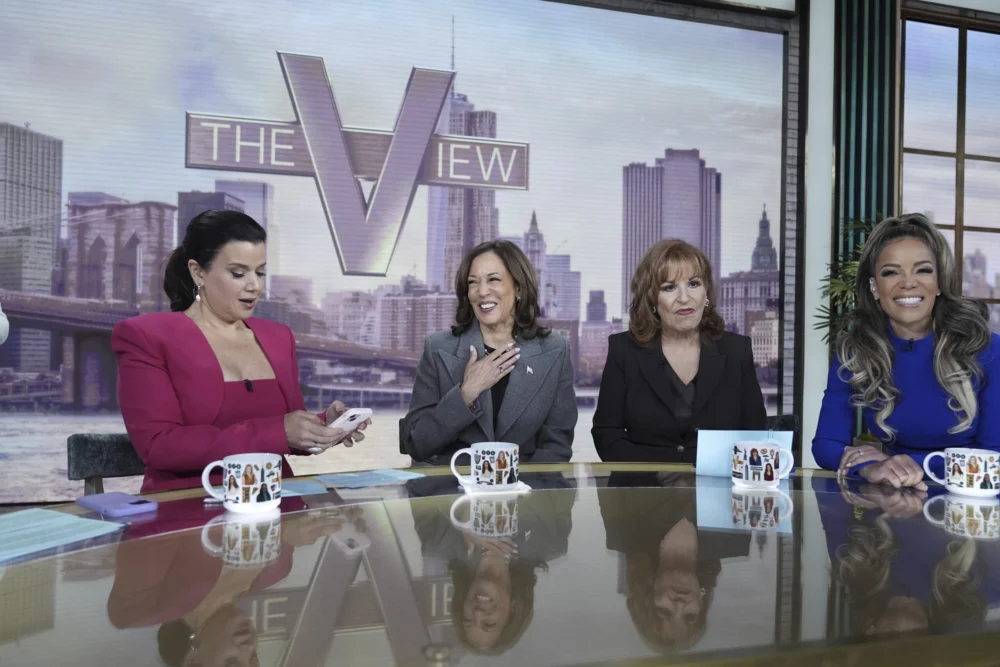
The FCC’s notice aims to prompt broadcasters to "obtain formal assurance" that their programs indeed qualify for an exemption, a process critics argue could be weaponized for harassment and intimidation. This move comes amidst increasing scrutiny of perceived partisan coverage on shows like "The View," "Saturday Night Live," and "Jimmy Kimmel Live." The FCC’s intent, as stated in the notice, is to ensure that stations are not mistakenly operating under the assumption that all such programming is exempt, thereby potentially offering an unbalanced platform to political figures.
Roots of the Equal Opportunities Rule
The bedrock of this regulatory debate lies in the Communications Act of 1934, enacted during an era when broadcast media held unparalleled sway over public information. The legislation recognized that broadcasters, by utilizing public airwaves, carried a public service responsibility. A key provision stipulated that any free airtime extended to a political candidate must be matched by equal opportunities for all other candidates vying for the same office. This ensured a level playing field, preventing incumbents or favored candidates from monopolizing valuable broadcast real estate.
Historically, the FCC has grappled with defining what constitutes a "bona fide news interview" program. Early interpretations, such as the ruling concerning John Kennedy’s appearance on "The Tonight Show" in 1959, established that equal time provisions applied. However, by 2006, when Arnold Schwarzenegger appeared on the same program during his gubernatorial campaign, the media landscape had evolved. Talk shows and entertainment programs had become more prominent, blurring the lines between news and entertainment. The FCC then ruled that "The Tonight Show," in that context, could be considered a bona fide news interview program and thus exempt from the equal time rule.
The recent FCC notice directly challenges the broad interpretation that has allowed many daytime and late-night shows to claim this exemption broadly, regardless of the specific content or format of their political segments. The commission explicitly states that the industry’s assumption that all such shows are automatically exempt is "not the case."
Broadening Concerns: From Equal Time to Free Speech
The implications of the FCC’s notice extend beyond the technicalities of equal time provisions, raising significant concerns about the broader landscape of free speech and media independence. Critics argue that the FCC’s directive, coupled with increasing corporate consolidation in media ownership, creates a fertile ground for regulatory overreach and a potential rollback of media freedom. This scenario is seen by some as mirroring developments in countries like Hungary and Russia, where media independence has been significantly eroded.
Harold Field, senior vice president at Public Knowledge, a progressive think tank, described the FCC’s process as a potential "tool for harassment and intimidation." He noted that broadcasters, facing the prospect of formal assurance requests and potential challenges, might preemptively censor content or avoid controversial political discussions to sidestep regulatory entanglements. This cautious approach, driven by fear of repercussions, could inadvertently limit the diversity of voices and perspectives available to the public.
Seth Stern, chief of advocacy at the Freedom of Press Foundation, echoed these concerns, suggesting that the notice and the associated petitioning process could lead broadcasters to reconsider "which perspectives to air and which ones not to." This self-censorship, driven by regulatory uncertainty, could disproportionately affect lesser-known or challenger candidates who rely on broader media access to gain traction.
Gigi Sohn, a legal expert who has previously served at the FCC, acknowledged the "spirit of the notice" in promoting equal access for less prominent candidates but voiced significant apprehension about its potential application. "The impact could be censorship," she stated, emphasizing her concern about "how it will be applied."
The Financial Calculus of Principle
The financial realities for media corporations play a crucial role in how such regulatory notices are perceived and acted upon. For-profit entities are often risk-averse, particularly when facing potential regulatory penalties or complications with mergers and license renewals. The FCC’s directive, therefore, could incentivize a more conservative programming approach.
Daniel Suhr, president of the Center for American Rights, a conservative think tank, highlighted this dynamic in a blog post for the Yale Regulatory Journal. He pointed out that shows like "Jimmy Kimmel Live" are fundamentally different from established news programs like "Meet the Press" and should not be afforded the same broad exemptions. The FCC’s notice effectively seeks to rectify this distinction, but the subsequent compliance mechanisms could prove costly for broadcasters.
FCC Commissioner Brendan Carr has been vocal on this issue, tweeting that some shows have claimed exemptions "even when motivated by partisan political purposes." Conservative analysts have cited studies suggesting a significant imbalance in guest diversity on shows like "The View," with a disproportionately low number of conservative guests compared to liberal ones. While a representative for "The View" did not respond to requests for comment, the perception of partisan bias fuels the FCC’s stated goal of ensuring fairness.
The fear among many is that this regulatory push is part of a larger effort to stifle satire, comedy, and political commentary, forms of expression that, while not traditional news, play a vital role in public discourse. Margot Susca, an assistant professor of journalism at American University, expressed alarm, stating, "This, to me, is the most shocking element of what this administration has been able to do, is to say that views, satire and humour are censored."
The pressure exerted by regulatory bodies can also be amplified through corporate structures. Instances where major media mergers or acquisitions are pending could see parent organizations become more susceptible to regulatory demands. The approval of the Paramount Skydance merger, for example, reportedly hinged on the settlement of a lawsuit related to Kamala Harris’s interview on "60 Minutes," illustrating how regulatory departments can leverage pending approvals to extract concessions.
"For-profit corporations are not known for their bravery," observed Field of Public Knowledge. "They may keep their heads down and views in check." This cautious approach, he suggests, is influenced by the financial stakes involved in maintaining favorable regulatory relationships.
Shifting Media Landscape and Audience Behavior
The FCC’s notice also arrives at a time of significant transformation in how Americans consume media. The rise of digital platforms and social media has fragmented the traditional broadcast audience, offering alternative avenues for news, opinion, and entertainment. While traditional broadcasters still hold sway, viewers increasingly turn to online sources, where regulatory oversight is less direct.
Gigi Sohn noted that the FCC’s directive could also create friction between network broadcasters and their local affiliates. A network might discourage political candidates from appearing on a show to avoid complications, or an affiliate might choose to preempt a program altogether if the burden of compliance becomes too onerous. This could lead to a patchwork of availability for certain political content, further complicating access for candidates and audiences.
A recent example highlighted this potential for disruption. When comedian Jimmy Kimmel made controversial remarks, FCC Commissioner Carr suggested that affiliates could preempt the show. Two major station owners, Nexstar and Sinclair, did indeed remove Kimmel’s program for several days, despite public outcry that eventually led ABC to reinstate it. This incident underscores how affiliate decisions, influenced by regulatory signals and potential backlash, can impact national programming.
"Public outrage is the best tonic," Sohn commented, referring to the public pressure that brought Kimmel’s show back. However, she cautioned that "there are so many outrages" in the current media and political climate, suggesting that sustained public attention might not always be sufficient to counter regulatory pressures.
Controlling the Narrative: Broader Implications for Democracy
The FCC’s public notice, while framed around equal time provisions, is viewed by some as a broader attempt to "control the narrative, not inform the public." This perspective suggests that the confluence of executive branch power and increased media consolidation creates a dual threat to independent journalism and robust public discourse.
The concentration of media ownership in the hands of a few large corporations, often aligned with powerful political interests, raises concerns about the erosion of journalistic independence. This trend mirrors patterns observed in countries where democratic standards have declined. Margot Susca points to Hungary as a prime example, where media ownership has become concentrated among wealthy individuals aligned with Prime Minister Viktor Orbán, leading to significant media restrictions and a decline in accountability journalism over two decades.
Seth Stern of the Freedom of Press Foundation acknowledges the value of comparing these developments to situations in Russia and Hungary, where media acquisitions have been steered towards politically favorable owners. However, he also emphasizes the unique context of the current U.S. political landscape, with Donald Trump being described as a "unique figure in a unique time."
Conservative commentators, meanwhile, often accuse mainstream media of harboring a liberal bias, and their efforts to counter this narrative have sometimes led to direct challenges to broadcast regulations. For instance, after Kamala Harris appeared on "Saturday Night Live" and made a joke about the "dramala," the Center for American Rights filed a complaint seeking equal time for Donald Trump. NBC responded by offering Trump a 90-second speech slot, which he utilized to solicit votes.
Despite these ongoing battles over broadcast rights, the evolving media consumption habits offer a counterpoint. As audiences increasingly turn to platforms like YouTube for content, the reach and impact of traditional broadcast regulations may diminish. The Communications Act rules, for instance, do not extend to content viewed on YouTube, even if it originates from a broadcast program.
Ultimately, the FCC’s recent notice serves as a critical juncture in the ongoing debate about the balance between broadcast regulation, political fairness, and the fundamental principles of free speech. The ultimate impact will depend on how the commission applies its directive and how broadcasters and the public respond to the evolving media environment. As Gigi Sohn stated, "I like more speech, not less. Limiting it could be a concerning impact of this."