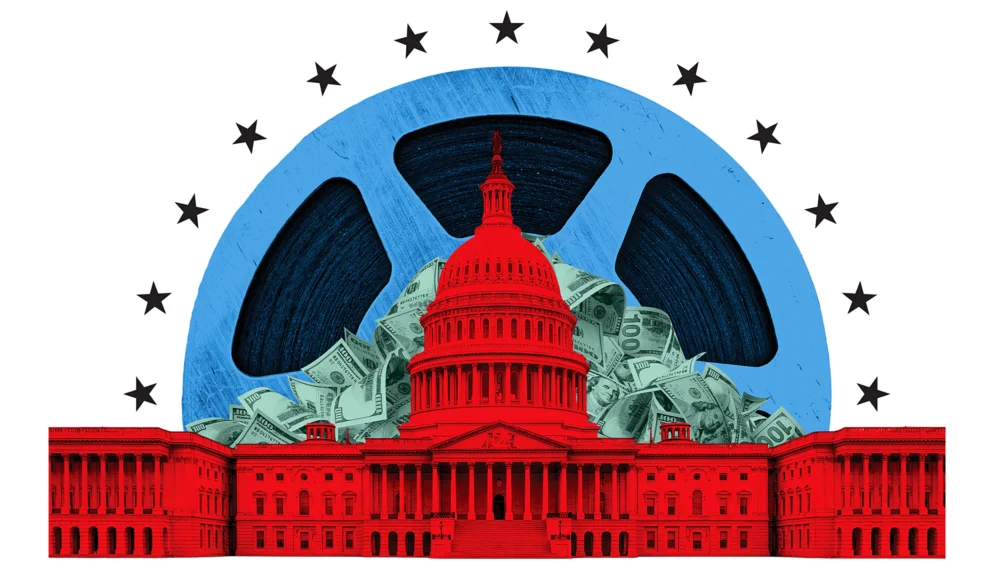
Washington D.C. saw a significant surge in lobbying efforts from major Hollywood studios and entertainment giants last year, driven by a confluence of disruptive technological advancements, evolving trade policies, and intense industry consolidation battles. Traditional focal points such as copyright law and tax policy remained consistent priorities, but emerging issues like artificial intelligence (AI) regulation and tariff mitigation commanded unprecedented attention and resources.
Hollywood has historically maintained a robust presence in the nation’s capital, leveraging both its cultural influence and considerable financial might to shape public opinion and secure favorable legislative outcomes. The narratives woven into films and television shows often resonate deeply with the public, while the corporations behind these productions actively engage lawmakers on policies impacting their bottom lines. However, the past year represented a distinct departure from established norms, marking a pivotal "sea change" in the industry’s approach to D.C. lobbying.
The New Landscape of Influence: AI and Tariffs Reshape Priorities
The primary catalysts for this intensified Hollywood Studio D.C. Lobbying Blitz were the rapid advancements in artificial intelligence and the specter of new trade tariffs. Generative AI, in particular, introduced a complex layer of legal and economic challenges, forcing entertainment firms to confront existential questions about intellectual property (IP) protection. Simultaneously, the Trump administration’s "Liberation Day" rhetoric and the threat of a film tariff sent shockwaves through an industry heavily reliant on global production and distribution.
Industry insiders from both the lobbying and public policy sectors confirm that entertainment firms, alongside their formidable Big Tech competitors, allocated substantial resources to secure a prominent voice in the nascent AI policy discussions. Studios focused intently on safeguarding their intellectual property rights against potential infringements by AI technologies, while technology companies often advocated for policies that would allow broader, less restricted development and deployment of AI tools. This created a direct clash of interests, with both sides vying to influence the foundational regulatory framework for this transformative technology.
Navigating Trade Winds: The Tariff Scare and Production Incentives
The threat of surprise tariffs, specifically President Trump’s contemplation of a film tariff—a measure that ultimately did not materialize—prompted a dramatic increase in lobbying expenditures related to production incentives and broader tariff policy. Entertainment companies quickly redirected their advocacy efforts, seeking to reframe the conversation around stimulating domestic production through tax incentives rather than penalizing international projects with new tariff-induced tax hikes.
This strategic shift highlighted the industry’s sensitivity to global trade dynamics. Film and television production is inherently international, with projects often spanning multiple countries to leverage diverse locations, talent, and financial incentives. A film tariff would have significantly increased production costs, potentially deterring international co-productions and pushing American jobs overseas. Lobbyists worked tirelessly to educate policymakers on these intricate economic realities, emphasizing the positive economic ripple effects of production incentives on local economies, job creation, and cultural exports.
The Battle for Warner Bros. and Media Consolidation
Beyond AI and tariffs, the latter part of the year witnessed intense lobbying activity surrounding significant media consolidation efforts, notably the battle for Warner Bros. Discovery (WBD). Lobbyist filings from the fourth quarter revealed Paramount Global’s proactive engagement with both houses of Congress and the White House, advocating for its proposed takeover of WBD. This direct approach signaled a clear intention to navigate regulatory hurdles and build political support for a blockbuster merger.
In the same period, Netflix also commenced lobbying on "issues related to competition," a broad descriptor often interpreted as an attempt to address the market dominance of larger platforms like YouTube and other Big Tech entities. This move underscored Netflix’s strategic positioning within an increasingly competitive streaming landscape, where consolidation and market share are paramount. Concurrently, Comcast initiated its own lobbying efforts concerning "media consolidation," reflecting its vested interest in the evolving competitive environment and its potential role in future industry restructuring. These coordinated, yet sometimes conflicting, lobbying campaigns from major players underscored the high stakes involved in shaping the future of media ownership and content distribution.
Political Shifts and New Lobbying Alliances
The political landscape in Washington underwent significant upheaval during this period, with the Trump administration taking office alongside a Republican-controlled Senate and House. This shift prompted a corresponding adjustment in lobbying strategies and partnerships within the entertainment and technology sectors. A comprehensive review of lobbying records indicated a widespread trend: virtually every major entertainment and tech company now listed the Trump-aligned Ballard Partners among its D.C. lobbying partners. Furthermore, Miller Strategies, another conservative upstart lobbying firm, also secured substantial business from key players in the space.
This strategic pivot to firms with strong ties to the new administration reflected a pragmatic recognition of the changed power dynamics in Washington. Companies sought to gain access and influence by partnering with entities perceived to have direct lines to the White House and the Republican leadership in Congress. Such alliances are critical in navigating new regulatory environments and advancing legislative agendas in a politically polarized capital. The selection of lobbying firms became as much a political statement as a business decision, signaling an adaptation to the prevailing political winds.
Telecommunications and the Broader Regulatory Burden
Comcast’s lobbying expenditures consistently surpassed those of other entertainment companies, a disparity attributed to its primary role within the heavily regulated telecommunications sector. Unlike pure content producers, Comcast must contend with a vast array of broadband policy, net neutrality regulations, infrastructure development, and other complex rules governing its core business operations. These regulatory burdens necessitate a sustained and significant lobbying presence to advocate for its interests across various federal agencies and congressional committees.
The inherent differences in regulatory oversight highlight a broader trend: as technology and media converge, the lines between traditional entertainment companies and telecommunications providers blur, leading to more complex and overlapping lobbying agendas. Issues like broadband access, data privacy, and spectrum allocation, once distinct to telecom, now directly impact how entertainment content is created, distributed, and consumed. This convergence demands a more integrated and comprehensive lobbying approach from diversified media conglomerates.
Public Impact and Future Trajectories
The concentrated Hollywood Studio D.C. Lobbying Blitz has profound implications for the public, the industry, and the future of policy. On the public front, the outcomes of AI policy debates could dictate the future availability, cost, and ethical standards of digital content, potentially influencing everything from news consumption to creative works. Decisions on media consolidation directly affect consumer choice, pricing for streaming services, and the diversity of voices in media. Tariff policies, while seemingly abstract, can impact the economic viability of creative projects and the jobs they support.
For the entertainment industry, the results of these lobbying campaigns will shape the competitive landscape for decades. The balance between protecting intellectual property and fostering technological innovation will determine the trajectory of generative AI tools. The success or failure of major mergers will redefine market power and competitive dynamics. As legislative battles continue to unfold, particularly around AI governance and the evolving digital economy, Hollywood’s influence in Washington will remain a critical force in shaping an increasingly intertwined technological and creative future. The intensity of lobbying efforts last year underscores that the stakes have never been higher, as the industry navigates an era of unprecedented technological disruption and political change.