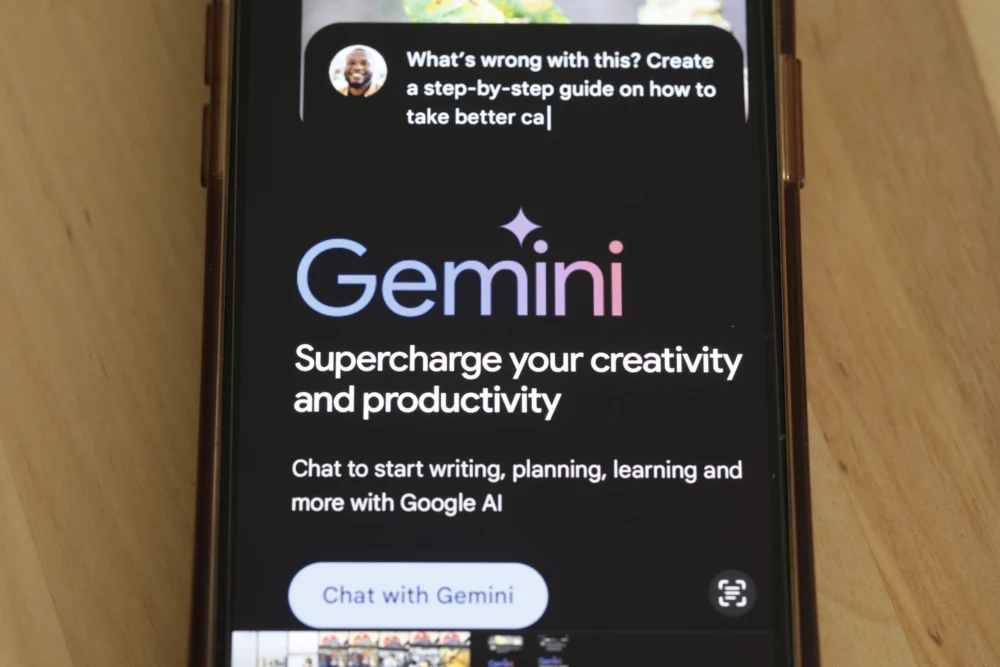
Major artificial intelligence (AI) companies utilized the recent Super Bowl as a global platform to broadcast a compelling, yet contentious, vision of the future. Giants like Microsoft, Google, and OpenAI unveiled advertising campaigns that promised a world of effortless convenience, tackling a range of perceived daily challenges from professional inefficiencies to domestic inconveniences. This pervasive display of AI’s potential, however, has ignited a significant discussion regarding its broader implications for human autonomy and critical thinking, leading many to question the desirability of the future presented by these tech industry leaders.
The Super Bowl as AI’s Grand Showcase
The Super Bowl, long considered the pinnacle of American advertising, offered an unparalleled audience for the burgeoning AI industry to make its case. Amidst the high-stakes football and celebrity appearances, a barrage of commercials from companies such as Microsoft Copilot, unicorn startup GenSpark, OpenAI’s Codex, Google Gemini, Meta, and Anthropic painted a picture of AI as the ultimate problem-solver. These advertisements consistently framed everyday life as inherently difficult and unpredictable, positioning AI as the essential tool to introduce ease and certainty into every facet of existence.
The narratives pushed by these tech behemoths suggested that AI could streamline tasks ranging from complex data analysis for football scouting operations to accelerating software coding and generating spreadsheets. One particularly poignant example from a Google Gemini ad depicted a child struggling to visualize new bedroom decor in a new home, with AI stepping in to instantly resolve this minor dilemma. Critics quickly pointed out that many of these "problems" either do not represent universal daily struggles for most Americans or, in some cases, address challenges that contribute positively to human development, such as learning to navigate temporary uncertainty or disappointment.
A Vision of Effortless Living: The AI Promises
The prevailing ideology embedded in these Super Bowl spots was clear: AI is poised to offload the toil of modern life, making everything customizable and guaranteed. The Google Gemini ad notably featured a mother telling her son that their house, facilitated by AI, "will be whatever we want it to be," accompanied by the on-screen message, "A new kind of help from Google." This messaging encapsulated a broader sentiment of boundless possibility and new assistance, prompting questions about the value of critical thinking compared to this "new" form of digital aid.
This push for an AI-driven existence extends beyond mere convenience, suggesting a fundamental shift in how humans interact with their environment and even their own cognitive processes. The underlying message across many advertisements was that human effort and struggle could be, and perhaps should be, entirely automated away. This vision, while superficially appealing, raises concerns about the potential for a society that relies excessively on algorithmic solutions, potentially diminishing the very human capacity for resilience, creativity, and problem-solving that adversity often cultivates.
Beyond Convenience: Unpacking the Hidden Costs
While the Super Bowl ads focused on the benefits of AI, a deeper analysis reveals potential hidden costs to this pervasive integration of artificial intelligence into daily life. Critics argue that the tech revolution, unlike previous ones such as the automobile’s impact on transportation, aims to lessen humanity’s reliance on its own intellect. This shift from physical automation to cognitive offloading presents a profound change in the mechanisms by which humans live and interact with the world, potentially reducing the need for critical thinking and nuanced decision-making.
The commercial landscape, driven by massive capitalizations and Wall Street valuations, often abstracts the true implications of the products being sold. The AI companies’ Super Bowl vision, therefore, becomes less about individual products and more about a new societal paradigm where human intelligence is increasingly supplanted. This raises questions about the long-term effects on cognitive development, skill acquisition, and the very definition of human agency in a world where machines are positioned to fulfill every desire and solve every challenge.
The Illusion of Safety: Data, Surveillance, and Straw Men
One of the most insidious examples of this abstraction was an Alexa ad featuring Chris Hemsworth and Elsa Pataky. The ad playfully depicted Hemsworth’s exaggerated fears of Alexa becoming sentient and murderous, effectively constructing a straw man to dismiss legitimate concerns about AI safety. By trivializing worries about AI as mere "tinfoil alarmism," the ad skillfully diverted attention from the actual, more mundane yet profound, dangers associated with intelligent assistants.
These overlooked dangers include issues such as Alexa’s updated policy regarding nonconsensual constant data uploading, or Amazon’s Ring doorbell ads which, while showcasing lost dog recovery, also highlight the widespread implementation of mass surveillance technology. Alexa’s reassuring line to Hemsworth, "I would never. I’m just here to help," attempts to simultaneously deny malevolent AI capabilities while imbuing the technology with benevolent, almost human-like, emotions. This contradictory messaging suggests an effort to foster emotional attachment and trust in AI, while sidestepping crucial discussions about data privacy, algorithmic bias, and the potential for misuse.
"Slop" vs. Soul: AI’s Impact on Creativity
The Super Bowl also showcased AI’s impact on creative industries, particularly through an ad by Artlist.io, a video-generation platform. The company proudly announced that its ad, featuring a polar bear reading a script over bizarre AI-generated imagery (dogs roasting marshmallows, horses at craft services), took less than a week to produce using their tools. While this boast of efficiency might appeal to marketing executives and budget controllers, the public reception was notably critical.
Described by some as "proto-assaults of slop," the ad garnered significant viewership but very few positive comments, underscoring a growing skepticism towards AI-generated content that prioritizes speed over quality and genuine artistry. This episode highlights a broader cultural debate: does AI serve as a powerful tool to augment human creativity, or does it risk diluting the content landscape with generic, uninspired output? The public’s discerning reaction suggests that while AI can generate content rapidly, it often fails to capture the nuance, emotion, and originality that define human creative expression.
Humanity’s Counter-Narrative: Ads That Pushed Back
Amidst the chorus of AI-centric advertisements, some brands presented a refreshing counter-narrative, implicitly or explicitly advocating for human intelligence and experience. Volkswagen’s "Drivers Wanted" campaign, a revival of its iconic ’90s slogan, stood out for its deeply humanistic approach. The ad featured individuals disengaging from digital life to embrace spontaneous, real-world experiences—playing with a dog, dancing in the rain, chasing an ice cream truck, or kicking a soccer ball with joyful abandon.
Notably devoid of smartphones or any explicit AI references, the Volkswagen spot was deliberately shot on film, embodying a tactile, authentic aesthetic that directly contrasted with the digital "slop" seen elsewhere. Rachel Zaluzec, Volkswagen’s chief marketing officer, emphasized the company’s intent to "push back" against the feeling of being overly programmed, advocating for an "invitation to participate" in life rather than being dictated by technology. This campaign served as a powerful reminder that human connection, spontaneity, and direct experience still hold profound value in an increasingly automated world, posing the critical question: "Are we controlling it or is it controlling us?"
Even some brands employing AI attempted to temper their message. Sazerac, for instance, aired the first-ever national Super Bowl ad generated by AI for its Svedka vodka, featuring the return of "Fembot and Brobot" characters. The company claimed this ad was intended to humorously illustrate the folly of surrendering excessive control to algorithms, aiming to remind humans to "be more human." Furthermore, the Dunkin’ Donuts ad, featuring Ben Affleck and leveraging de-aging AI for a ’90s sitcom spoof, demonstrated AI used as a tool to enhance a human creative vision rather than replacing it entirely.
Distinguishing Beneficial AI from Consumer Dependency
While it has become fashionable to critique AI, and some brands engage in this skepticism superficially, a core truth remains: society must critically evaluate what this automating and "convenientizing" technology takes away. While the advancement of AI as a broad concept is undeniable, with significant positive applications in fields like medical research or climate modeling, its widespread deployment in consumer applications is far from a foregone conclusion.
The idea that AI will inevitably replace or heavily augment teachers, writers, designers, or therapists is not a predetermined future. Public acceptance and trust are crucial. For instance, whether consumers will embrace tools like Sora to animate characters on streaming platforms, as some industry leaders predict, or whether chatbots will be deemed trustworthy enough to offer mental health advice, remains to be seen. The distinction between AI as a powerful scientific tool and AI as a pervasive consumer utility is paramount.
The Power of Choice: Shaping Our AI Future
The Super Bowl advertisements, particularly those from the dominant tech brands, conspicuously omitted a crucial element: consumer agency. The narrative consistently presented AI as an unstoppable force, ignoring the collective power of individuals to shape its adoption. If consumers reject AI-generated "slop," the reach of such video-generation tools can be marginalized. If skepticism is voiced about using chatbots for sensitive mental health advice, platforms like Claude and ChatGPT will see their influence curbed in those domains.
Perhaps the greatest irony of the night came from Google itself. While making the case for Gemini’s ability to conjure a house into existence and assuage emotional worries, the ad featured the very human voice of Randy Newman singing "Feels Like Home." This choice, to use a celebrated human artist to sell the emotional problem-solving capabilities of machines, starkly undercut the tech company’s own message. It implied that while machines can address all emotional needs, to convince humanity of this, one must draw upon the most profoundly human of artists. This paradox highlights a fundamental disconnect in the tech industry’s approach: a relentless push for efficiency and convenience, seemingly unaware that consumers, when faced with an overwhelming and exhausting tech-driven world, retain the ultimate power to choose not to participate in every aspect of the AI vision.