Prime Minister Keir Starmer’s government is fighting for survival as high-ranking Cabinet ministers launched a coordinated public defense following a stunning demand for his resignation by Scottish Labour leader Anas Sarwar. The internal rebellion, which marks the most significant threat to Starmer’s leadership since Labour’s general election victory 18 months ago, has triggered a wave of "online cheerleading" from the Prime Minister’s closest allies. Deputy Prime Minister David Lammy and Chancellor Rachel Reeves are leading the efforts to stabilize a Downing Street operation currently reeling from high-level resignations and a burgeoning scandal involving the appointment of Peter Mandelson as the U.S. Ambassador.
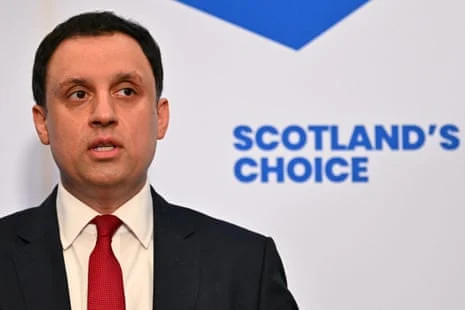
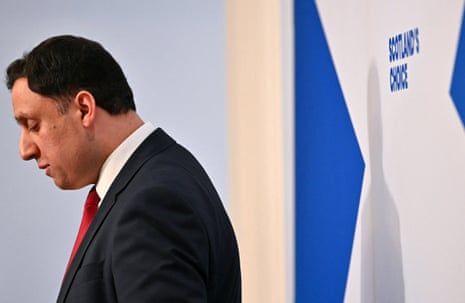
The political firestorm reached a crescendo Monday afternoon when Anas Sarwar, traditionally one of Starmer’s most loyal allies, held a hastily arranged press conference in Glasgow to withdraw his support. Sarwar’s decision to break ranks is rooted in the fear that Starmer’s personal unpopularity and a series of "judgment calls" are jeopardizing Labour’s chances in the upcoming Scottish Parliament elections this May. The move has exposed deep fractures within the party, forcing Cabinet members to take to social media and the airwaves to insist that the Prime Minister still holds a mandate to govern.
Anas Sarwar’s Dramatic Break from Downing Street
Anas Sarwar’s call for Keir Starmer’s resignation sent shockwaves through the Labour Party, signaling that the Prime Minister’s problems have moved beyond backbench grumbling to a full-scale institutional crisis. During his press conference, Sarwar described the decision as one of the most difficult of his career, citing a long-standing friendship with the Prime Minister. "So does this cause me personal hurt and pain? Of course it does," Sarwar told reporters. "But my first priority and my first loyalty has to be to my country, Scotland."
Sarwar argued that the "never-ending chaos" in London is drowning out the achievements of the Labour government and providing an opening for the Scottish National Party (SNP) to maintain its grip on power in Edinburgh. He specifically pointed to the controversy surrounding Peter Mandelson’s links to the late convicted sex offender Jeffrey Epstein as a betrayal of public trust. Sarwar stated that Mandelson’s actions and the Prime Minister’s decision to appoint him to a prestigious diplomatic post were "unacceptable" and had become an insurmountable distraction for the party.
The Scottish leader’s intervention is seen as a survival tactic for the Scottish branch of the party. Recent polling shows Scottish Labour trailing in third place, a catastrophic decline from their dominant performance in the 2024 general election. By distancing himself from Starmer, Sarwar is attempting to insulate his local candidates from the scandals currently engulfing Number 10 Downing Street.
Coordinated Cabinet Support in the Face of Resignation Demands
As Sarwar’s press conference concluded, a wave of Cabinet ministers began posting messages of solidarity on social media, a move observers described as a desperate attempt to show a united front. David Lammy, the Deputy Prime Minister, emphasized the democratic legitimacy of the current administration. "Keir Starmer won a massive mandate 18 months ago, for five years to deliver on Labour’s manifesto that we all stood on," Lammy wrote. He urged the party to let nothing distract from the mission to "change Britain."

Chancellor Rachel Reeves followed suit, focusing her defense on the government’s economic record. She argued that the administration’s difficult decisions were beginning to bear fruit, citing falling inflation and interest rates. "With Keir as our Prime Minister, we are turning the country around," Reeves stated. Other senior figures, including Housing Secretary Steve Reed and Northern Ireland Secretary Hilary Benn, echoed these sentiments, calling for "calm heads" and a "seriousness of purpose" during the crisis.
Despite this show of force, journalists noted that the public displays of loyalty seemed organized and reactive rather than spontaneous. The "online cheerleading" was viewed by some critics as an admission of the Prime Minister’s vulnerability. For the first time since taking office, the question of whether Starmer can survive the week is being openly discussed within the corridors of Westminster.
The Mandelson Scandal and the Erosion of Public Trust
At the heart of the current turmoil is the fallout from the appointment of Peter Mandelson as the United Kingdom’s Ambassador to the United States. The release of files detailing Mandelson’s past relationship with Jeffrey Epstein has ignited a firestorm regarding vetting procedures and the standards of public life. Critics argue that Starmer, a former Director of Public Prosecutions, should have known that the appointment would be ethically and politically toxic.
The scandal has already claimed several high-profile casualties. Morgan McSweeney, Starmer’s influential Chief of Staff and the architect of the party’s election strategy, resigned over the weekend after admitting he was the primary advocate for Mandelson’s appointment. McSweeney’s departure has left the Prime Minister without his most trusted political strategist, a loss that many believe makes Starmer’s position significantly more precarious.
In a further blow to the government’s stability, Director of Communications Tim Allan also stepped down on Monday. Allan stated his resignation was intended to "allow a new No 10 team to be built," but his departure means Starmer is now searching for his fifth communications chief in less than two years. This high turnover rate in senior advisory roles has led to accusations that the government is in a state of "permanent paralysis," unable to move past self-inflicted wounds.
Analysis of the Political Fallout and Internal Dissent
The pressure on Starmer is not coming solely from Scotland or the opposition benches. Within the Parliamentary Labour Party (PLP), backbenchers are increasingly vocal about their dissatisfaction. Graham Stringer, a veteran Labour MP, told the media that the Prime Minister "cannot survive this amount of chaos." Stringer claimed that while some publicly support the PM, the private consensus among many MPs is that a leadership change is a matter of "when, not if."
Similarly, MP Andy McDonald warned that Starmer must "own the error he’s made" and convince the party that he is capable of a radical reset. McDonald, representing the left wing of the party, argued that the Prime Minister’s strategy of "purging the left" has left the party narrow and vulnerable to the current crisis. The divide between the party’s leadership and its various factions has never been more apparent, with the Mandelson affair serving as a catalyst for long-standing grievances.
On the opposition side, Conservative leader Kemi Badenoch has called Starmer’s position "untenable." Badenoch argued that the Prime Minister’s defense—that he was "badly advised" by McSweeney—is insufficient for a leader of a G7 nation. "Advisers advise, leaders decide," Badenoch said, accusing Starmer of allowing subordinates to "carry the can" for his own poor judgment. The SNP and the Green Party have also joined the chorus calling for a resignation, further isolating the Prime Minister.
Broad Consequences for the Labour Party’s Future
The current crisis has implications that extend far beyond the immediate survival of Keir Starmer. The Labour Party is facing a fundamental identity crisis just as it enters a crucial period of governance. The loss of key strategists like McSweeney means the "Starmerism" project—defined by a legalistic, centrist approach to policy—is now leaderless and lacking a clear direction.
The government is attempting to pivot back to policy to regain its footing. Darren Jones, the Chief Secretary to the Prime Minister, is expected to announce a new set of "tougher standards" for public appointments in a statement to the House of Commons. These proposals are expected to include U.S. Senate-style public hearings for major ambassadorial and ministerial roles, a move intended to prevent a repeat of the Mandelson debacle. However, political analysts question whether such reforms can save a Prime Minister whose personal credibility has been so severely damaged.
The public impact of this political infighting is also significant. With the cost of living still a primary concern for voters, the image of a government "fixated on itself" rather than the country’s problems is damaging. The upcoming local and national elections in Scotland and Wales will serve as a referendum on Starmer’s leadership. If Labour suffers heavy losses in May, the pressure from the Cabinet and the PLP may become overwhelming, regardless of the current rallying efforts.
Next Steps for Downing Street
As the week progresses, Keir Starmer faces the daunting task of rebuilding his inner circle while fending off a growing rebellion. He told staff at Number 10 this morning that he remains "positive, confident, and determined," but the reality on the ground suggests a much more fragile situation. The Prime Minister’s spokesperson explicitly stated that Starmer will not be resigning today, but the 48-hour window is seen by many as the "crucial period" that will determine the fate of his premiership.
The government’s strategy is currently focused on "staying the course" and hoping that the coordinated support from ministers like Rachel Reeves and David Lammy will settle the markets and the party. However, with Anas Sarwar’s defection, the "Scottish problem" has now become a national crisis for Labour. The party must now decide if Keir Starmer is still the right person to lead them into a year of electoral challenges, or if the "force for good" he promised has been permanently overshadowed by the very scandals he vowed to eliminate.