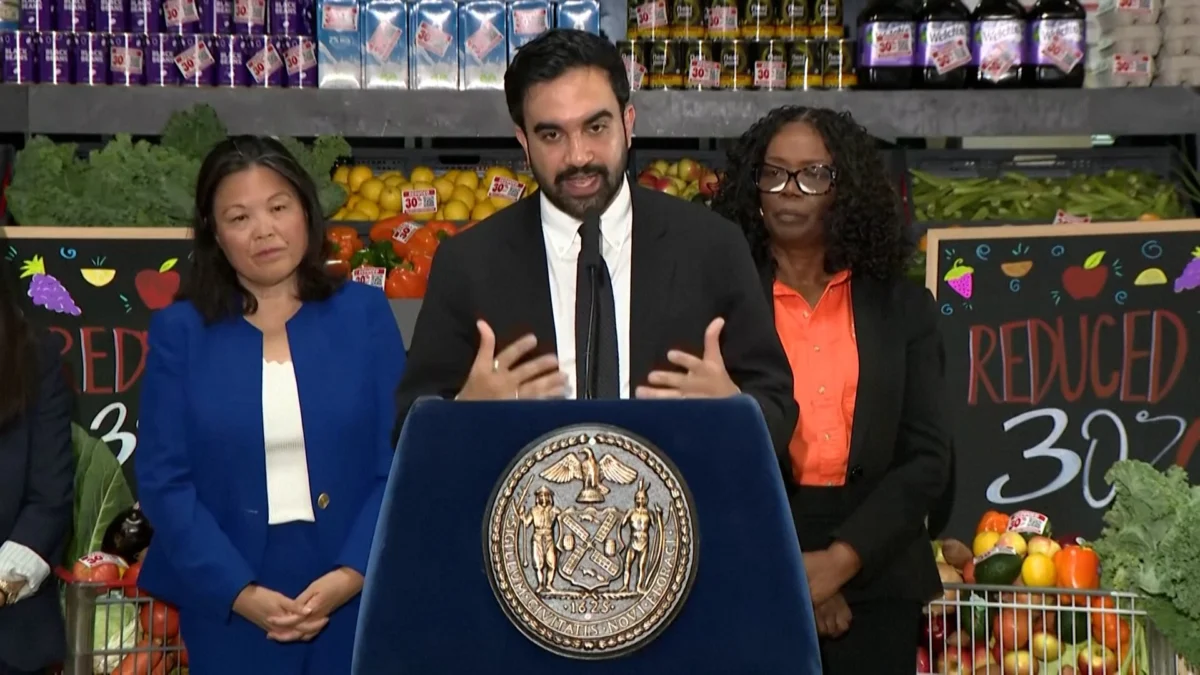
Congressional Democratic leaders on Monday dismissed a counterproposal from the White House regarding the funding of Immigration and Customs Enforcement (ICE), significantly increasing the risk of a partial government shutdown at the end of the week. Senate Democratic leader Chuck Schumer and House Democratic leader Hakeem Jeffries issued a joint statement late Monday evening characterizing the administration’s offer as "incomplete and insufficient," noting that the proposal lacked both specific legislative text and the detailed reforms required to address ongoing concerns regarding agency conduct.
The standoff centers on a fast-approaching Saturday deadline, at which point funding for the Department of Homeland Security (DHS) is set to expire. Democrats have tethered their support for continued funding to a series of strict new mandates for federal immigration agents, including requirements for judicial warrants, improved officer identification, and standardized use-of-force protocols. These demands have gained momentum following a series of high-profile incidents, including the fatal shooting of two protesters by federal agents in Minneapolis last month.
Democrats Reject White House ICE Offer Amid Shutdown Fears
The rejection of the administration’s proposal marks a sharp pivot from the cautious optimism expressed by Republican leadership earlier in the day. Senate Majority Leader John Thune had previously suggested that negotiations were moving in a positive direction, citing the exchange of papers between the two sides as a sign of "forward progress." However, the subsequent statement from Schumer and Jeffries suggests that the gap between the White House and congressional Democrats remains substantial.
Democratic leadership argued that the White House counteroffer failed to provide a framework for accountability. They specifically criticized the lack of language addressing "lawless conduct" within ICE, an agency that has become a lightning rod for political controversy during President Donald Trump’s second term. Rank-and-file Democrats have signaled they are prepared to withhold their votes entirely if the final funding bill does not include radical scaling back of enforcement tactics.
Hakeem Jeffries emphasized this position on Monday, stating that dramatic changes at the Department of Homeland Security are a prerequisite for any further funding. "Period. Full stop," Jeffries told reporters, underscoring the party’s refusal to provide a "blank check" for the administration’s immigration crackdown. The impasse leaves the federal government on the precipice of its first partial shutdown of the year, which would freeze operations for DHS and several other key agencies.
Surveillance and Immigration: The Role of School Security Cameras
As the funding battle intensifies in Washington, a new investigation has revealed the extent to which local law enforcement agencies are assisting federal immigration efforts through civilian infrastructure. Reports indicate that police departments across the United States are utilizing security cameras installed at public school districts to track individuals for immigration-related investigations.
The investigation centered on audit logs from Texas school districts that utilize technology from Flock Safety, a prominent manufacturer of AI-powered license plate readers. These logs show that police have been searching national databases for vehicle information captured by school cameras to assist the Department of Homeland Security in enforcing federal immigration laws. While these cameras are ostensibly installed to ensure student safety, their integration into a broader law enforcement network has allowed for the monitoring of immigrant families during school drop-offs and pick-ups.

The use of campus surveillance for immigration enforcement has sparked outrage among educators and parents. In several instances, families have been targeted for detention in the immediate vicinity of school grounds, leading to a chilling effect on student attendance in immigrant-heavy communities. The data raises significant questions regarding the ethics of repurposing school safety technology for federal enforcement campaigns that have grown increasingly unpopular with the general public.
Trade Tensions and Infrastructure: The Gordie Howe International Bridge
Adding to the week’s political volatility, President Donald Trump issued a series of threats directed at Canada, the United States’ second-largest trading partner. In a late-night social media post, the president threatened to block the opening of the Gordie Howe International Bridge, a $4.6 billion project connecting Detroit, Michigan, and Windsor, Ontario. The bridge, which has been under construction since 2018, is considered a vital economic artery for North American trade.
Trump claimed that Canada has treated the United States "very unfairly for decades" and stated that he would not allow the bridge to open until the U.S. is "fully compensated" for perceived economic imbalances. The president also made a series of unsubstantiated claims regarding Canadian trade with China, suggesting without evidence that a new trade deal between the two nations would lead to a ban on Canadians playing ice hockey.
The threat to block the bridge represents a total reversal of the president’s previous stance. In 2017, Trump issued a joint statement with Canadian Prime Minister Justin Trudeau endorsing the project as a "vital economic link" that would create jobs in both countries. The sudden shift in rhetoric has alarmed business leaders on both sides of the border, who warn that interfering with the bridge’s completion could disrupt supply chains and damage the automotive industry, which relies heavily on the Detroit-Windsor crossing.
Public Sentiment and the Erosion of American Optimism
The political turbulence in Washington coincides with a historic decline in national morale. According to new data from Gallup, American optimism for the future has fallen to its lowest level since the organization began tracking the metric nearly two decades ago. In 2025, only 59% of Americans gave high ratings when asked to evaluate how they expect their lives to look in five years.
Research director Dan Witters noted that while current life satisfaction has seen a gradual decline over the last decade, future optimism has eroded at twice that rate. Gallup classifies individuals as "thriving" if they rate their current life highly and have high expectations for the future; currently, fewer than half of all Americans fall into this category.
The "gloom" identified in the polling is attributed to a combination of economic uncertainty, political polarization, and the perceived instability of federal institutions. The report suggests that the typical correlation between present-day satisfaction and future hope has broken down, with many Americans expressing a deep-seated fear that the country’s best days are behind it.
Legal and International Developments
In the judicial sphere, a federal judge in California has issued a preliminary injunction blocking a state law that would have banned federal immigration agents from wearing facial coverings. The law, signed by Governor Gavin Newsom following a series of controversial raids in Los Angeles, sought to ensure that agents were easily identifiable to the public. However, Judge Christina Snyder ruled that the law unfairly discriminated against federal agents because it did not apply the same restrictions to state and local police.

U.S. Attorney General Pam Bondi hailed the ruling as a victory for federal law enforcement, arguing that agents require facial protection to guard against "doxing" and physical harassment. While the mask ban is currently blocked, the court maintained that agents must still wear clear identification, including agency names and badge numbers.
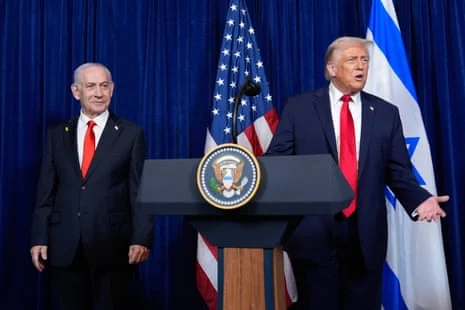
On the international front, Israeli Prime Minister Benjamin Netanyahu is scheduled to meet with President Trump in Washington this Wednesday. Netanyahu stated that his primary objective for the visit is to discuss principles for negotiations with Iran. This meeting follows recent talks between the U.S. and Iran in Oman, which Trump has described as a potential prelude to a broader diplomatic agreement. The discussions are expected to be high-stakes, as Netanyahu seeks to align Israeli security interests with the administration’s evolving Middle East policy.
Ongoing Controversies and Military Action
The administration also faces renewed scrutiny following the release of partially redacted documents related to the Jeffrey Epstein investigation. The Miami Herald reported on an account from 2006 in which Trump allegedly told the Palm Beach police chief that "everyone has known" about Epstein’s conduct and described Ghislaine Maxwell as "evil." These revelations stand in contrast to the president’s more recent public comments, in which he claimed to have no knowledge of Epstein’s crimes.
In separate developments, an immigration judge has terminated deportation proceedings against Rumeysa Öztürk, a doctoral student at Tufts University. Öztürk was arrested last year during a crackdown on pro-Palestinian campus activists, but the judge ruled that the administration’s efforts to remove her lacked sufficient legal grounds.
Simultaneously, the U.S. military’s Southern Command confirmed a "lethal kinetic strike" in the eastern Pacific on Monday. The operation resulted in the deaths of two suspected drug smugglers. The strike is part of an intensified maritime interdiction campaign aimed at disrupting narcotics trafficking routes from South America to the United States, reflecting the administration’s broader "law and order" focus.
As the Saturday deadline for DHS funding approaches, the rejection of the White House offer by Democrats suggests that a resolution is not yet in sight. The intersection of immigration policy, national security, and international trade continues to create a volatile environment in the nation’s capital, with the potential for a government shutdown looming over all other legislative priorities.