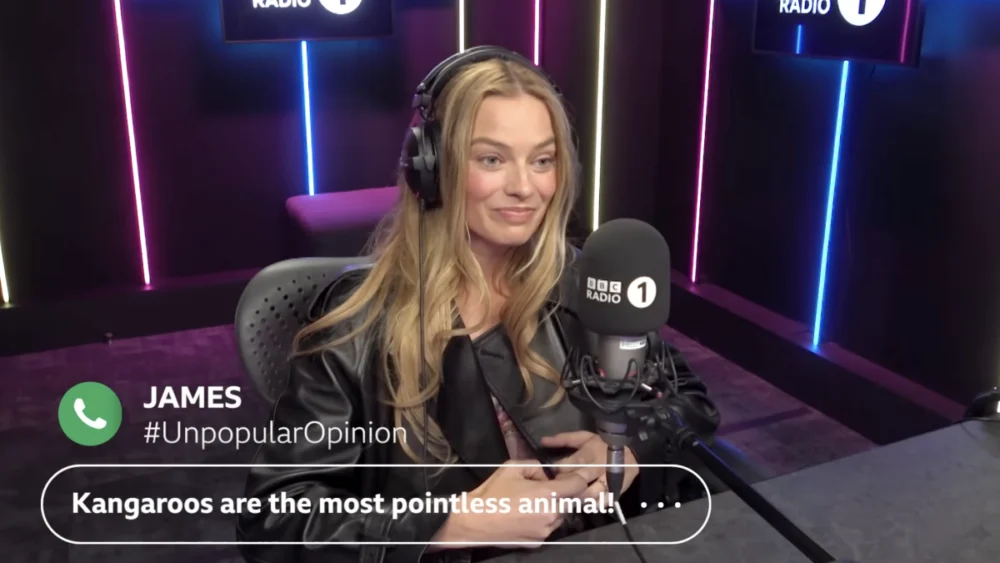
Margot Robbie, the Academy Award-nominated actress and producer, recently participated in a high-profile radio segment where she was tasked with navigating a series of polarizing views presented by members of the public. This appearance, which has since gained significant traction across social media platforms, showcased the "Barbie" star’s ability to maintain her characteristic poise while engaging with unconventional and often controversial takes on pop culture, lifestyle, and daily habits. The segment, a staple of modern celebrity press tours, highlights the evolving relationship between A-list Hollywood talent and the interactive nature of digital-age broadcasting.
The format required Robbie to listen to various "unpopular opinions" submitted by radio callers and decide whether she agreed or disagreed with their assessments. These opinions ranged from trivial culinary preferences to broader social observations, providing a platform for the actress to display a more candid and relatable persona than is typically seen in scripted interviews or red-carpet appearances. As the video of the exchange circulated online, it underscored the effectiveness of gamified media segments in humanizing global icons.
The Dynamics of Celebrity Engagement with Radio Callers
The decision for a star of Robbie’s magnitude to participate in such a segment is indicative of a broader shift in entertainment marketing. For decades, celebrity interviews were strictly controlled environments, often limited to late-night talk shows or carefully curated magazine profiles. However, the rise of viral video content has forced a pivot toward more spontaneous and interactive formats. When Margot Robbie responds to the unpopular opinions of radio callers, she is participating in a calculated effort to bridge the gap between the "unapproachable" movie star and the everyday consumer.
Radio callers often present a unique challenge for celebrities. Unlike professional journalists, these individuals are not bound by the conventions of industry etiquette, frequently posing questions or offering opinions that are irreverent or outright bizarre. Robbie’s responses during the segment were noted for their quick wit and lack of pretension, traits that have become central to her public brand. Industry analysts suggest that these interactions are vital for maintaining "likability" in an era where audiences value authenticity above all else.
The specific "unpopular opinions" featured in the segment touched on several cultural nerves. One caller suggested that certain beloved cinematic classics were overrated, while another proposed that common social etiquettes were unnecessary. Robbie’s role was to act as a surrogate for the audience, either defending the status quo or siding with the "rebel" caller. This dynamic creates a participatory experience for the viewer, who is likely to have their own strong feelings on the topics discussed.
Analyzing the Strategy Behind Unpopular Opinions Segments
The "unpopular opinion" format has become a cornerstone of contemporary broadcasting, particularly on stations like BBC Radio 1 and various Australian networks where Robbie frequently appears. The goal is to generate "clip-able" moments that can be shared across TikTok, Instagram, and X (formerly Twitter). By having Margot Robbie respond to the unpopular opinions of radio callers, the network ensures that the content has a high probability of going viral, thereby increasing the reach of the program far beyond its traditional terrestrial audience.
From a public relations perspective, these segments serve as a "stress test" for a celebrity’s public persona. The ability to handle a "bad take" from a caller with grace and humor is seen as a sign of emotional intelligence and relatability. For Robbie, who has transitioned from a breakout star in "The Wolf of Wall Street" to a powerful industry mogul with her production company, LuckyChap Entertainment, maintaining this down-to-earth image is crucial. It balances her status as a high-earning producer with the "girl next door" charm that first endeared her to global audiences.
Furthermore, the segment allows the celebrity to indirectly address their own work or the industry at large. When callers discuss movie tropes or the state of modern cinema, it provides Robbie with an opening to share her professional insights in a way that feels organic rather than promotional. This "soft marketing" approach is often more effective than traditional advertising, as it builds a sense of community between the star and the listener.
Margot Robbie’s Career Evolution and Public Persona
To understand the impact of Robbie’s media appearances, one must look at her trajectory within the Hollywood ecosystem. Since her move from the Australian soap opera "Neighbours" to the international stage, Robbie has been meticulous about her career choices. Her portrayal of Harley Quinn in the DC Extended Universe and her lead role in "Barbie" have made her one of the most recognizable faces in the world. However, it is her work behind the scenes that has truly redefined her standing in the industry.
Through LuckyChap Entertainment, Robbie has produced critically acclaimed films such as "I, Tonya," "Promising Young Woman," and "Saltburn." These projects often challenge conventional narratives, much like the "unpopular opinions" she discussed on the radio. This alignment between her professional output and her public interactions creates a cohesive brand identity. When she engages with radio callers, she is not just an actress; she is a tastemaker who is comfortable navigating the complexities of public discourse.
The public’s fascination with Robbie also stems from her perceived "authenticity." In an industry often criticized for being out of touch, Robbie’s willingness to engage in self-deprecating humor and defend "unpopular" views makes her appear more grounded. This was evident in the radio segment, where she occasionally sided with the callers on controversial topics, showing a willingness to deviate from the "safe" or expected answer.
The Role of Interactive Media in Modern Film Promotion
The appearance comes at a time when the film industry is grappling with how to promote movies in a fragmented media landscape. Traditional junkets, where actors sit in front of a poster and answer the same questions from dozens of reporters, are increasingly seen as obsolete. Instead, studios are leaning into interactive and experiential marketing. Having Margot Robbie respond to the unpopular opinions of radio callers is a prime example of this trend.
These segments are designed to be "evergreen" content. While they may be filmed during a specific press tour—such as for "Barbie" or an upcoming project—the nature of the conversation is often timeless. This allows the video to resurface periodically, keeping the actress in the public eye even when she does not have a current release. The longevity of digital content means that a single radio appearance can provide marketing value for years.
Moreover, the interactive element of radio—where callers can speak directly to the talent—creates a sense of intimacy that is difficult to replicate on other platforms. For the callers involved, the experience of having a Hollywood star validate or challenge their opinion is a significant event. For the broader audience, watching these interactions provides a voyeuristic thrill, as they get to see how a celebrity reacts to the "real world."
Cultural Impact and the "Unpopular Opinion" Trend
The concept of the "unpopular opinion" has itself become a significant cultural phenomenon. On platforms like Reddit and X, users frequently share their contrarian views to spark debate and engagement. By bringing this digital trend into the broadcast space, radio stations are tapping into a pre-existing appetite for discourse. When a figure like Margot Robbie joins the conversation, it legitimizes the trend and elevates the level of engagement.
Psychologically, these segments appeal to the audience’s desire for conflict and resolution. There is a minor tension created when a caller presents a view that contradicts the mainstream, and the celebrity’s reaction provides the resolution. If the celebrity agrees, it validates the "outlier" opinion; if they disagree, it reinforces the collective social norm. This cycle of tension and release is highly addictive for viewers, contributing to the high view counts these videos receive.
Additionally, the segment highlights the democratization of criticism. In the past, only professional critics had a platform to voice their opinions on culture. Today, through radio call-ins and social media, anyone can share their "hot takes." Robbie’s participation in the segment is a nod to this shift, acknowledging that the audience’s opinion is just as relevant as that of the "experts."
Future Outlook for Celebrity Media Interactions
As the media landscape continues to evolve, it is likely that we will see more celebrities engaging in these types of interactive, unscripted segments. The success of the "unpopular opinions" format suggests that audiences are hungry for content that feels less like a sales pitch and more like a genuine conversation. For stars like Robbie, these appearances are an essential tool for navigating the complexities of 21st-century fame.
The impact of these interactions extends beyond mere entertainment. They influence how the public perceives the industry and the people who run it. By appearing approachable and open to debate, Robbie and her peers are helping to dismantle the "ivory tower" image of Hollywood. This, in turn, can lead to a more loyal and engaged fan base, which is vital for the success of future projects.
In the coming years, the integration of AI and more advanced interactive technologies may further transform these segments. We might see live-streamed events where thousands of fans can simultaneously share their opinions with a celebrity in real-time. However, the core appeal will remain the same: the human desire to connect, debate, and find common ground—or agree to disagree—with the figures who shape our cultural landscape.
Final Observations on the Intersection of Fame and Public Discourse
The video of Margot Robbie responding to the unpopular opinions of radio callers serves as a microcosm of the current state of celebrity culture. It is a blend of entertainment, public relations, and social commentary, all packaged in a format that is easily consumable for a digital audience. Robbie’s performance in the segment reinforces her status as a savvy operator who understands the nuances of modern media.
As the industry moves forward, the ability to engage with the public in a meaningful and authentic way will be the defining characteristic of a successful career. Robbie has proven that she is more than capable of meeting this challenge, using every platform at her disposal to build a brand that is both powerful and relatable. Whether she is producing a blockbuster film or debating the merits of a caller’s fringe opinion, she remains one of the most compelling figures in entertainment today.
The continued popularity of these segments ensures that the dialogue between the stars and the public will remain a central feature of the media landscape. As long as there are "unpopular opinions" to be shared, there will be a place for celebrities like Margot Robbie to respond to them, creating a bridge between the heights of Hollywood stardom and the everyday experiences of audiences worldwide.