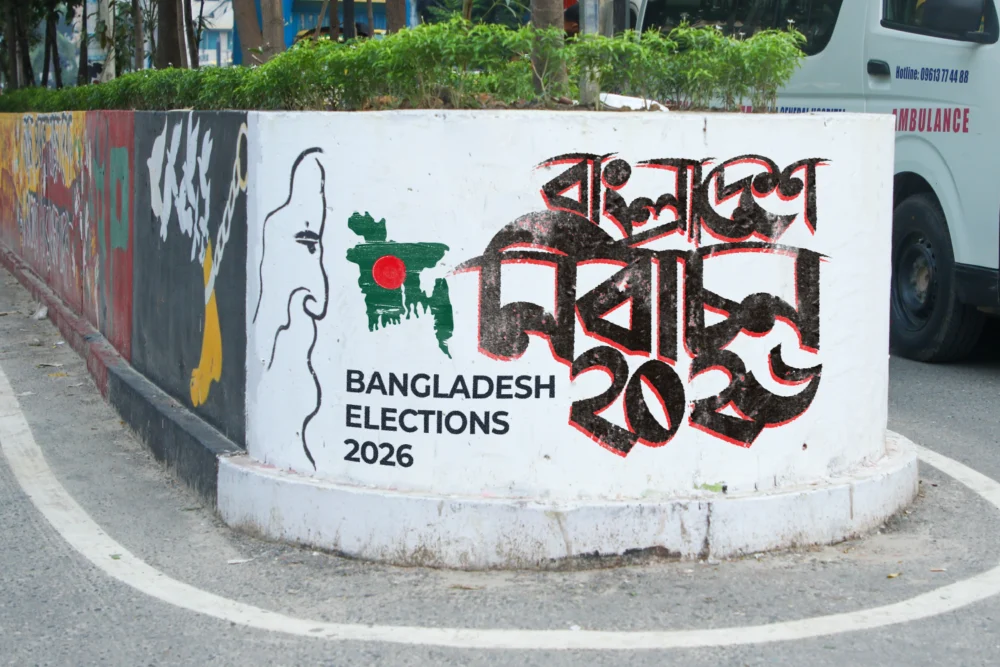
Voting commenced today across Bangladesh under a veil of heavy security as the nation heads to the polls in a pivotal 2026 election, a contest widely seen as a direct confrontation between the frontrunner Tarique Rahman’s Bangladesh Nationalist Party (BNP) and an 11-party coalition spearheaded by Jamaat-e-Islami. The electoral landscape is fraught with anticipation, with millions of citizens poised to cast their ballots in a democratic exercise that will determine the country’s political trajectory for the coming years.
The Bangladesh election 2026 unfolds against a backdrop of intense political polarization and a history of contentious electoral cycles. This year’s vote is particularly significant, marking a potential shift in the nation’s governance and the alignment of its key political forces. The BNP, led by the influential Tarique Rahman, is vying for a decisive victory, aiming to unseat the incumbent government and implement its policy agenda. Their primary challenger is the coalition organized by Jamaat-e-Islami, a party with a significant, albeit controversial, base of support and a distinct ideological platform.
Key Players and Alliances Shaping the 2026 Electoral Contest
The political arena in Bangladesh is characterized by a complex interplay of parties and alliances. The Bangladesh election 2026 is no exception, with the BNP and the Jamaat-e-Islami-led coalition emerging as the dominant forces. Tarique Rahman, currently living in exile, remains a central figure in Bangladeshi politics, commanding considerable loyalty from his party’s supporters. His leadership, though distant, continues to shape the BNP’s campaign strategies and its overarching message to the electorate.
On the opposing side, the Jamaat-e-Islami’s coalition represents a formidable bloc, bringing together various smaller parties under a unified banner. This alliance aims to consolidate opposition votes and present a unified front against the BNP. The dynamics between these major blocs, and the allegiances of smaller parties, will undoubtedly play a crucial role in determining the final outcome of the Bangladesh election 2026.
Historical Context and Electoral Precedents
Understanding the current electoral environment requires a look back at Bangladesh’s political history. The nation has experienced periods of both democratic progress and authoritarian rule since its independence. Elections have often been marked by significant political tensions, allegations of irregularities, and occasional boycotts. The Bangladesh election 2026 is being closely watched by international observers, who hope for a free, fair, and transparent process.
Past elections have often seen intense competition between the BNP and the Awami League, the country’s other major political party. However, this year’s landscape appears to be defined by the BNP’s primary contest with the Jamaat-e-Islami-led coalition, signaling a potential realignment of political forces. The outcomes of previous polls have frequently hinged on the ability of parties to mobilize their core support bases and appeal to undecided voters in key constituencies.
Security Measures and Electoral Integrity
In anticipation of the Bangladesh election 2026, authorities have implemented extensive security measures across the country. The deployment of law enforcement personnel, including police, paramilitary forces, and potentially the army in certain areas, is aimed at ensuring the safety of voters and polling officials, and preventing any potential unrest or violence. The presence of a strong security apparatus is a testament to the high stakes involved in this election.
Election officials have emphasized their commitment to maintaining the integrity of the electoral process. This includes measures to prevent vote rigging, ensure the secrecy of the ballot, and address any complaints or disputes that may arise during the polling day. The transparency and fairness of the Bangladesh election 2026 will be critical for its legitimacy, both domestically and internationally.
Campaign Themes and Voter Concerns
The campaigns leading up to the Bangladesh election 2026 have been dominated by a range of issues crucial to the nation’s future. Economic development, job creation, inflation, and poverty reduction have been central themes for all major parties. Voters are also concerned about issues such as education, healthcare, and infrastructure development.
Furthermore, the political climate, including issues of governance, human rights, and the rule of law, has also been a significant point of contention. The BNP has likely focused on promising reforms and addressing perceived shortcomings of the current administration, while the Jamaat-e-Islami-led coalition has presented its own distinct vision for the country, often emphasizing its ideological principles. The ability of each party to articulate compelling solutions to these pressing concerns will be a determining factor in how citizens cast their votes in the Bangladesh election 2026.
Economic Outlook and Electoral Impact
Bangladesh’s economy has experienced significant growth in recent decades, transforming it into one of the fastest-growing nations in South Asia. However, challenges remain, including income inequality, the impact of climate change, and the need for continued investment in key sectors. The outcome of the Bangladesh election 2026 will have a direct bearing on the country’s economic policies and its future development trajectory.
Investors, both domestic and international, will be closely observing the election results. Political stability and clear economic policies are crucial for attracting foreign investment and fostering sustained economic growth. The winning party or coalition will face the immediate task of addressing economic challenges and implementing policies that can sustain the nation’s development momentum.
The Role of Technology and Media
The Bangladesh election 2026 is also being shaped by the increasing influence of technology and social media. Political parties have utilized these platforms to reach voters, disseminate their messages, and engage in online campaigning. Social media has become a powerful tool for political discourse, but it also presents challenges related to the spread of misinformation and disinformation.
Traditional media outlets continue to play a vital role in providing news coverage and analysis of the election. Live updates, debates, and investigative reports contribute to informing the public and holding political actors accountable. The interplay between digital and traditional media will be a key factor in how voters perceive the candidates and issues in the Bangladesh election 2026.
International Scrutiny and Global Implications
The Bangladesh election 2026 is not only a domestic affair but also attracts significant international attention. Many countries and international organizations will be observing the process to assess its adherence to democratic principles. The European Union, the United Nations, and various human rights organizations often send observers to monitor elections in developing democracies.
The results of the election will have implications for Bangladesh’s foreign relations, its role in regional politics, and its partnerships with global powers. A peaceful and credible election outcome can strengthen Bangladesh’s position on the international stage, while any significant irregularities could lead to diplomatic challenges and a reassessment of international engagement.
Public Sentiment and Voter Turnout
The mood among the electorate ahead of the Bangladesh election 2026 is one of anticipation and, for many, a sense of civic duty. Millions of eligible voters are expected to participate, reflecting their desire to have a say in the country’s governance. The turnout rate will be a key indicator of public engagement and the perceived importance of this election.
Analysts will be closely examining voter behavior across different demographics and regions. Factors such as age, gender, socioeconomic status, and geographic location often influence voting patterns. The ability of parties to mobilize their supporters and persuade undecided voters will be critical for success in the Bangladesh election 2026.
Challenges and Potential Roadblocks
Despite the preparations, the Bangladesh election 2026 is not without its potential challenges. Past elections have sometimes been marred by logistical issues, such as delays in opening polling stations or problems with electronic voting machines in some areas. Ensuring smooth operations across all polling units is a significant undertaking.
Furthermore, the heightened political tensions and the deep divisions between the major political blocs could lead to isolated incidents of conflict or protest. The security forces will be on high alert to manage any such situations and ensure that voting proceeds without significant disruption. The resilience of Bangladesh’s democratic institutions will be tested throughout the electoral process.
The Road Ahead: Post-Election Scenarios
As the votes are cast, the focus will soon shift to the counting process and the eventual announcement of results. The Bangladesh election 2026 could lead to various scenarios. A clear victory for one party or coalition would provide a mandate for their governance, while a very close contest might lead to a period of uncertainty and potential coalition negotiations.
Regardless of the outcome, the elected government will face the immense task of uniting a divided nation, addressing pressing economic and social issues, and upholding democratic principles. The actions taken in the immediate aftermath of the election will be crucial in shaping the country’s political stability and its future development. The world watches as Bangladesh navigates this critical democratic juncture.