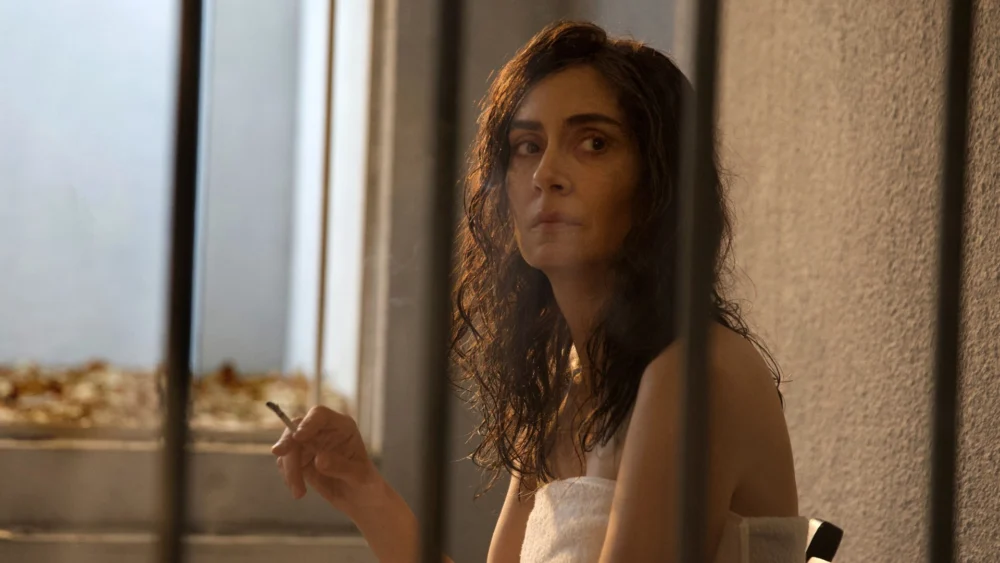
Iranian filmmaker Mahnaz Mohammadi’s second fiction feature, Roya, is set to make its world premiere at the Berlin International Film Festival, offering a profound exploration of the psychological toll of imprisonment in Iran. Shot in secrecy due to Mohammadi’s official ban from filmmaking, the movie arrives amidst heightened international scrutiny of Iran’s human rights record and its crackdown on widespread anti-government protests. The film delves into the harrowing experience of a teacher named Roya, incarcerated in Tehran’s notorious Evin Prison, facing the agonizing choice between a forced televised confession and indefinite confinement within a tiny cell.
The Unseen Battle: Filmmaking Under Repression
Mahnaz Mohammadi is an acclaimed Iranian auteur with a history of challenging state authority through her work. Her career has been marked by persistent harassment and restrictions from Iranian authorities, including multiple arrests and a long-standing prohibition on her professional activities. This ban forced her to undertake the production of Roya entirely clandestinely, a testament to her determination and the significant risks involved for filmmakers operating outside state approval. Her previous documentary works and activism have consistently focused on social justice issues and human rights within Iran, making her a target of the regime. The clandestine nature of Roya‘s production underscores the severe limitations and dangers faced by independent artists in the country, where artistic expression is often conflated with political dissent.
Mohammadi’s personal experience with imprisonment, having spent time in Evin Prison herself for her political beliefs, lends an authentic and visceral dimension to Roya. This direct understanding informs the film’s narrative, imbuing it with a raw emotional truth that resonates beyond mere storytelling. The decision to make a film under such duress is a powerful act of defiance, transforming the cinematic endeavor itself into a form of resistance against censorship and state control.
Evin Prison: A Symbol of State Repression
The setting of Roya in Tehran’s Evin Prison is not incidental; it is central to the film’s narrative and its broader political commentary. Evin Prison has long been synonymous with the Iranian regime’s suppression of political dissent. Established in 1972, it has held countless intellectuals, journalists, human rights activists, and political prisoners throughout various political eras in Iran. The prison is infamous for its harsh conditions, including widespread reports of torture, solitary confinement, and denial of legal rights and medical care. Its grim reputation as a site of systematic human rights abuses makes it a potent symbol of state repression and the psychological warfare employed against political opponents.
The film’s depiction of a "three-square-meter prison cell" is particularly poignant, highlighting the physical and psychological claustrophobia endured by inmates. Such conditions are designed not merely to contain, but to break the human spirit, eroding an individual’s sense of self and their capacity for resistance. Roya aims to expose this brutal reality, offering a window into the unseen struggles within these notorious walls.
Timeliness Amidst Iranian Protests
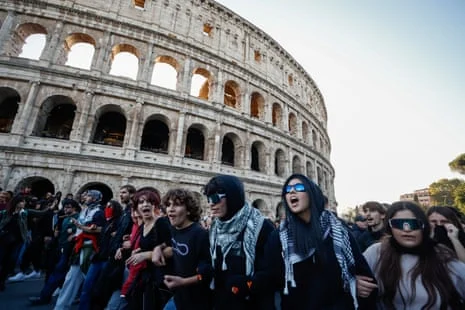
The premiere of Roya at the Berlin International Film Festival’s Panorama lineup on Saturday arrives at a moment of intense global focus on Iran. The nation has been gripped by widespread anti-government protests, sparked by the death of Mahsa Amini in police custody in September 2022. These demonstrations, which began as protests against mandatory hijab laws, quickly evolved into a broader movement demanding fundamental changes to the Islamic Republic’s governance. The regime has responded with a brutal crackdown, resulting in thousands of arrests, numerous deaths, and the execution of protestors, drawing condemnation from international human rights organizations and governments worldwide.
In this volatile context, Roya serves as a critically timely cinematic intervention. The film’s narrative—focusing on a political prisoner facing an impossible choice under duress—mirrors the realities confronting countless Iranians arrested during the recent protests. The portrayal of state-sanctioned psychological torment and the pressure for forced confessions resonates deeply with current headlines, where confessions extracted under duress are frequently broadcast on state television as a tool to discredit dissidents and justify state violence. The film provides crucial human context to the abstract statistics and news reports emerging from Iran, personalizing the struggle against an authoritarian system.
The Psychological Battleground of Solitary Confinement
At its core, Roya transcends the physical confines of a prison to explore the psychological dimensions of incarceration, particularly solitary confinement. The film is described as a "journey into the dark recesses of human minds," meticulously examining how extreme isolation fundamentally reshapes perception, memory, and identity. This psychological deconstruction is a deliberate strategy employed by oppressive regimes to weaken prisoners’ resilience and dismantle their will to resist. The constant mental pressure, the lack of external stimuli, and the erosion of social connections can lead to severe psychological distress, including hallucinations, paranoia, and a profound sense of disorientation.
The film confronts the devastating impact of such conditions, illustrating how the state manipulates the human psyche to achieve submission. It highlights the insidious nature of psychological torture, which often leaves no visible scars but inflicts deep and lasting damage. By focusing on this aspect, Roya illuminates a less visible but equally brutal facet of political imprisonment, challenging audiences to consider the true cost of dissent under authoritarian rule.
Forced Confessions: A Tool of Repression
A central plot point in Roya is the protagonist’s forced choice: either deliver a televised confession or remain indefinitely imprisoned. This scenario is a chillingly accurate reflection of a common tactic used by the Iranian regime. Forced confessions, often extracted under duress, torture, or threats against family members, are regularly broadcast on state media. These "confessions" serve multiple purposes: they are used to legitimize the regime’s actions, demonize dissidents, sow fear among the populace, and create a false narrative of stability and compliance.
The film explores the immense moral and psychological burden placed upon individuals forced into such a predicament. The act of publicly recanting one’s beliefs, especially when coerced, represents a profound violation of personal integrity and a betrayal of one’s principles. Roya aims to expose the cruelty of this practice, emphasizing how it not only victimizes the individual but also undermines truth and justice within society. The film’s narrative highlights the devastating impact of such choices, both on the individual’s conscience and on their public image.
An International Collaboration Against Repression
The production of Roya involved a significant international collaboration, a common strategy for Iranian filmmakers facing state repression at home. Produced by Farzad Pak at Hamburg-based PakFilm, the movie is a co-production with Europe Media Nest (Czech Republic), Amour Fou (Luxembourg), and major German broadcasters NDR, ARD Degeto Film, BR, and SWR. This multi-national backing provides not only crucial financial support but also a degree of artistic freedom and protection that would be impossible within Iran. International co-productions allow filmmakers to bypass domestic censorship and access resources necessary for telling their stories authentically.
The film features an international cast, led by Turkish star Melisa Sözen, renowned for her role in Nuri Bilge Ceylan’s Cannes winner Winter Sleep and the French TV series The Bureau. She is joined by Maryam Palizban, Hamidreza Djavdan, Mohammad Ali Hosseinalipour, Bacho Meburishvili, and Gholamhassan Taseiri. This diverse ensemble brings a global perspective to a deeply localized story, enhancing its universal appeal and resonance. Support for Roya also came from MOIN Filmförderung Hamburg Schleswig-Holstein, Medienboard Berlin-Brandenburg, and Film Fund Luxembourg, underscoring the broad European commitment to supporting independent cinema, particularly films addressing critical human rights issues.
A Glimpse into the Abyss: The Exclusive Clip
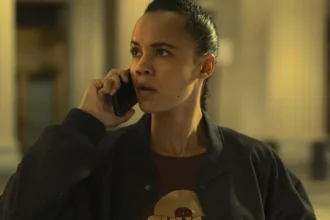
As Roya prepares for its Berlin premiere, an exclusive clip has been released, offering a stark preview of the film’s intensity. The clip is described as "not for the faint of heart," utilizing potent commands and emotional dialogue to convey the psychological torment at the film’s core. The command “Spin!” hints at coercive tactics or disorienting exercises used to break prisoners, while the line “I told you this is the end of the world” speaks to the profound despair and existential crisis experienced within solitary confinement.
These fragments are designed to immerse the viewer immediately in Roya’s harrowing reality, foreshadowing the escalating psychological pressure she endures. The clip serves as a powerful testament to Mohammadi’s directorial vision, promising a film that is unflinching in its portrayal of human resilience and vulnerability in the face of systemic oppression. It sets the stage for a cinematic experience that challenges audiences to confront uncomfortable truths about political incarceration and the enduring human spirit.
Art as Resistance and Global Awareness
Roya is more than just a film; it is an act of artistic resistance. By secretly making and internationally premiering a film that critiques the Iranian regime’s human rights abuses, Mahnaz Mohammadi reclaims her voice and uses the power of cinema to shed light on critical issues. The film’s presence at the Berlin International Film Festival, a major global platform, ensures that its message will reach a wide international audience, raising awareness about the plight of political prisoners in Iran and the broader struggle for freedom and justice in the country.
The film’s global distribution, handled by Totem Films, is crucial for its impact. It signifies the international community’s role in amplifying voices that are silenced at home and supporting filmmakers who risk their freedom to tell essential stories. Roya stands as a poignant reminder that while prisons are physical places, their true power often lies in their ability to invade and reshape the human mind, making the fight for mental and emotional integrity as crucial as the fight for physical freedom.