Assaf Machnes’ debut feature film, Where To?, emerged as a poignant and critically relevant entry in this year’s Berlinale program, offering an intimate exploration of human connection amidst deep geopolitical and personal divides. The Israeli writer-director’s drama navigates the complex terrain of trauma, masculinity, and queer identity through the evolving relationship between a Palestinian Uber driver and a young Israeli passenger in the vibrant, nocturnal landscape of Berlin. This narrative, described as both timely and timeless, challenges audiences to confront uncomfortable questions while celebrating moments of tender, unexpected understanding.
The Genesis of an Unlikely Connection
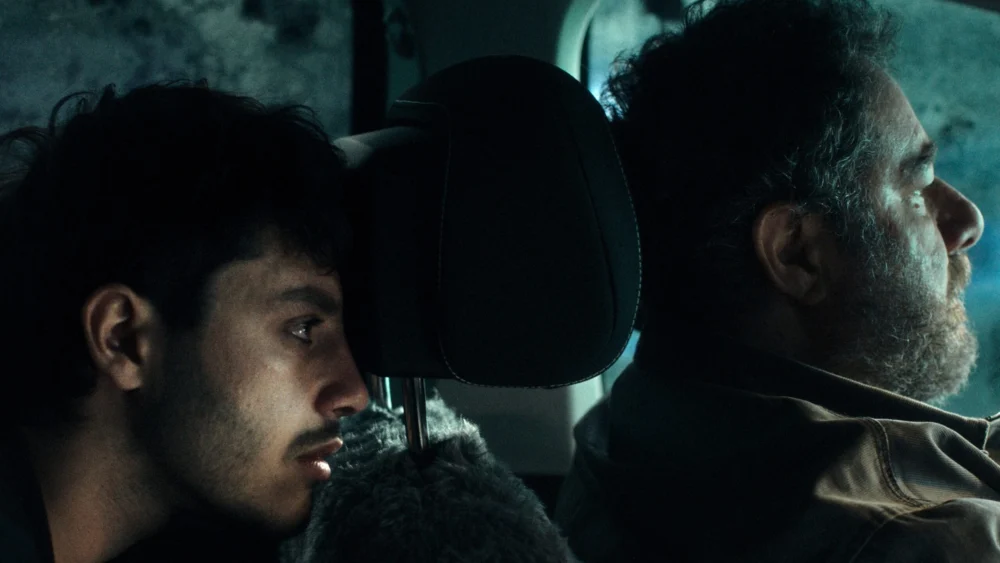
The film introduces Hassan, a 55-year-old Palestinian Uber driver, skillfully portrayed by veteran Palestinian actor Ehab Salami, known for his work in Let It Be Morning. Hassan spends his nights ferrying revelers across Berlin’s sprawling party scene, a solitary figure navigating the city’s ceaseless energy. His routine is punctuated one evening by the arrival of Amir, a 25-year-old Israeli passenger played by Israeli actor Ido Tako, who recently gained recognition in The Vanishing Soldier. Amir is depicted as a young man embarking on a journey of self-discovery, including sexual exploration, far from the familiar confines of his homeland.
Over a period spanning two years, the two men repeatedly cross paths in Hassan’s taxi, gradually forging an unlikely and profound bond. This consistent interaction in the confined space of a vehicle allows for a unique intimacy, transcending their respective backgrounds and initial reservations. Their conversations, initially superficial, deepen to reveal shared vulnerabilities and unspoken pains.
Deepening Bonds and Shared Traumas
Hassan, grappling with the estrangement from his eldest daughter, who plans to marry her German boyfriend, finds himself an unwitting confidant to Amir. The younger man shares details of a painful breakup, a narrative that begins to resonate deeply with Hassan. Through Amir’s experiences, Hassan starts to recognize echoes of his own long-suppressed grief and unresolved emotional conflicts, pains he had never dared to confront directly. This mirrored experience of heartbreak and familial strain forms the bedrock of their burgeoning connection, highlighting universal human emotions that bridge cultural and political chasms.
The film meticulously peels back layers of identity, revealing how personal histories, cultural backgrounds, and societal expectations shape individual experiences. Hassan’s quiet stoicism and Amir’s youthful vulnerability represent different facets of masculinity, both of which are explored and challenged within the context of their developing relationship. The exploration of Amir’s queer identity further adds to the film’s nuanced portrayal of self-discovery and acceptance in a foreign land.

Crafting ‘Where To?’: Inspiration from Berlin
Director Assaf Machnes drew inspiration for Where To? from a deeply personal experience in Berlin. He recounted a period of emotional disorientation during a cold winter in the city, where he found himself lost amidst a confusing love story. It was during this time that he encountered a Palestinian Uber driver, an interaction that left a lasting impression. Machnes shared with The Hollywood Reporter his feeling of an unspoken understanding with the driver, a connection that felt more profound than many others, despite minimal verbal exchange. This serendipitous meeting sparked the initial concept for the film, leading him to ponder the possibilities if such encounters were to recur.
As Machnes developed the narrative, he consciously shifted the focus, elevating the driver to the central protagonist. This decision was rooted in his desire to tell a story about individuals who, on the surface, appear to have moved past their traumas but have, in reality, never fully articulated or processed their experiences. The film, therefore, becomes a quiet testament to the resilience and silent suffering of those who "simply kept driving," a theme Machnes underscored by dedicating the movie to his father and other men who embody this quiet perseverance. It serves as a narrative on the psychological toll of avoidance, portraying how individuals often continue to navigate life’s challenges without truly confronting their emotional burdens.
‘Where To?’ in a Shifting Geopolitical Landscape
The narrative arc of Where To? extends into October 2023, deliberately incorporating the seismic events following the October 7 Hamas attacks and the subsequent escalation of violence in the region. Machnes faced the complex challenge of integrating these profound geopolitical developments into an already deeply personal story. He articulated his approach by emphasizing that the underlying "problem" between Israelis and Palestinians existed long before October 7 and persists thereafter. The director stressed that the touching encounter that inspired the film would have been just as poignant irrespective of the timing.
Consequently, while the film acknowledges the October 7 events, it refrains from making them the central focus. Instead, it uses them as a backdrop that underscores the enduring relevance of individual human connections in a world marked by persistent conflict. Machnes’ intention was to highlight that the fundamental issues of understanding, empathy, and shared humanity remain constant, even as political landscapes shift dramatically. The film, therefore, positions itself not as a direct commentary on the conflict’s immediate aftermath, but as a timeless reflection on the universal human need for connection in the face of division.
A Bridge Through Art: Israeli-Palestinian-German Collaboration
The production of Where To? itself stands as a powerful testament to the film’s message of collaboration and understanding. Assaf Machnes actively fostered a diverse creative environment, bringing together characters and actors from both Israeli and Palestinian backgrounds, alongside German contributors behind the scenes. This collaborative spirit is exemplified by the involvement of first-time feature cinematographer Maayane Bouhnik, who is Israeli, and Palestinian composer Habib Hanna Shehadeh.

Machnes underscored the profound value of this multinational cooperation, particularly in a global climate often characterized by incitement and separation. He asserted that the film’s very existence as a joint Israeli-Palestinian-German endeavor represents a significant counter-narrative, advocating for unity and mutual respect through artistic expression. This collaborative framework extends beyond the screen, serving as a tangible example of how different communities can work together to create something meaningful and impactful, challenging preconceived notions and fostering dialogue. Lucky Number is handling the film’s world sales, aiming to bring this message to a global audience.
Resonating Beyond the Screen: ‘Where To?’ and Dialogue
Where To? possesses a unique capacity to resonate deeply with audiences, not only for its compelling narrative but also for its broader implications in fostering dialogue and empathy. In an era marked by increasing polarization and conflict, the film’s intimate portrayal of an unlikely bond between a Palestinian Uber driver and a young Israeli offers a powerful counterpoint. It subtly challenges stereotypes and humanizes individuals from communities often viewed through the lens of political conflict.
The film’s presence within the Berlinale program amplifies its significance, positioning it within an international forum where challenging and thought-provoking cinema thrives. Its exploration of personal trauma, identity, and the search for connection transcends geographical and political boundaries, making it a universal story. By focusing on individual experiences and shared vulnerabilities, Where To? encourages viewers to look beyond headlines and political rhetoric, inviting them to consider the profound humanity that connects us all.
Critical Acclaim and the Path Forward for ‘Where To?’
Early reception for Where To? at the Berlinale has highlighted its sensitive direction and the compelling performances by Ehab Salami and Ido Tako. Critics have praised Machnes for his ability to craft a story that is both deeply personal and broadly resonant, particularly in its nuanced handling of complex themes. The film’s measured pace and atmospheric depiction of Berlin contribute to its immersive quality, drawing viewers into the characters’ inner worlds.
As Where To? seeks wider distribution, its potential impact on cultural discourse and public understanding cannot be overstated. It stands as a powerful example of how cinema can serve as a bridge, facilitating empathy and opening avenues for conversation in even the most contentious of contexts. The film’s timeless message about the enduring human need for connection, even in the face of profound division, ensures its relevance long after its initial screenings, solidifying its place as a significant voice in contemporary cinema.