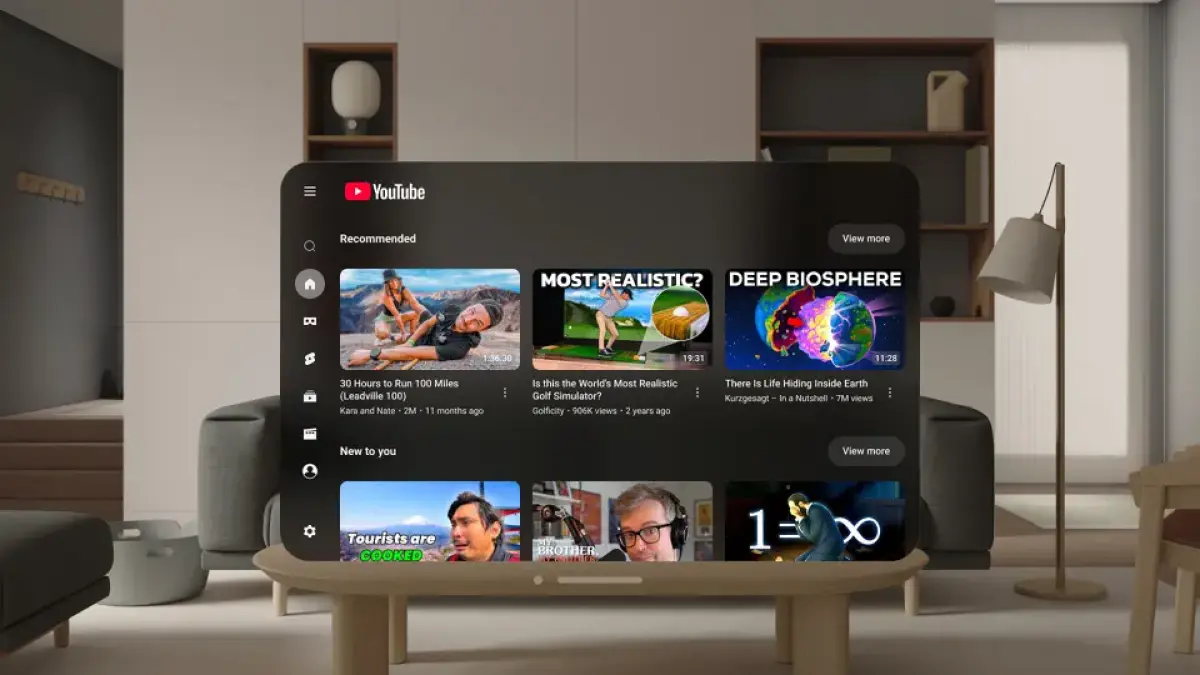
Google has officially released a dedicated YouTube application for the Apple Vision Pro, ending a months-long period where users of the $3,500 spatial computer were required to access the world’s largest video platform through a web browser. The new application is now available for download on the visionOS App Store, providing a native interface designed specifically for Apple’s high-end mixed-reality hardware.
The arrival of the Apple Vision Pro official YouTube app marks a significant shift in the relationship between Google and Apple regarding spatial computing. Upon the headset’s initial launch in early 2024, YouTube was notably absent from the platform’s native ecosystem, joining other major streaming services like Netflix and Spotify in declining to build dedicated software for the device’s debut. This forced early adopters to rely on the Safari browser or third-party workarounds to view content.
The newly released software is compatible with current Apple Vision Pro models powered by the M2 silicon, as well as high-specification variants utilizing the M5 architecture. By moving beyond the limitations of a standard web browser, the application introduces a suite of features intended to leverage the unique hardware capabilities of the Vision Pro, including eye-tracking navigation and hand-gesture controls.
Bridging the Gap: Features of the Apple Vision Pro Official YouTube App
The Apple Vision Pro official YouTube app introduces a theater-like virtual environment, allowing users to scale video playback to massive proportions within their physical or virtual space. This immersive mode is designed to simulate a cinema experience, providing a level of depth and scale that was previously difficult to achieve through the Safari-based interface.
Beyond standard video playback, the app integrates the full breadth of the YouTube ecosystem, including access to personalized playlists, subscriptions, and the "Shorts" vertical video feed. The interface has been optimized for visionOS, ensuring that menus and navigation bars do not obstruct the viewing area while remaining easily accessible through the headset’s gaze-and-pinch interaction model.
For users operating the M5-equipped Apple Vision Pro, the app supports video playback at 8K resolution. This high-fidelity output is intended to take advantage of the headset’s micro-OLED displays, which provide more pixels than a 4K television for each eye. While 8K content remains a niche segment of the overall YouTube library, its inclusion highlights a commitment to pushing the technical boundaries of spatial media consumption.
A Delayed Arrival in the visionOS Ecosystem
The absence of an Apple Vision Pro official YouTube app at the time of the device’s launch was a point of significant contention among tech analysts and consumers. When the Vision Pro was first unveiled, Apple positioned it as a revolutionary "spatial computer" capable of replacing traditional home theater setups. However, the lack of native support from the internet’s primary video repository was seen as a major hurdle for mainstream adoption.
In the months following the February 2024 release, users turned to independent developers to bridge the gap. One notable third-party application, "Juno," gained popularity by offering a wrapper for the YouTube web interface that felt more like a native app. The release of an official version from Google may render such third-party alternatives less essential, though it raises questions about why the development process took nearly a year to complete.
Industry insiders suggest the delay was likely rooted in a combination of technical challenges and strategic hesitation. Building for visionOS requires developers to adapt to a new paradigm of user interface design that moves away from traditional touchscreens or mouse pointers. Furthermore, Google may have been waiting to gauge the initial market reception of the Vision Pro before committing the engineering resources required to maintain a native spatial application.
Market Challenges and the Impact of the Apple Vision Pro Official YouTube App
The release of the Apple Vision Pro official YouTube app comes at a critical juncture for Apple’s wearable technology division. Recent industry reports have indicated a cooling of interest in the high-priced headset, with some supply chain analysts suggesting that Apple has significantly scaled back production targets for the remainder of the year.
The $3,499 starting price has remained a significant barrier to entry for the general public, relegating the Vision Pro primarily to developers, enterprise users, and high-net-worth early adopters. By expanding the library of "must-have" applications, Apple and its partners hope to increase the device’s utility and justify its premium cost. The presence of a native YouTube experience is a foundational requirement for any device marketed as a media consumption powerhouse.
Furthermore, the introduction of 8K streaming capabilities via the Apple Vision Pro official YouTube app serves as a technical showcase for the platform. As competitors like Meta continue to dominate the lower-priced VR market with the Quest series, Apple’s strategy relies heavily on providing a superior visual and processing experience. The M5 chip’s ability to handle high-bitrate 8K streams without significant latency is a key differentiator in this high-stakes hardware race.
Technical Integration and visionOS Evolution
The Apple Vision Pro official YouTube app is built to exist within the "Shared Space" of visionOS, meaning users can keep a video window open while simultaneously interacting with other applications like Mail, Messages, or Keynote. This multitasking capability is central to Apple’s vision of spatial computing, where digital content is integrated into the user’s physical surroundings.
The app also utilizes spatial audio, a technology that anchors sound to the location of the video window. As a user moves their head or repositions the virtual screen, the audio profile shifts to maintain a sense of directional realism. This level of integration is a significant upgrade over the Safari experience, where audio was often treated as a flat, system-wide output.
Software updates to visionOS have also played a role in making the YouTube app possible. Apple has been aggressive in refining its operating system, addressing early complaints regarding window management and gesture recognition. These improvements provided a more stable foundation for Google’s developers to build a complex, media-heavy application that requires consistent high-speed data throughput and real-time rendering.
The Competitive Landscape of Spatial Media
The arrival of the Apple Vision Pro official YouTube app places additional pressure on other streaming giants that have yet to release native software for the platform. While Disney+ was an early partner, offering 3D movies and immersive viewing backgrounds, Netflix has remained a notable holdout, advising its subscribers to use the web browser instead.
The disparity in app support creates a fragmented user experience that Apple is eager to resolve. In the broader context of the "metaverse" and augmented reality, content is king. Without a robust library of native applications, even the most advanced hardware risks becoming a niche product. Google’s decision to finally enter the visionOS App Store may signal a shift in developer sentiment, potentially encouraging other major platforms to follow suit.
Comparisons are frequently drawn to the Meta Quest ecosystem, which has enjoyed a dedicated YouTube VR app for years. However, the Quest version focuses heavily on 360-degree immersive videos, whereas the Apple Vision Pro version appears to prioritize high-resolution traditional media and 2D content within a 3D space. This reflects the different target demographics: Meta’s focus on gaming and social VR versus Apple’s focus on professional productivity and high-end cinema.
Public Reception and Future Outlook
Early feedback from the community regarding the Apple Vision Pro official YouTube app has been largely positive, specifically praising the clarity of the 8K playback on compatible models. Users have noted that the native app feels significantly more responsive than the browser-based version, with faster load times and more intuitive controls for skipping through videos or adjusting settings.
However, some critics argue that the release is "too little, too late" to reverse the current sales trends for the first-generation hardware. There is ongoing speculation that Apple is shifting its focus toward a more affordable version of the headset, potentially dubbed the "Apple Vision," which would strip away some premium features to reach a wider audience. If such a device is released, having a pre-established ecosystem of apps like YouTube will be vital for its success.
The long-term impact of the Apple Vision Pro official YouTube app will likely be measured by how it influences content creation. As more users gain access to high-resolution spatial viewing, creators may be incentivized to upload more 8K and 180-degree immersive content. This creates a feedback loop that could eventually solidify the Vision Pro’s position as the premier device for digital media consumption.
Strengthening the Spatial Ecosystem
As the Apple Vision Pro official YouTube app becomes a staple of the visionOS experience, the focus shifts to how Google will maintain and update the software. The rapid pace of hardware iterations, such as the transition from M2 to M5 chips, requires developers to stay agile. The commitment to 8K support suggests that Google views the Vision Pro as a long-term platform rather than a short-term experiment.
The integration of YouTube Shorts into the spatial environment also points toward a desire to capture younger audiences who are accustomed to vertical, fast-paced content. Seeing these videos rendered as large, floating panels in a living room provides a glimpse into how social media might evolve in an augmented reality future.
While the initial launch of the Vision Pro was met with questions about its practical utility, the steady accumulation of flagship applications is beginning to fill the gaps. The Apple Vision Pro official YouTube app is not just a tool for watching videos; it is a necessary component of the platform’s identity as a comprehensive spatial computer.
The move by Google to support Apple’s hardware also reflects a pragmatic realization that, despite the high price point, the Vision Pro represents the current gold standard for display technology in the wearable space. For a company like Google, which relies on maximum reach for its ad-supported video platform, being absent from the most talked-about hardware in the tech industry was a position that could not be sustained indefinitely.
Moving forward, the tech industry will be watching closely to see if this launch prompts a response from other major tech firms. The presence of an Apple Vision Pro official YouTube app is a major milestone, but it is only one piece of a much larger puzzle that Apple must solve to make spatial computing a ubiquitous part of modern life. For now, owners of the headset can finally enjoy the full breadth of the world’s most popular video site with the fidelity the hardware was designed to deliver.