Grant Gee’s fiction feature debut, Everybody Digs Bill Evans, premiered recently in the competitive lineup of the Berlin International Film Festival, offering an intimate portrayal of jazz piano legend Bill Evans and the profound impact of grief on his life and artistry. The film, starring Norwegian actor Anders Danielsen Lie as Evans, delves into the period following the tragic death of his bassist and musical soulmate, Scott LaFaro, in 1961, exploring how this immense loss silenced a prodigious talent and challenged his path forward. This exclusive release offers a glimpse into the film’s evocative narrative.
A Portrait of Genius and Loss
Bill Evans stood as a titan of modern jazz piano, celebrated for his introspective lyricism, sophisticated harmonic language, and revolutionary approach to trio interplay. His career, though marked by immense musical innovation, was also shadowed by personal struggles, none more devastating than the sudden passing of Scott LaFaro. LaFaro, a virtuosic bassist whose collaborative spirit and melodic inventiveness pushed the boundaries of the jazz rhythm section, died in a car crash just ten days after recording the iconic live albums Sunday at the Village Vanguard and Waltz for Debby with Evans and drummer Paul Motian.
The loss of LaFaro, who was not just a bandmate but a kindred musical spirit, plunged Evans into a deep depression, forcing him to withdraw from performing for months. This period of artistic silence and profound personal anguish forms the emotional core of Everybody Digs Bill Evans. The film, penned by screenwriter Mark O’Halloran, navigates Evans’s internal landscape, contrasting moments of sobriety with bouts of intoxication, and his complex relationships with family and his on-again/off-again girlfriend who shared his musical tastes and struggles with substance abuse.
Grant Gee’s Vision: From Documentary to Drama
Director Grant Gee, renowned for his acclaimed documentaries like The Gold Machine and Joy Division, makes his ambitious leap into narrative filmmaking with Everybody Digs Bill Evans. Gee’s extensive background in capturing real-life stories and musical performances provided a unique foundation for tackling the complexities of Evans’s life. His approach blends the authenticity often found in documentaries with the narrative depth required for a compelling biographical drama, creating a film that is both historically resonant and deeply personal.
Gee’s inspiration for the film originated from a striking 1962 photograph by Lee Friedlander. The image captured Evans seated at a piano, exuding an Ivy League cool yet appearing profoundly haunted. His bandmates from the post-LaFaro trio laughed in the background, a stark contrast to Evans’s intense demeanor. This enigmatic photograph sparked Gee’s curiosity, prompting the fundamental question: "Who is that?" The film, in many ways, serves as a creative answer to that initial inquiry, seeking to unravel the mystery behind the haunted gaze.
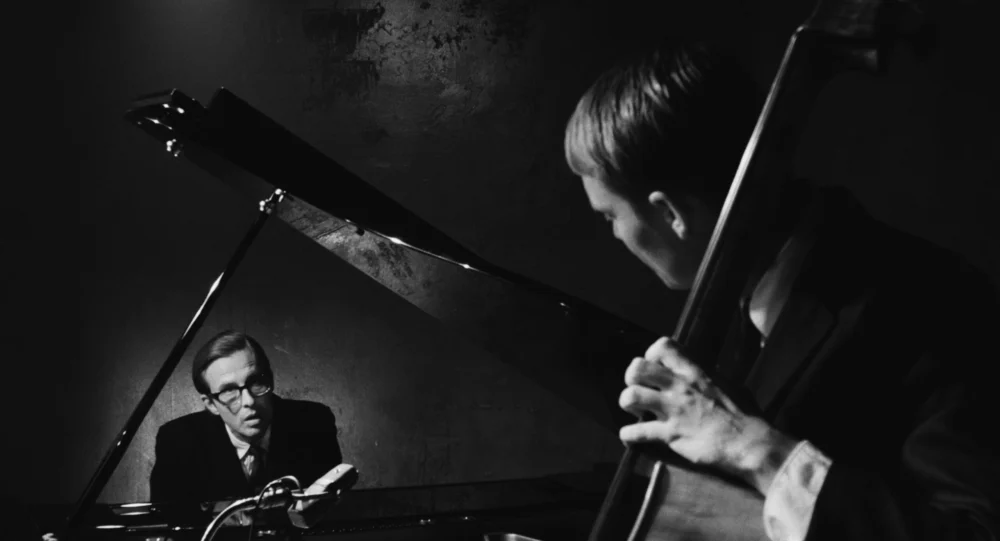
The transition from documentary to fiction presented Gee with new artistic challenges and opportunities. He notes that his prior experience directing music videos, particularly for bands like Radiohead, proved invaluable in staging the film’s musical sequences. The opening four minutes of Everybody Digs Bill Evans, which depicts the band performing an entire track in a meticulously recreated New York’s Village Vanguard club, was directly influenced by his music video expertise. Furthermore, his documentary work, which often necessitates adapting to unpredictable situations, fostered a flexibility on set that proved crucial for his fiction debut.
Crafting a Performance: Anders Danielsen Lie as Bill Evans
Central to the film’s success is the nuanced portrayal of Bill Evans by Anders Danielsen Lie, an actor celebrated for his collaborations with director Joachim Trier in films such as The Worst Person in the World and Oslo, August 31st. Lie’s casting brought an unexpected depth, as he revealed himself to be a devoted fan of Evans’s work, having spent considerable time transcribing the pianist’s solos to intimately understand his musical and emotional language.
This profound personal connection facilitated a remarkably collaborative process between Gee and Lie. Their early conversations, spanning the man, his work, and the script, established a strong foundation of trust. Gee observed that Lie’s preparation was so thorough that little additional direction was needed on set beyond blocking and subtle adjustments to pace and tone. This synergy allowed for a performance that feels both authentic and deeply empathetic to Evans’s internal struggles.
A particular highlight of the production was the recording of the "live" version of "Jade Visions," a track that opens Everybody Digs Bill Evans. Lie, on piano, collaborated with professional jazz musicians Will Sach (bass) and Boz Martin-Jones (drums) in a music studio in West Cork, Ireland. Gee recounted how the trio immediately "gelled," producing the captivating version heard in the film. This commitment to musical authenticity underscores the film’s dedication to honoring Evans’s legacy.
Exploring Universal Themes: Grief, Addiction, and the Creative Process
Everybody Digs Bill Evans is not merely a biographical account; it is a profound exploration of universal themes: grief, the intricate relationship between suffering and creativity, and the arduous path to recovery. The film unflinchingly depicts how LaFaro’s death acted as a severe block to Evans’s creative output, prompting his retreat from the public eye and even sparking rumors of his own demise in New York jazz circles during the summer of 1961.
The narrative proposes that Evans, once the initial numbing grip of grief began to loosen, faced a monumental decision: whether to return to the demanding world of New York jazz, to playing and recording, or to succumb to his sorrow. While Evans ultimately chose to continue, embarking on another two decades of an extraordinary career marked by music of unparalleled beauty and grace, the film subtly suggests that the wound of LaFaro’s loss never fully healed. As writer Gene Lees, one of Evans’s closest friends, observed, Bill never truly got over LaFaro’s death. This enduring pain, intertwined with his struggles with hard drugs, becomes a central facet of the film’s portrayal of a troubled musical genius learning that "sometimes an intermission is part of the music."
The film portrays Evans’s struggles with addiction not as a sensationalized element but as a tragic consequence of his inner turmoil and the immense pressure of his artistic life. His reliance on substances is presented as a coping mechanism, a dark shadow accompanying his attempts to navigate profound loss and rekindle his creative fire. This nuanced approach allows the audience to connect with Evans’s humanity, recognizing the universal struggle to find solace and meaning amidst personal devastation.
The Berlin Premiere and International Reach
The selection of Everybody Digs Bill Evans for the Berlin International Film Festival’s competition lineup signifies a significant debut for Gee’s first fiction feature. The Berlinale is one of the world’s most prestigious film festivals, and its competition section is reserved for films considered to be of the highest artistic merit, often serving as a launchpad for critical acclaim and international distribution. This high-profile premiere ensures global attention for the film and its exploration of Evans’s complex legacy.
Mister Smith Entertainment is overseeing world sales for the movie, which is an international co-production involving Dublin-based Cowtown Pictures and London’s Hot Property. This collaborative effort underscores the film’s global appeal and the universal resonance of its themes. The involvement of such key players in international film distribution and production further cements the film’s potential to reach a wide and diverse audience.
The Enduring Legacy of Bill Evans
Bill Evans’s musical output, characterized by its emotional depth and harmonic innovation, continues to inspire generations of musicians and listeners. His ability to convey profound emotion through intricate melodic lines and sophisticated voicings established him as one of the most influential pianists in jazz history. Everybody Digs Bill Evans serves as a poignant reminder that behind the genius lay a man grappling with immense personal pain, whose art was inextricably linked to his life experiences.
The film’s exploration of grief as both a paralyzing force and, eventually, a catalyst for deeper artistic expression, resonates far beyond the confines of the jazz world. It speaks to the human condition, the resilience required to navigate loss, and the enduring power of art to articulate the inexpressible. As audiences engage with Everybody Digs Bill Evans, they are invited not only to revisit the music of a legend but also to understand the profound human story that shaped it, reinforcing the idea that even in the deepest sorrow, there can be a path, however arduous, back to creation.