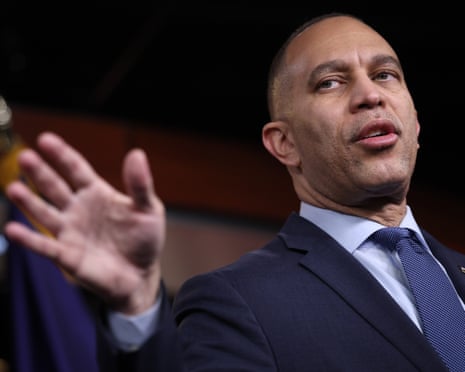
House Minority Leader Hakeem Jeffries on Friday characterized the latest Republican proposal to fund the Department of Homeland Security as "unserious," as the federal government careens toward a midnight deadline that could trigger a partial shutdown of several critical agencies. The impasse on Capitol Hill centers on a fundamental disagreement over the conduct and oversight of federal immigration agents, a dispute that has only intensified following a series of high-profile incidents involving the use of force by federal officers in the Midwest.
Jeffries placed the blame for the looming fiscal crisis squarely on the shoulders of House Republicans and Speaker Mike Johnson, noting that the GOP leadership allowed lawmakers to leave Washington for a week-long recess despite the impending funding lapse. The Democratic leader indicated that while his caucus would provide a formal response to the Republican offer, the proposal remains fundamentally flawed because it omits critical "guardrails" intended to reform the operations of Immigration and Customs Enforcement (ICE) and Customs and Border Protection (CBP).

Top House Democrat Says Republicans’ Latest Offer to Fund DHS is ‘Unserious’ Amid Shutdown Fears
The core of the legislative battle involves Democratic demands for ironclad transparency measures within the annual DHS appropriations bill. Specifically, Democrats are seeking to codify requirements that federal immigration agents obtain judicial warrants before conducting raids or arrests on private property. Other proposed reforms include a permanent ban on officers wearing masks while on duty and a mandate for the continuous use of body-worn cameras during all enforcement actions.
Republicans have countered that such restrictions are non-starters, arguing that they would impede the efficiency of the administration’s "maximum pressure" immigration strategy. This ideological divide has left the Department of Homeland Security without a full-year funding agreement through September. While the Trump administration’s "One Big Beautiful Bill Act" (OBBBA) provided a $75 billion cash infusion to immigration enforcement last year—likely insulating ICE and CBP from the immediate effects of a shutdown—other agencies remain at risk.
If a funding agreement is not reached by tonight, the Transportation Security Administration (TSA), the Secret Service, and the Federal Emergency Management Agency (FEMA) would be forced to operate under shutdown protocols. TSA workers, including airport screeners and baggage handlers, would be expected to work without pay, a situation that previously led to significant travel disruptions during the record-breaking 43-day shutdown in early 2019. FEMA officials have also warned that a lapse in funding could severely limit the agency’s ability to coordinate with state and local partners during natural disasters.
Republicans’ Latest Offer to Fund DHS is ‘Unserious’ as Minnesota Tensions Rise
The tension on Capitol Hill is mirrored by a legal and humanitarian crisis unfolding in Minnesota, which has become a focal point for the administration’s domestic enforcement surge. On Friday, a federal judge ordered the DHS to guarantee that immigrants held at the Bishop Henry Whipple federal building in Minneapolis are granted meaningful access to legal counsel before being transferred out of state.
Judge Nancy Brasel, a Trump appointee, issued a 41-page ruling that chided the administration for what she termed an "unconstitutional infringement" of detainees’ rights. The ruling stems from a class-action lawsuit alleging that individuals were being moved across state lines before they could make a single phone call to an attorney or family member. Judge Brasel’s order mandates that the government provide private telephone access and lists of legal service providers within one hour of a person’s detention.
The judicial intervention follows a string of controversies in the Twin Cities, including the fatal shooting of two U.S. citizens during recent immigration operations. In a separate development on Thursday, federal prosecutors in Minneapolis moved to drop felony assault charges against two Venezuelan nationals after "newly discovered evidence" contradicted the official accounts provided by federal officers. One of the men had been shot in the leg during the encounter, an incident that initial government affidavits claimed was necessitated by a violent struggle involving a snow shovel and a broom handle.

Trump Administration Actions and the ‘Unserious’ Funding Proposal
As the shutdown looms, the Trump administration has continued to move forward with a sweeping agenda of deregulation and enforcement. In what the President described as "the single largest deregulatory action in American history," the Environmental Protection Agency (EPA) officially revoked the 2009 "endangerment finding." This bedrock scientific determination had previously allowed the government to regulate greenhouse gas emissions as a threat to public health.
The repeal has drawn sharp rebukes from former officials and environmental advocates. Former Secretary of State John Kerry called the move "un-American" and "Orwellian," arguing that ignoring the warning signs of climate change puts Americans directly in the path of increasingly severe weather events. Former President Barack Obama also weighed in on social media, stating that the repeal would leave the nation "less safe and less healthy" for the benefit of the fossil fuel industry.
Simultaneously, the administration is moving forward with a massive expansion of the nation’s immigration detention infrastructure. Documents disclosed by the governor of New Hampshire revealed that U.S. Citizenship and Immigration Services (USCIS) expects to spend an estimated $38.3 billion to acquire and retrofit industrial warehouses across the country into new detention centers. The plan includes the creation of 16 regional processing centers and eight large-scale detention facilities, some capable of holding up to 10,000 detainees at a time.

International Fallout and the Munich Security Conference
The domestic political strife is also reverberating on the global stage, where U.S. allies are expressing growing concern over the administration’s "America First" foreign policy. At the Munich Security Conference on Friday, French President Emmanuel Macron urged Europe to reassert its global position and "show the world our unwavering commitment to defend our own interests." Macron’s remarks included thinly veiled swipes at U.S. trade policy and recent suggestions from the White House regarding the potential annexation of Greenland.
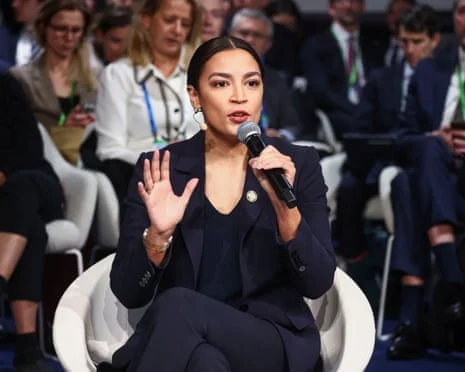
Representative Alexandria Ocasio-Cortez, also attending the conference, warned that the current administration is "tearing apart the transatlantic partnership" and ripping up democratic norms. In a panel discussion on populism, the New York Democrat argued that "hypocrisy is vulnerability" in a rules-based international order. She called for a return to a partnership based on integrity and shared values, rather than isolationism or threats against allies.
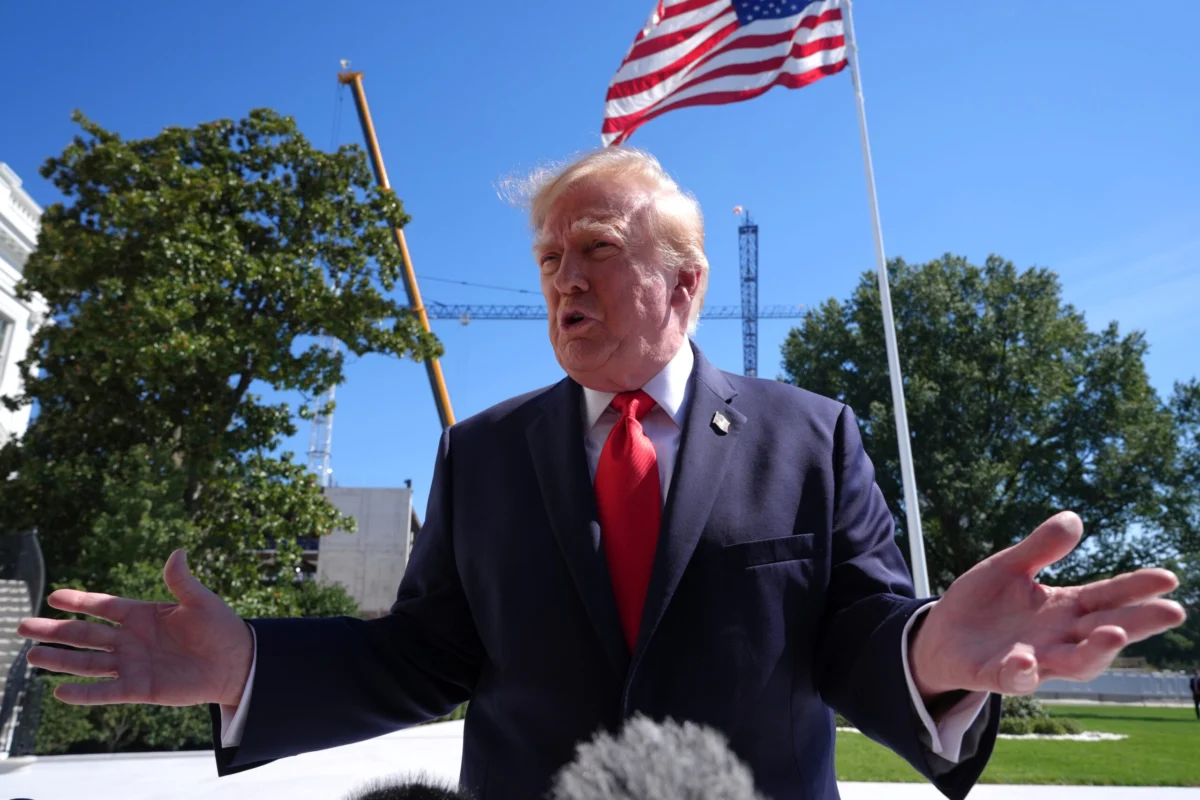
The President, however, remained defiant during a visit to military families at Fort Bragg in North Carolina. Addressing the crowd, he claimed that the U.S. military would be "severely disturbed" if Democrats were to succeed in the upcoming 2026 midterm elections. He also commented on the DHS funding battle, labeling Democratic negotiators "radical left lunatics" and asserting that he knows exactly what his own party can "live with" in a final bill.
Broad Implications of the Funding Impasse
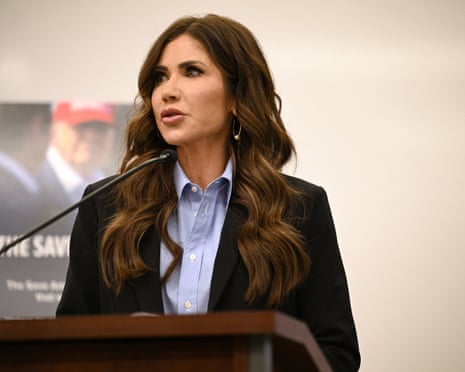
The current standoff is not merely a budgetary dispute but a referendum on the limits of executive power and the role of oversight in a polarized government. The "unserious" nature of the negotiations, as Jeffries described them, suggests that a quick resolution is unlikely before the midnight deadline. The political calculations are further complicated by the recent passage of the "Save America Act" in the House, a Republican-led bill that would require proof of citizenship for voter registration—a measure that Homeland Security Secretary Kristi Noem has touted as "commonsense" but which is expected to die in the Senate.
As the clock ticks toward a shutdown, the impact on the American public becomes more tangible. While the administration continues to revoke temporary protected status (TPS) for nationals from countries like Yemen, Haiti, and Venezuela, the lack of a funded DHS could disrupt the very administrative systems required to process these deportations. The result is a landscape of profound uncertainty, where federal agents, legal advocates, and millions of citizens are left waiting for a signal that the government is ready to resume the serious business of governing.
Without a breakthrough, the partial shutdown will begin at 12:01 a.m. Saturday. Jeffries has signaled that Democrats remain ready to "sit down with anyone, anytime, anyplace" if the administration is serious about reform, but the current trajectory suggests that the halls of the Capitol will remain quiet through the weekend while the consequences of the impasse begin to be felt at airports and border facilities across the nation.