Recent disclosures regarding flight logs and internal government communications have intensified pressure on British authorities to determine if Andrew Mountbatten-Windsor should be questioned over his relationship with Epstein. The calls for a formal interrogation come as former Prime Minister Gordon Brown and several members of Parliament demand a full accounting of the former prince’s ties to the late convicted sex offender Jeffrey Epstein. While the royal family has historically enjoyed a degree of deference from law enforcement, the emergence of evidence suggesting the misuse of official trade envoy resources has shifted the conversation from social scandal to potential criminal inquiry.
Mounting Evidence and the Call for Andrew to be Questioned Over His Relationship with Epstein
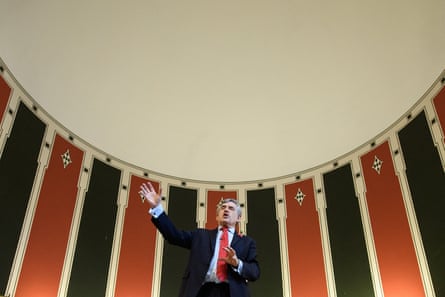
Former Prime Minister Gordon Brown, known for his meticulous approach to policy and forensics, has recently turned his attention to the unsealed Epstein files. Brown’s public insistence that the police must act marks a significant turning point in the long-running saga. According to those close to the former premier, Brown was particularly disturbed by the discovery of flight records and the "extent of betrayal" involving high-ranking British officials. His primary focus, however, remains the systemic failure to hold powerful enablers accountable for the abuse of women within British borders.

Brown’s analysis of flight records suggests that Jeffrey Epstein’s private aircraft frequently moved through Stansted and other UK airports. These logs reportedly show instances where women were transferred between planes on British soil, a detail Brown argues was overlooked by previous Metropolitan Police inquiries. He has stated privately that earlier investigations into Andrew Mountbatten-Windsor failed to properly scrutinize these aviation records. Consequently, Brown and other critics argue that the Stansted revelations alone provide sufficient grounds for the police to interview the former prince.
The demand for transparency is not limited to former heads of state. In Westminster, the mood has shifted toward a more confrontational stance regarding the monarchy’s role in the Epstein affair. Sarah Owen, chair of the Commons Women and Equalities Committee, recently challenged Cabinet Secretary Chris Ward over the government’s handling of the matter. Owen argued that the public’s faith in democratic systems depends on the principle that no individual is above the law. She noted that if institutions fail to investigate these ties, it risks eroding the very foundation of political trust in the United Kingdom.
Why Authorities Want Andrew Questioned Over His Relationship with Epstein Regarding Trade Envoy Roles
A central component of the current controversy involves Andrew Mountbatten-Windsor’s tenure as the UK’s special representative for international trade and investment. Between 2001 and 2011, he served as a trade envoy to critical markets, including China and Hong Kong. Recent evidence suggests that during this period, he may have utilized his government-funded position to benefit Jeffrey Epstein’s private interests. Emails obtained through various investigations appear to show the former prince sharing sensitive investment data with Epstein while on the government payroll.
One particularly damning document, reportedly prepared by British government officials for the prince, detailed significant mineral deposits in Afghanistan. The report highlighted high-value resources such as gold, uranium, marble, and lithium. On Christmas Eve 2010—just months after Epstein’s release from a Florida prison—Andrew allegedly forwarded this information to Epstein. The document specifically mentioned the "potential for low-cost extraction" of these minerals, raising questions about whether state secrets or sensitive economic intelligence were being shared with a convicted sex offender.
Furthermore, flight and travel records indicate that during official trade missions to Singapore, Vietnam, and Shenzhen, the former prince was accompanied by business associates of Epstein. Internal communications suggest that reports from these visits were forwarded to Epstein almost immediately after being received from official special assistants. This level of coordination has led groups like the anti-monarchy campaign Republic to report the matter to the Thames Valley Police. The group’s leadership has argued that there is no meaningful difference between these allegations and those facing other high-ranking political figures linked to the financier.
The Role of Thames Valley Police and the CPS
The investigation is currently being assessed by the Thames Valley Police, the force responsible for the area encompassing the Windsor estate. They are reportedly in discussions with the Crown Prosecution Service (CPS) to determine if a full criminal probe is warranted. The assessment focuses on two primary areas: the alleged sharing of confidential government documents and separate claims involving a sexual encounter at Royal Lodge in 2010.

This second allegation involves a woman who was reportedly sent to the United Kingdom by Epstein specifically for an encounter with the prince. While this claim is separate from the high-profile civil case brought by Virginia Giuffre, it adds to a growing body of testimony suggesting that Epstein’s trafficking network operated within the UK. Former Victims’ Commissioner Vera Baird has stated that she previously raised concerns with the police but was told the matter was being handled by U.S. authorities. With the emergence of new emails and flight data, Baird now insists that the British police can no longer defer to their American counterparts.
Contradicting the "No Contact" Defense and the Impact of New Disclosures
For years, the primary defense used by Andrew Mountbatten-Windsor was the assertion that he had severed ties with Epstein following the financier’s 2010 conviction. During a 2019 interview with BBC Newsnight, he claimed that a final meeting in New York’s Central Park was intended to end the friendship "honourably." He explicitly told interviewer Emily Maitlis that from that day forward, he was never in contact with Epstein again.
However, a series of emails from 2011 appears to directly contradict this testimony. In an email dated December 22, 2010, the former prince reportedly wrote to Epstein, stating it was "great to spend time with my US family" and that he looked forward to "joining you all again soon." Another message from February 2011, sent as media scrutiny began to mount, stated, "It would seem we are in this together and we will have to rise above it." These communications suggest a level of intimacy and ongoing collaboration that was never disclosed to the public or the BBC.
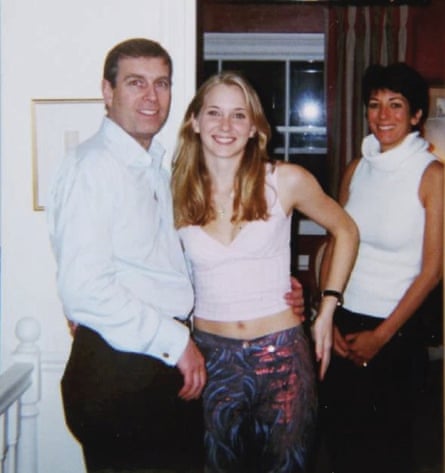
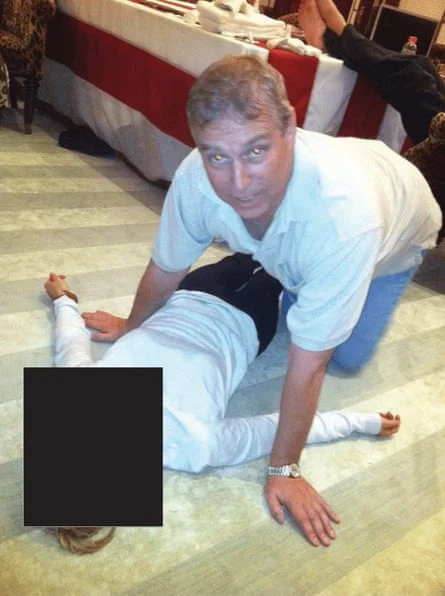
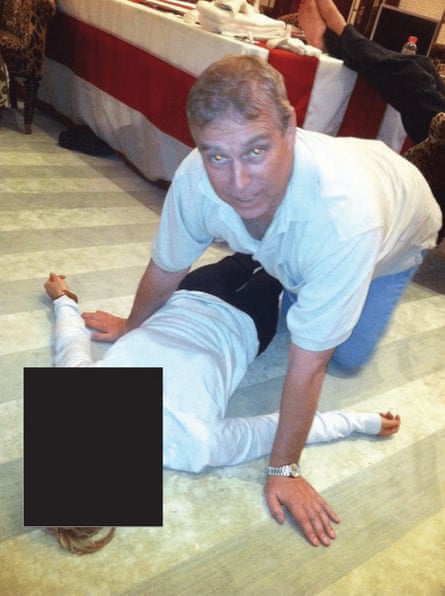
The 2019 interview also famously included denials regarding a 2001 photograph showing the prince with his arm around a 17-year-old Virginia Giuffre. The prince suggested the photo might have been faked or manipulated, claiming he was not one for "public displays of affection." Recent disclosures, including an email from Ghislaine Maxwell in 2015, appear to confirm the photograph’s authenticity. Maxwell’s draft statement at the time acknowledged that the photo was taken in London when Giuffre met several of her friends, including the prince. Furthermore, a recently surfaced photograph of the prince in a compromising position with another woman has further damaged his claims of being "un-huggy."
The Royal Family’s Internal Response and Public Perception
The fallout from these revelations has reached the highest levels of the British monarchy. King Charles III has taken decisive action to distance the institution from his brother. In October, the King stripped Andrew of his remaining royal titles and ordered his eviction from Royal Lodge, the 30-room residence he had occupied for years. The King has reportedly expressed "profound concern" over the continuing drip-feed of disclosures and has indicated that the palace will support any police investigation if approached.
The Prince and Princess of Wales have also been described by spokespeople as "deeply concerned" by the allegations. For the royal family, the crisis represents more than a personal family dispute; it is a threat to the prestige of the Crown. Natalie Fleet, an MP and survivor of teenage grooming, noted that while many people still hold the monarchy on a pedestal, that status requires the family to be seen doing the right thing. She emphasized that "words are no longer enough" and that the public expects action and transparency.
Future Implications: Should Andrew be Questioned Over His Relationship with Epstein by US Authorities?
While the British police assess the domestic evidence, there are also calls for the former prince to testify before the U.S. Congress. Survivors of Epstein’s abuse, such as Juliette Bryant, have urged the palace to proactively search and release all emails and files related to the prince’s interactions with Epstein. Bryant argued that the palace’s statements of support for investigations must be followed by tangible cooperation, including granting access to royal email servers.
The legal and political pressure suggests that the strategy of "quiet exile" at Sandringham may no longer be sustainable. As more documents from the Epstein estate are unsealed and more government communications are leaked, the demand for a formal interview grows. Whether the Thames Valley Police will move forward with a formal questioning remains to be seen, but the consensus among legal experts and political leaders is that the current silence from the former prince is increasingly untenable.
The situation underscores a broader shift in how modern societies view the intersection of power, privilege, and accountability. In an era where victims are increasingly empowered to speak out and digital trails are harder to erase, even the most insulated figures find themselves subject to the rule of law. The coming months will likely determine if the British justice system is prepared to take the unprecedented step of formally questioning a member of the royal family in a criminal context.