The Liberal Party of Australia has signaled a definitive shift toward fiscal conservatism and stricter border controls under its newly minted leadership team, with Deputy Leader Jane Hume vowing to block any proposed hikes to the capital gains tax. Speaking during a high-stakes media circuit on Sunday morning, Hume articulated a "back-to-basics" approach for the Coalition, emphasizing lower taxes and "energy abundance" as the primary pillars of the party’s recovery strategy following its worst electoral showing in nearly a century. The policy pivot comes at a moment of intense internal friction, highlighted by the high-profile resignation of Charlotte Mortlock, a leading advocate for women within the party, who surrendered her membership following the recent leadership spill.
The current political landscape in Canberra is defined by the Liberal Party’s efforts to redefine itself after the 2025 federal election, which Jane Hume described as an "existential crisis." The party is currently grappling with a loss of support to both the Labor government and the "Teal" independents, who successfully campaigned on climate action and integrity in former Liberal strongholds. By appointing Angus Taylor as Leader and Jane Hume as Deputy, the Coalition appears to be doubling down on a platform of economic traditionalism and social conservatism to win back disgruntled voters who have migrated to minor parties like One Nation.
Liberal Party Signals Hardline Stance Against Capital Gains Tax Increases
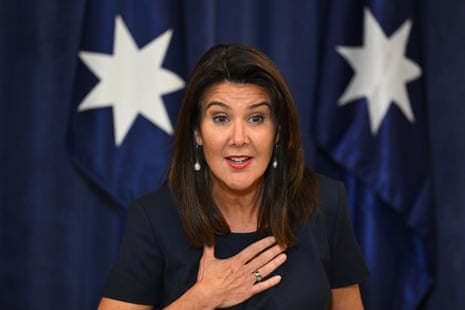
In an appearance on ABC’s Insiders, Jane Hume made it clear that the Liberal Party would remain the party of lower taxes, specifically targeting any potential changes to the capital gains tax (CGT) discount on residential property. The CGT discount has long been a point of contention in Australian politics, with critics arguing it inflates housing prices and benefits wealthy investors at the expense of first-time homebuyers. However, Hume argued that increasing the tax burden on residential housing would exacerbate the nation’s supply shortage.
"If you tax residential housing, there will be less of it," Hume stated, labeling any move to increase the tax a "disaster" for the economy. She challenged the notion that altering the capital gains structure would create more opportunities for renters or those looking to enter the property market. This stance sets up a significant legislative battleground, as the Labor government continues to explore revenue-raising measures to fund social services and infrastructure projects.
Hume’s comments reflect a broader strategy to position the Coalition as the sole protector of the Australian standard of living. While she declined to provide specific details on many new policies—citing that the leadership change was only 48 hours old—she repeatedly returned to the theme of "conviction over convenience." The opposition’s refusal to consider CGT increases suggests they will lean heavily into property-owner demographics in the lead-up to the next federal election.

Internal Turmoil Intensifies as Charlotte Mortlock Resigns from Liberal Party
Despite the leadership’s attempt to project unity and direction, the resignation of Charlotte Mortlock has exposed deep-seated divisions regarding the party’s treatment of women. Mortlock, a former Coalition staffer and the founder of Hilma’s Network, announced Sunday that she was relinquishing her membership and stepping down from her leadership role in the grassroots organization. Her departure follows the ousting of Sussan Ley, who was replaced by Angus Taylor in a move that many moderates viewed as a step backward for gender representation.
Hilma’s Network was established to modernize the Liberal Party and encourage the preselection of more female candidates. Mortlock has been a vocal proponent of gender quotas and net-zero emissions targets, positions that often put her at odds with the party’s more conservative wing. In her resignation statement, Mortlock indicated that "recent events" led her to conclude that there are more effective ways to support women and the country outside the Liberal framework.
The loss of such a high-profile figure is a blow to the party’s efforts to win back female voters in metropolitan areas. During the 2025 election, the "woman problem" was cited as a primary reason for the swing toward Teal independents. Mortlock had previously warned that if the party failed to address its internal culture, more women would walk away. Her exit suggests that the elevation of Taylor and Hume has not sufficiently addressed those concerns, potentially leaving the party vulnerable in key suburban electorates.
Angus Taylor’s New Leadership Faces Immediate Test in Farrer By-election
The political stakes for the new leadership are further heightened by an impending by-election in the southwestern New South Wales seat of Farrer. The seat became vacant following Sussan Ley’s decision to quit politics after being removed from the deputy leadership. Farrer has traditionally been a safe Liberal stronghold, but the upcoming contest is being viewed as the first major referendum on Angus Taylor’s leadership.
Independent candidate Michelle Milthorpe, who finished second to Ley in the previous general election, has already announced her intention to run, vowing to "finish what we started." Milthorpe’s campaign will likely focus on local issues and the perceived instability within the Liberal Party. For Taylor, a loss or even a significant swing against the Liberals in Farrer would be a catastrophic start to his tenure, signaling that the party’s message is failing to resonate even in its heartland.
Taylor has acknowledged the "scale of the challenge" ahead but has so far been reluctant to announce the composition of his shadow cabinet. During a Sky News interview, he parried questions about his frontbench, stating he would "put great people into place" in due course. He also faced questions regarding the Coalition’s relationship with One Nation, particularly regarding preference deals. Taylor emphasized that while he respects One Nation voters, the party organization would ultimately decide on preferencing strategies.

Shifts in Immigration and National Security Vetting Policies
Beyond economics, the new leadership is signaling a move toward more restrictive immigration policies. Both Taylor and Hume have described the current immigration system as "out of control," arguing for a "reset" that prioritizes "standards" over "numbers." Taylor suggested a controversial new approach that would involve intelligence agencies in the vetting process for potential immigrants.
The proposed policy would see agencies assess whether applicants "share Australian beliefs" and respect the rule of law. Taylor argued that the door should be "shut" on those who reject Australian values or bring "hate and violence from another place." This rhetoric aligns with a broader focus on culture-war issues, as evidenced by Taylor’s demand that Prime Minister Anthony Albanese condemn specific pro-Palestine protest slogans.
Critics have characterized this shift as an attempt to appeal to the far-right and reclaim voters who have moved toward One Nation. However, Hume defended the approach, stating that a citizenship test should ensure new Australians subscribe to "core beliefs, freedoms, and personal responsibility." This focus on "values-based" immigration is expected to be a central theme of the Coalition’s platform as they seek to differentiate themselves from Labor’s more globalist outlook.
The Energy Debate: Abundance, Nuclear Power, and Climate Ideology
Energy policy remains one of the most contentious issues in Australian politics, and the new Liberal leadership is signaling a departure from "green ideology." Jane Hume argued that the country must move toward "energy abundance" to bring down prices for households and businesses. A key component of this plan involves lifting the moratorium on nuclear energy, a move Hume has championed since her time as a backbencher.
"It is absolutely crazy to take an ideological approach towards energy," Hume said, arguing that nuclear power is a zero-emissions technology used by almost every other developed nation. While the Labor government remains committed to a renewables-led transition, the Coalition is positioning nuclear power as a pragmatic solution to both energy security and emissions reductions.
However, the path to winning back "Teal" seats may be complicated by this stance. While Hume acknowledged the importance of protecting the environment, she argued that it is not the only priority for Australians. By focusing on the cost of living and "economic flourishing," the leadership is betting that voters will prioritize their hip pockets over aggressive climate targets in the next election cycle.
Global Trade and Domestic Safety: EU Negotiations and Sydney Tragedy
While the political drama unfolded in Canberra, Trade Minister Don Farrell provided an update on the long-stalled free trade agreement with the European Union. Farrell noted that while "10 issues" that previously blocked the deal have been "significantly reduced," a final agreement remains out of reach. The negotiations have been hampered by disputes over agricultural products, including the EU’s insistence on protecting geographical indicators for products like beef, parmesan, and prosecco.
"If getting a free trade agreement with Europe had been easy, somebody else would have done it," Farrell said, expressing determination to reach a deal that benefits Australian exporters. The outcome of these talks will have significant implications for Australia’s agricultural sector, which is seeking to diversify its markets amid ongoing regional tensions.
In a separate and somber development, New South Wales police have declared a critical incident following a tragic car crash in Sydney’s west. The incident began when a 31-year-old man allegedly stole a vehicle and led police on a pursuit through Bankstown. The chase was terminated due to safety concerns, but the stolen vehicle later collided with an Alfa Romeo in Camden South, killing two unidentified passengers. The driver has been charged with eleven offences, including dangerous driving occasioning death.
As the Liberal Party attempts to rebuild and the nation deals with both policy shifts and local tragedies, the coming weeks will be a period of intense scrutiny for the Taylor-Hume leadership. With a by-election on the horizon and internal dissent simmering, the Coalition’s ability to present a unified and compelling alternative to the Labor government will be tested at every turn.