Sebastian Brameshuber’s new film, London, is set to premiere globally at the Berlin International Film Festival’s Panorama program, challenging conventional cinematic categories by blending elements of documentary and fiction through the intimate, often revealing, dynamic of car-sharing. The Austrian director, known for Movements of a Nearby Mountain and And There We Are, in the Middle, utilized a highly controlled studio environment to foster spontaneous, deeply personal conversations, creating a unique portrait of contemporary Europe. This innovative approach to filmmaking, which sees strangers sharing rides and life stories, has generated considerable buzz ahead of its highly anticipated debut on Monday, Feb. 16.
The Genesis of a Genre-Bending Vision
The concept for London originated from director Sebastian Brameshuber’s own experiences with long-distance car-sharing between Vienna and Berlin. He observed a distinct quality of interaction that emerged when strangers were confined together in a vehicle for extended periods. This particular dynamic, characterized by a unique blend of intimacy and detachment, became the fertile ground for his latest project. Brameshuber noted that the physical orientation of car travel – passengers largely looking forward rather than directly at each other – creates an atmosphere conducive to open, unguarded conversation, fostering a sense of shared journey that transcends initial unfamiliarity.
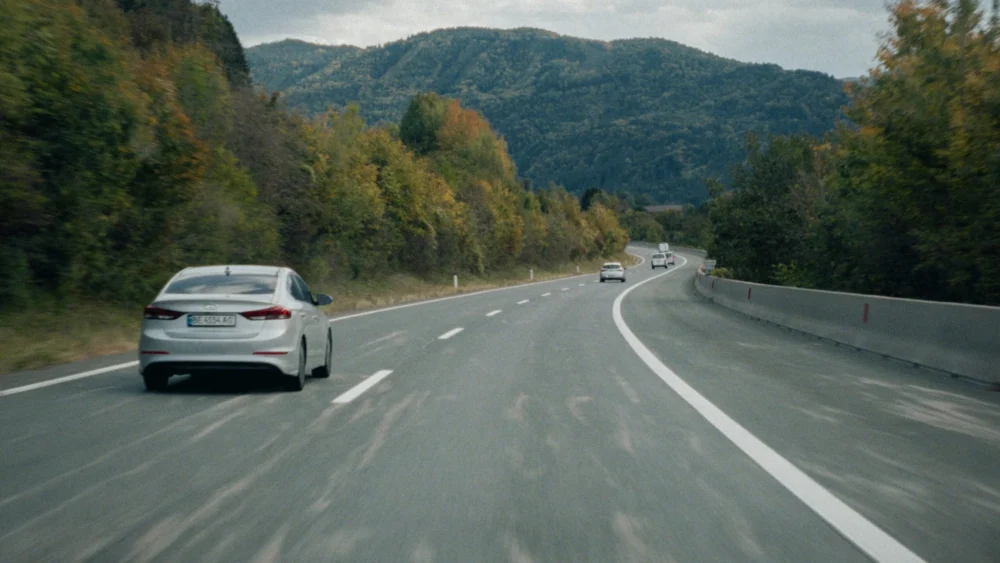
This observation led Brameshuber to explore how such encounters could be translated into a cinematic experience that defies easy categorization. Described as "neither a documentary nor entirely fiction," London deliberately blurs the lines between staged reality and authentic human interaction. The film centers on Bobby Sommer, playing a character also named Bobby, who navigates the highway linking Vienna and Salzburg. Through a car-sharing service, Bobby picks up an array of diverse passengers, each bringing their own narratives, struggles, and perspectives to the confined space of the car. These include a young man grappling with mandatory military service, a queer woman on the cusp of marriage, a supermarket trainee, and an academic delving into the history of the very motorway they travel.
Crafting Conversations on the Open Road (or Studio Set)
Despite depicting what appears to be an authentic road trip, London was predominantly filmed within a studio. This seemingly restrictive setting was, according to Brameshuber, precisely what allowed for creative liberation. “The setting was very strict, because we were in the studio,” Brameshuber explained, “But this strict set-up brought about this freedom for how the conversations could flow.” This paradox lies at the heart of the film’s genre-bending methodology. By isolating the car and its occupants from external variables, the director could meticulously control the environment, thereby enabling a focus solely on the unfolding dialogue and character interactions.

The casting process was crucial to achieving this balance. Brameshuber cast Bobby Sommer after seeing him in another film and recognizing a resemblance to GTO, the character portrayed by Warren Oates in Monte Hellman’s 1971 road movie classic, Two-Lane Blacktop. The director was particularly inspired by GTO’s tendency to reinvent his personal story for each new passenger, a narrative device that resonated deeply with the themes of identity and self-presentation in London. This initial spark of inspiration blossomed into a dialogue with Sommer, though the project itself took nearly 12 years to materialize, a testament to Brameshuber’s commitment to refining his vision.
For the other roles, Brameshuber sought out individuals who possessed both conversational engagement and a compelling, yet slightly mysterious, presence. These carefully selected actors and non-actors were placed in the car with Sommer, with the director sometimes providing cues and topics for discussion to Sommer via an earpiece. This method allowed for a guided spontaneity, ensuring that key themes were explored while preserving the organic flow of human conversation. The film’s producers, David Bohun and Lixi Frank of Panama Film, supported this unconventional approach, understanding that the film’s power would stem from its unique production design and the authenticity it managed to extract from a controlled environment.
A Microcosm of Modern Europe
At its core, London aims to be more than just a series of isolated dialogues; it endeavors to create "a portrait of today’s Europe." The diverse array of passengers picked up by Bobby represents a cross-section of contemporary European society, each facing distinct personal and societal challenges. Through their conversations, the film subtly touches upon themes of national identity, military service obligations, evolving social norms (as seen with the queer woman), economic realities, and the role of academia in understanding the past. These individual narratives, woven together by the common thread of the car-sharing journey, collectively offer a nuanced glimpse into the varied experiences and anxieties that define the continent today.
The film also delves into the personal world of Bobby, the driver. As he transports his passengers, audiences gradually uncover details about his youth, his relationship with his parents, his reflections on aging, and the profound reason behind his constant travel: a friend in a coma in Salzburg. This personal tragedy adds an emotional anchor to the film, transforming Bobby from a mere facilitator of encounters into a character with his own compelling internal journey. His story intertwines with those of his passengers, creating a layered narrative where individual destinies momentarily converge in the shared space of the car. This humanistic approach underscores Brameshuber’s primary motivation: "The most important thing for me was making this film about this particular form of encounter between strangers."
The psychology of car-sharing as observed by Brameshuber is central to the film’s effectiveness. The act of sitting side-by-side, largely looking ahead at the passing road, rather than directly at one another, often disarms individuals. This indirect form of communication can lead to a deeper level of sharing, as the pressure of direct eye contact is reduced. It allows for a relaxed intimacy, where personal stories and vulnerabilities can emerge more freely than in a face-to-face interaction. The director articulated this observation, noting that "You’re mostly looking straight ahead, while making conversation with the person sitting next to you, so you don’t look at the person, or at least only occasionally." This subtle yet significant aspect of the car-sharing experience is meticulously recreated and explored within the film.
The Road’s Unseen History and Evolving Identity

Beyond the personal stories and contemporary social commentary, London also imbues its setting with historical weight. The A1 motorway, also known as the Westautobahn, which serves as the film’s constant backdrop, carries a complicated and often overlooked past. Brameshuber reveals that the picturesque views along this route were deliberately designed during the Nazi era. This historical layer adds a profound, albeit subtle, dimension to the film, connecting personal journeys to a broader, often uncomfortable, national history.
Brameshuber, whose previous projects have explored "historically charged locations," found the Westautobahn to be a compelling site for this investigation. “I’m always interested in places that carry history within them, and for the Westautobahn, that’s very true,” he stated. He elaborated on how this history is largely invisible to the casual observer, hidden beneath modern infrastructure like bridges and viaducts from that period that continue to support parts of the motorway. The seemingly natural landscape views are, in fact, a historical design, a detail that challenges perceptions of what is "given" and what is constructed. This exploration of hidden histories and their lingering presence adds intellectual depth to the film’s otherwise intimate focus on human connection.
From "Current Traffic" to a "Mental Geography"
The film’s title, London, holds a symbolic significance that evolved throughout its long development process. For a considerable time, the working title was In Current Traffic, a contemporary reference to digital navigation systems that provide real-time travel estimates, such as "13 hours until the destination in current traffic." This initial title highlighted the immediacy and pragmatic reality of the car-sharing experience in the digital age.
However, as Brameshuber neared the completion of the project, he felt a shift was necessary to capture the film’s deeper, more associative meanings. The final title, London, emerged from a detail within Bobby’s narrative. Bobby mentions London as a destination he visited in his youth, drawn by its music, spirit, and the promise of freedom. For Brameshuber, this reference transcends a literal geographical location. “For me, the title opens up the narrow space of the car to a mental geography and to a destination that’s more of a feeling,” he concluded. London thus becomes a metaphor for aspiration, youth, escape, and an abstract sense of freedom that resonates with the various characters’ internal journeys and desires.
The film’s journey to the screen has been a lengthy one, culminating in its premiere at the prestigious Berlin International Film Festival. With world sales handled by Square Eyes, London is poised to captivate international audiences and critics alike with its unconventional narrative structure and profound exploration of human connection. Brameshuber’s masterful blend of strict studio control and fluid conversational freedom promises a cinematic experience that is both intellectually stimulating and emotionally resonant, solidifying its place as a notable entry in contemporary Austrian cinema and a true genre-bender on the global stage.