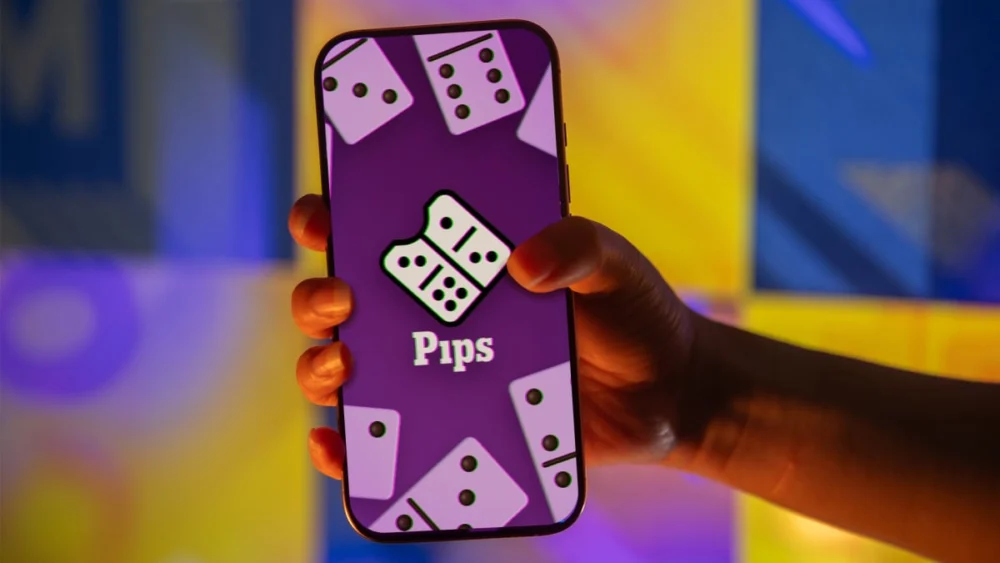
The New York Times digital gaming suite continues to expand its influence over daily internet habits as players engage with the February 15, 2026, iteration of Pips, a complex tile-matching puzzle that has seen a surge in popularity since its mid-2025 debut. The game, which blends the traditional mathematics of dominoes with modern spatial logic, presents a three-tiered difficulty structure that has become a staple for millions of subscribers seeking to maintain their daily "streaks." As the puzzle grows in complexity, the demand for incremental guidance has increased, particularly due to the game’s current binary resolution system which offers no middle ground between total failure and a complete reveal of the solution.
Since its release in August 2025, Pips has carved out a unique niche within the New York Times Games portfolio, sitting alongside legacy titles like The Crossword and modern sensations like Wordle and Connections. The game represents a strategic shift for the Times, moving toward more tactile, visual-logic puzzles that appeal to a broad demographic of problem-solvers. Unlike traditional dominoes, where the primary goal is to exhaust one’s hand by matching ends, Pips requires players to populate a pre-defined grid while adhering to strict mathematical and color-coded constraints. This shift from competitive play to a solitary, logic-based experience has redefined how the "pip"—the traditional term for the dots on a domino—is perceived by the modern gamer.
The difficulty for many players on February 15 stems from the intricate interplay between horizontal and vertical placements. The game’s interface utilizes a color-coded system where specific regions of the board dictate the required sum or value of the pips contained within them. A recurring challenge in the current build of the software is that it does not provide partial hints; if a player becomes obstructed by a specific logic gate, the only in-game option is to reveal the entire board. This "all-or-nothing" approach has led to a robust secondary market for daily guides and strategic breakdowns, as enthusiasts seek to preserve the integrity of their solve without resorting to a total reveal.
The Mechanics of Pips and the February 15 Challenge
To master Pips, one must first understand the relationship between the tiles and the colored zones. The tiles are standard dominoes, featuring two squares each containing a number of pips ranging from zero to six. These tiles can be oriented vertically or horizontally. The primary complexity arises when a single tile straddles two different zones. For example, a 6-3 tile might have its "6" side in a zone requiring a sum of ten and its "3" side in a zone requiring a sum of five. This overlap requires players to think several moves ahead, as a single placement can satisfy one condition while simultaneously making another impossible to meet.
On February 15, 2026, the board configurations across Easy, Medium, and Hard levels emphasize the "Equal" and "Number" conditions. The "Number" condition requires that all pips within the specified color-coded boundary add up exactly to the target integer. Conversely, the "Equal" condition mandates that every individual tile face within that zone must display the exact same number of pips. This distinction is critical for the mid-month puzzles, as the grid layouts have become increasingly cramped, leaving little room for error in the early stages of the solve.
Breaking Down the Easy Difficulty NYT Pips Hints, Answers for February 15, 2026
The Easy level for February 15 serves as an introductory course in spatial management. The board is divided into several distinct zones, including a "Number (2)" area and an "Equal (3)" red space. In the "Number (2)" space, the solution requires the placement of a 2-3 tile in a horizontal orientation. Because only the "2" side of the domino falls within the active zone, the condition is met. This demonstrates a key mechanic: players must ignore the portion of the tile that sits outside the color-coded boundary.
Further complexity is found in the "Number (10)" and "Number (5)" zones. The "Number (10)" area is resolved by placing a 1-4 tile vertically alongside a 6-3 tile placed horizontally. The math here is precise; the 1, 3, and 6 pips combine to reach the target, provided the 4 is positioned outside the zone. Meanwhile, the orange "Number (5)" space utilizes the other half of that 6-3 tile. By adding a 2-0 tile horizontally, the 3 from the first tile and the 2 from the second tile satisfy the requirement. The Easy puzzle concludes with a "Number (1)" zone, where a 3-1 vertical tile and the 2-0 horizontal tile overlap, leaving only the "1" and "0" pips within the boundary to reach the sum of one.
Navigating the Medium Difficulty NYT Pips Hints, Answers for February 15, 2026
The Medium difficulty puzzle for February 15 introduces the "Greater Than" and "Less Than" operators, which significantly broaden the possible tile combinations. The puzzle begins with a purple "Equal (3)" space, requiring a 3-3 tile placed horizontally. This is a straightforward start, but the board quickly becomes more demanding. A "Greater Than (4)" zone is solved using a 6-2 tile placed vertically, where the 6 satisfies the condition.
The central challenge of the Medium board involves a light blue "Equal (2)" space. This area requires three different tiles to interact: a 6-2 vertical tile, a 5-2 horizontal tile, and a 2-1 vertical tile. The common thread is the "2" face of each domino, which must be the only part of the tile touching the light blue zone. This level also features a "Number (12)" zone that requires high-value tiles. Players must place a 0-6 tile and a 6-1 tile, both horizontally, to reach the sum. Interestingly, the 6-1 tile also serves a "Less Than (2)" zone, where the "1" side of the domino is the only portion counted, successfully meeting the constraint.
Advanced Logic: Hard Difficulty NYT Pips Hints, Answers for February 15, 2026
The Hard difficulty puzzle for February 15 is a masterclass in overlapping constraints. The red "Equal (4)" space is particularly grueling, requiring three horizontal tiles: 6-4, 4-4, and 4-5. All three must have their "4" faces aligned within the red zone. This placement ripple-effects across the rest of the board. The 6-4 tile also feeds into a purple "Equal (6)" space, which is completed by a 6-2 vertical tile.
One of the most difficult sections of the Hard board is the "Number (22)" zone. Reaching such a high sum requires the densest tiles in the set. The solution involves a 4-5 horizontal tile, a 5-6 vertical tile, and a 6-0 vertical tile. The 4, 5, 5, 6, and 2 (from an adjacent tile) must be carefully managed so that their pips fall within the boundary. Furthermore, the board includes a "Less Than (2)" and "Greater Than (3)" conflict resolved by a single 1-6 vertical tile. The "1" satisfies the "Less Than" zone at the top, while the "6" satisfies the "Greater Than" zone at the bottom. This type of "dual-purpose" placement is the hallmark of the Hard difficulty level.
The Strategic Evolution of the New York Times Games Portfolio
The success of Pips is indicative of a broader trend in the New York Times’ digital strategy. Since the acquisition of Wordle in early 2022, the company has aggressively expanded its gaming division to drive subscription growth. Games have proven to be a "sticky" product, keeping users within the ecosystem long after they have finished reading the day’s headlines. By August 2025, when Pips was launched, the Times had transitioned from a news organization that offered games to a lifestyle platform where gaming is a central pillar of the user experience.
Industry analysts note that Pips fills a specific void in the NYT catalogue. While Wordle is linguistic and Sudoku is purely numeric, Pips is spatial and tactile. It appeals to the same logic centers as Tetris or jigsaw puzzles, but with the added layer of arithmetic. This multi-disciplinary approach ensures that the "Games" tab remains a daily destination for a diverse array of minds. The February 15 puzzle specifically highlights the "gamification" of mathematics, turning simple addition and inequality into a high-stakes logic gate.
Digital Gaming Habits and the Growth of Single-Player Puzzles
The rise of Pips also reflects a shift in digital gaming habits toward "snackable" content. In a landscape dominated by high-intensity multiplayer games, there is a growing demand for calm, methodical, single-player experiences. Pips offers a meditative quality; there is no timer, and the visual aesthetic—clean lines and muted colors—is designed to reduce cognitive load rather than increase it. This "cozy gaming" trend has seen significant growth in the mid-2020s, with Pips leading the charge on mobile platforms.
However, the lack of a hint system remains a point of contention among the player base. Social media platforms and community forums are frequently flooded with requests for "piecemeal" help. Players often express frustration that the current app design forces a "surrender" if they are stuck on a single tile. This has created a vibrant community of "solvers" who publish daily guides, similar to the long-standing tradition of crossword blogs. These communities not only provide the necessary answers but also teach the underlying logic, helping players improve their skills for future puzzles.
Future Outlook for Pips and NYT Gaming
As the New York Times moves deeper into 2026, the evolution of Pips is expected to include more interactive features. Rumors within the tech community suggest that a "hint" button, which might reveal a single tile placement in exchange for a streak penalty or an ad view, is currently in beta testing. Such a feature would address the primary criticism of the game and likely increase retention rates among casual players who find the Hard difficulty puzzles, like that of February 15, too daunting.
The impact of Pips extends beyond mere entertainment. Educators have begun to take notice of the game’s potential as a tool for teaching basic logic and arithmetic to younger audiences. By stripping away the competitive nature of traditional dominoes and focusing on the "conditions" of the grid, Pips reinforces the concept of constraints-based problem solving. As the game nears its first anniversary in August 2026, its place in the pantheon of great digital puzzles seems secure, continuing to challenge the minds of millions one pip at a time.