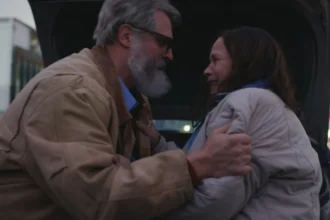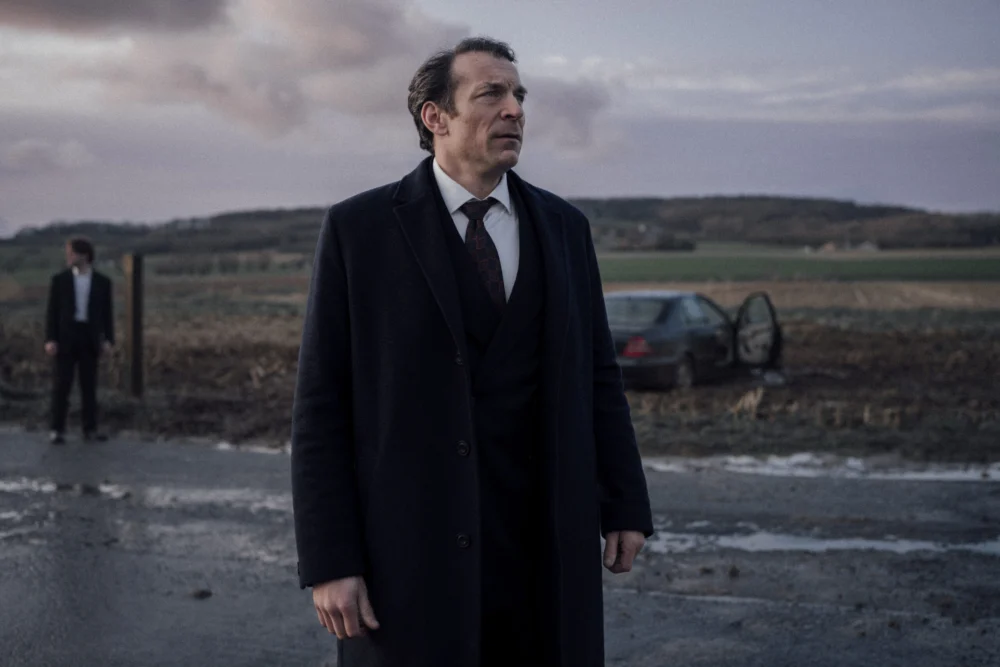
The Berlinale competitor Dust presents a didactic parable of corporate malfeasance, centering on two outwardly respectable yet inwardly panicking Flemish business partners, Geert (Arieh Worthalter) and Luc (Jan Hammenecker), as their fraudulent tech venture faces imminent exposure. Directed by Anke Blondé and penned by Angelo Tijssens, known for his work on Close, the film meticulously details the unraveling of their speech-to-text software start-up, revealed to be a sophisticated scam built on capital swindled from friends, family, and small-time investors.
The Echo of Eras: A Timeless Tale of Greed
Set against the backdrop of the late 20th-century tech boom, a period characterized by explosive growth and rampant speculation, Dust finds an unsettling resonance in today’s burgeoning artificial intelligence (AI) landscape. The film’s narrative mirrors the current global fascination with transformative technologies and the rapid influx of capital into speculative ventures, drawing parallels between past and present market frenzies that can often obscure ethical boundaries.
A Familiar Tech Bubble Burst
The dot-com bubble of the late 1990s, when Dust is primarily set, fostered an environment ripe for rapid investment and the promise of unprecedented returns. This era saw countless start-ups emerge, many with innovative concepts but others built on shaky foundations or outright deception. The allure of quick wealth often overshadowed due diligence, making small investors particularly vulnerable to schemes that capitalized on the public’s eagerness to participate in the perceived "new economy." Dust expertly taps into this historical context, illustrating how the intoxicating atmosphere of a boom can erode character and fuel venality.
The Anatomy of a Scam
The core of Geert and Luc’s enterprise is a classic Ponzi scheme, thinly disguised as a legitimate tech start-up. Their speech-to-text software, ostensibly a groundbreaking product, serves as the facade for a continuous cycle of attracting new investments to pay off earlier ones. Such financial scams are notorious for preying on trust, often targeting individuals within the perpetrators’ personal networks—friends, family, and local communities—who invest based on personal relationships rather than rigorous financial assessment. The film underscores the devastating impact of such white-collar crimes, not just on financial portfolios but on human relationships and communal trust.
A Moral Crucible: The Downfall of Geert and Luc
The narrative thrust of Dust begins with the partners at the height of their perceived success, enjoying a jet-set lifestyle that masks their deep-seated anxiety. A pithy epigraph from Dutch satirist Multatuli, "Nothing is entirely true and not even that," immediately sets the tone, foreshadowing the layers of deceit and moral ambiguity that define the film.
The Architects of Deception
Geert and Luc embody the archetype of the "finance bro," projecting an image of confidence and innovation while privately grappling with the imminent collapse of their empire. Arieh Worthalter’s Geert is portrayed as the more calculating and detached of the two, while Jan Hammenecker’s Luc appears more visibly distressed by their predicament. Their partnership, once a source of ambition and illicit gain, quickly devolves into a desperate struggle for self-preservation.
The Unraveling: A Ticking Clock
The film’s inciting incident sees the partners presenting their product at an international conference, basking in applause. However, this public triumph is immediately followed by a private moment of panic, with Luc succumbing to nausea in an executive restroom. There, they encounter British financial journalist Aaron (Anthony Welsh), who gleefully informs them that his exposé on their "ghost" companies and offshore accounts is poised for publication. This revelation initiates a rapid descent into crisis. Back at their half-finished headquarters—a visual metaphor for their incomplete and fraudulent enterprise—the board, led by the stern Yvette (Aldona Jankowska), votes to oust them. The men are informed they will be arrested within 24 hours but are granted a reprieve until 9 a.m. the following day to "get their affairs in order." This deadline transforms the film into a tense, ticking-clock thriller, intensifying the moral and personal stakes.
Visual Language and Atmosphere
Dust employs a rich visual and auditory tapestry to underscore its themes of greed, superficiality, and decay. The meticulous production design and evocative soundscapes play a crucial role in enhancing the narrative and psychological depth of the film.
Production Design as Narrative
Stijn Verhoeven and Ewa Mroczkowska’s nuanced production design for the interiors serves as a silent narrator, eloquently conveying the material culture of the era and the characters’ aspirational yet ultimately hollow existence. Bourgeois homes filled with kitschy knick-knacks speak to a desire for comfort and status, often achieved through ill-gotten gains. Anonymous office spaces, with fancy chairs still wrapped in plastic in usable meeting rooms, symbolize the facade of a legitimate business built on an unfinished foundation. Frigidly austere villas, on the other hand, hint at a colder, more detached form of wealth, reflecting the emotional distance and moral emptiness that can accompany extreme venality. These settings are not merely backdrops but active participants in the storytelling, emphasizing the characters’ struggle between outward appearances and inner turmoil.
Soundscapes of Deceit
Composer Andrea Balency-Béarn’s menacing musical score, blended with a strange rhythmic industrial noise, contributes significantly to the film’s atmosphere of impending doom. This unsettling soundscape is later revealed to be the steady whir of a paper shredder, methodically destroying incriminating documents. The sound becomes a powerful metaphor for the deliberate dismantling of evidence, the destruction of trust, and the desperate attempts to erase the past. It underscores the pervasive sense of deceit and the irreversible consequences of their actions, permeating the characters’ final hours of freedom with an inescapable sense of dread.
Personal Reckonings and Fragmented Lives
As the 9 a.m. deadline looms, Geert and Luc retreat to their respective lives, each confronting their imminent downfall in vastly different ways, revealing the varied impacts of their choices on their personal spheres. Their individual journeys during this critical period highlight the human cost of their corporate deception.
Luc’s Desperate Attempts at Reconciliation
Luc, visibly more distraught by the impending arrest, makes a detour to visit his hospitalized, stroke-incapacitated father. The father’s attempt to scrawl a message, initially unreadable, symbolizes the communication breakdowns and unresolved issues that have plagued Luc’s life. At home, his wife, Alma (Fania Sorel), is depicted as acutely aware of his shady dealings, her primary concern being the social repercussions and the devastating impact on those who invested their life savings. Luc’s desperate, yet ultimately futile, attempt to reconcile with his estranged daughter over the phone further emphasizes the irreparable damage his actions have inflicted on his family life, leaving him isolated and facing consequences that extend far beyond legal penalties.
Geert’s Cold Calculations
In stark contrast, Geert, portrayed as a gay man in a relationship with his driver Kenneth (Thibaud Dooms), appears to approach his situation with a more detached and pragmatic mindset. Without children to consider, his calculations seem focused on personal escape rather than familial reparations. While Kenneth enjoys a final, carefree skinny dip in an indoor pool, Geert is shown making inquiries about flights to countries without extradition treaties to Belgium. This cold assessment of his options, coupled with the revelation that his sister (Janne Desmet), who runs a bakery, will also be a victim of their Ponzi scheme, underscores his self-serving nature. His concern for his sister appears to be one of the few humanizing elements in his otherwise ruthless contemplation of evasion.
The Weight of Betrayal and Unresolved Fates
As their individual paths converge toward the inevitable, the specter of betrayal looms large, testing the already strained partnership between Geert and Luc. The film masterfully builds tension around the question of loyalty and self-preservation in the face of imminent catastrophe.
The Seeds of Doubt and Self-Preservation
The possibility of one partner flipping on the other to mitigate their own sentence becomes a palpable tension. Geert, with his more calculating demeanor, clearly considers betraying Luc to save himself. Conversely, Luc’s desperate situation suggests that such a thought has also crossed his mind. This mutual suspicion adds a layer of psychological complexity to their final hours, transforming their partnership from a bond of shared ambition into a fragile alliance threatened by individual survival instincts. The ethical exercise of Dust is most keenly felt here, as the film explores the breaking point of human character when confronted with ultimate consequences.
Mired in the Mud: A Symbolic Climax
In a powerful symbolic moment toward the film’s conclusion, Luc finds himself literally stuck in the adhesive Flemish mud after driving recklessly into a field. This physical entrapment serves as a potent metaphor for his and Geert’s predicament—mired in the consequences of their own making, unable to escape the sticky web of deceit they have spun. The ambiguity of his destination—whether he is attempting to flee or heading reluctantly to his final morning at the office—leaves the audience to ponder the ultimate choices of desperate men. This scene encapsulates the film’s critique of venality, suggesting that the pursuit of illicit wealth ultimately leads to a state of being trapped and unable to move forward.
Critical Reception and Broader Implications
Dust has garnered attention for its timely subject matter and strong performances, though its pacing has been a point of contention among critics. The film’s ability to transcend its specific Belgian setting and comment on universal aspects of human nature remains a key discussion point.
Pacing and Purpose
While some viewers have found the film’s "plodding pace" to be attenuated and flat, particularly by the time the climax arrives, it is arguable that director Anke Blondé and screenwriter Angelo Tijssens intended this deliberate tempo. This slow burn might be interpreted as a means to immerse the audience in the psychological decay of the characters, allowing for a deeper contemplation of their ethical dilemmas rather than a fast-paced thriller. The measured rhythm serves to emphasize the slow erosion of moral fiber in the crucible of greed, making the "ethical exercise" a drawn-out, uncomfortable watch designed to provoke introspection.
Societal Mirror: Beyond Belgian Borders
Despite some critiques suggesting a lack of wider sociological background for non-Belgian or non-Northern European audiences, Dust serves as a potent societal mirror. The film’s exploration of venality, moral erosion, and the alluring, yet destructive, power of illicit wealth resonates far beyond its specific cultural context. The characters, though Belgian, embody universal flaws, making their downfall a cautionary tale relevant to any society grappling with corporate ethics, speculative markets, and the temptation of quick riches. In its unflinching portrayal of human weakness and the far-reaching consequences of deception, Dust offers a timely reflection on the enduring challenges of maintaining integrity in a world often driven by profit and ambition.
Ultimately, Dust delivers a compelling, if sometimes challenging, Dust Review of human character under immense pressure. Its relevance to current discussions around tech bubbles and corporate responsibility is undeniable, providing a stark reminder that while technology evolves, the fundamental human temptations of greed and deceit remain constant. The film’s strengths lie in its sharp character studies, its meticulously crafted production design, and its potent thematic resonance, even if its deliberate pace occasionally tests the viewer’s patience. It effectively portrays the corrosive effects of fraud, leaving a lasting impression of the fragility of reputation and the steep price of moral compromise.