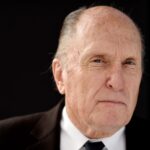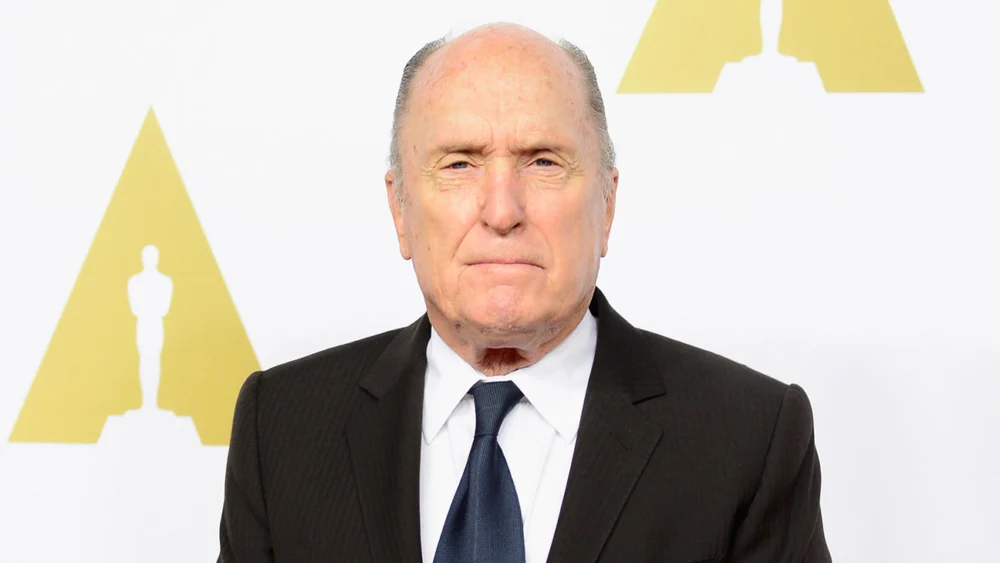
Hollywood is profoundly mourning the loss of Robert Duvall, a towering figure in American cinema, who passed away Sunday at his Virginia ranch at the age of 95. The revered actor, celebrated for his indelible performances across more than six decades, was a seven-time Academy Award nominee and an Oscar winner, leaving behind a legacy of iconic roles that shaped cinematic history. His wife, Luciana Pedraza Duvall, confirmed his passing, prompting an outpouring of tributes from across the entertainment industry.
Luciana Duvall issued a heartfelt statement, acknowledging the global recognition her husband received while emphasizing his personal significance to her. "To the world, he was an Academy Award-winning actor, a director, a storyteller. To me, he was simply everything," she articulated. She highlighted his profound dedication to his craft, matched only by his deep affection for the characters he portrayed, good food, and engaging conversation. Duvall, she noted, invested his entire being into each role, striving to capture the fundamental truth of the human spirit, thereby leaving an enduring and unforgettable mark on audiences worldwide. Her statement also expressed gratitude for the years of public support and requested privacy to honor his memory.
A Career Defined by Versatility and Authenticity
Robert Duvall’s career was a testament to his extraordinary versatility and unwavering commitment to authenticity. Born in San Diego, California, in 1931, Duvall honed his craft at the prestigious Neighborhood Playhouse School of the Theatre in New York City under the tutelage of Sanford Meisner. His early contemporaries included Dustin Hoffman and Gene Hackman, both lifelong friends and fellow luminaries who would also rise to prominence. Duvall’s foundation in method acting instilled in him a meticulous approach to character development, often immersing himself fully in the lives of the people he was to portray.
His cinematic debut in 1962 as the enigmatic Boo Radley in "To Kill a Mockingbird" immediately signaled the arrival of a distinctive talent. Despite having no dialogue, Duvall conveyed immense depth and vulnerability, creating one of the film’s most memorable characters. This role set the stage for a career characterized by an unparalleled ability to inhabit a vast spectrum of human experience, from quiet introspection to explosive charisma.
Iconic Roles and Enduring Legacy
Duvall’s filmography reads like a syllabus of classic American cinema. He became a household name for his portrayal of Tom Hagen, the quiet, loyal consigliere to the Corleone family in Francis Ford Coppola’s "The Godfather" (1972) and "The Godfather Part II" (1974). His understated yet powerful performance earned him an Academy Award nomination for Best Supporting Actor for the first film, solidifying his status as a master of nuanced character work.
Another collaboration with Coppola yielded one of his most quoted and iconic roles: Lieutenant Colonel Bill Kilgore in "Apocalypse Now" (1979). His chillingly casual delivery of the line, "I love the smell of napalm in the morning," and his character’s surreal surfing obsession amidst a war zone, earned him another Oscar nomination and cemented his place in popular culture. Kilgore became a symbol of the absurdities of war, brought to life with Duvall’s unique blend of menace and charm.
Further demonstrating his range, Duvall garnered critical acclaim and another Oscar nomination for his emotionally complex performance as Marine Corps aviator Bull Meechum in "The Great Santini" (1979). However, it was his poignant portrayal of down-and-out country singer Mac Sledge in "Tender Mercies" (1983) that finally earned him the Academy Award for Best Actor. His performance was lauded for its raw honesty and quiet dignity, embodying the struggles and redemption of a man grappling with his past.
The 1980s and 1990s continued to showcase Duvall’s profound talent. His role as Augustus "Gus" McCrae in the epic 1989 miniseries "Lonesome Dove" became another career-defining performance, earning him a Golden Globe Award and an Emmy nomination. As the gruff, philosophical former Texas Ranger, Duvall captured the essence of the American West, creating a character beloved by millions. In 1997, he wrote, directed, and starred in "The Apostle," a passion project about a charismatic but flawed Pentecostal preacher. This deeply personal film earned him another Best Actor Oscar nomination, highlighting his dedication to storytelling both in front of and behind the camera.
Hollywood Remembers a Giant
The news of Robert Duvall’s passing sent ripples throughout Hollywood, with many of his colleagues and collaborators sharing heartfelt tributes. Director Scott Cooper, who worked with Duvall on his last film, "The Pale Blue Eye" (2022), and who also collaborated with him on "Crazy Heart" (2009), described Duvall as his most important artistic mentor. Cooper stated that Duvall produced and acted in his first film, and from that point forward, read nearly every screenplay Cooper wrote, offering his quiet wisdom and unwavering belief. He hailed Duvall as his fiercest supporter, not through grand gestures but with honesty, rigor, and a profound love for the work itself. Cooper affirmed Duvall’s secure legacy as one of the true giants of acting, but stressed that he would most remember Duvall’s generosity, humility, and the example he set of a life entirely devoted to truth, crediting Duvall for shaping him as both a filmmaker and a man.
Mary Badham, who famously starred opposite Duvall as Scout in "To Kill a Mockingbird" when she was just 10 years old, reflected on his exceptional talent. In an interview, Badham simply yet powerfully stated, "He was a very good actor, and I admired his work." Her words, coming from a child actress who witnessed his early brilliance firsthand, underscore the immediate impact of his performances.
Viola Davis, who shared the screen with Duvall in the 2018 film "Widows," expressed her profound admiration on Instagram Threads. Davis recalled being in awe of Duvall’s "towering portrayals of men who were both quiet and dominating in their humanness." She declared him "a giant… an icon," listing many of his seminal works, including "Apocalypse Now," "The Godfather," "To Kill a Mockingbird," "Tender Mercies," "The Apostle," and "Lonesome Dove." Davis concluded her tribute with a powerful assertion: "Greatness never dies. It stays… as a gift. Rest well, sir. Your name will be spoken… May flights of angels sing thee to thy rest."
Walton Goggins, who was directed by Duvall in "The Apostle" when he was 24, referred to him as his "mentor" and "North Star." Goggins described the privilege of working with and knowing Duvall as the most important experience of his life, crediting Duvall with affording him the unique opportunity to remain by his side throughout the filmmaking process. He spoke of a deep friendship that lasted for years, emphasizing that Duvall’s generosity and impact extended to many, but that this specific connection profoundly changed his own life. "I love you Bobby. Thank you for changing my life," Goggins wrote in an emotional Instagram post.
Adam Sandler, who appeared alongside Duvall in the 2022 Netflix film "Hustle," celebrated him as "one of the greatest actors we ever had" in an Instagram tribute, highlighting the respect he commanded from generations of performers. Michael Keaton, who starred with Duvall in Ron Howard’s 1994 film "The Paper," also paid tribute on Instagram, referring to Duvall as his "friend" and describing him as "greatness personified as an actor."
Beyond his direct collaborators, the broader cultural impact of Duvall’s work resonated with many. Celebrated author Stephen King succinctly honored Duvall by quoting his iconic "napalm in the morning" line from "Apocalypse Now" in a social media post, a testament to the character’s enduring cultural footprint. Sports journalist Jemele Hill highlighted several of Duvall’s "underrated" films, including "Colors," "The Paper," and "Days of Thunder," underscoring the breadth of his excellent performances across various genres.
A Lasting Influence on American Cinema
Robert Duvall’s profound influence on American cinema stems from his relentless pursuit of truth in performance. He eschewed easy stereotypes, consistently delving into the complexities of his characters, whether they were heroes, villains, or ordinary men grappling with extraordinary circumstances. His ability to convey deep emotion and psychological nuance with minimal fuss made him a "national treasure" in the eyes of many critics and audiences. He was a character actor who transcended the label, becoming a leading man through sheer force of talent and presence.
His career spanned pivotal eras of Hollywood, from the studio system’s decline to the rise of independent cinema, adapting and thriving through each transformation. Duvall’s work will continue to serve as a masterclass for aspiring actors and a rich source of study for film scholars. The collective memory of his performances, characterized by their raw power, subtle gestures, and profound humanity, ensures that his name will indeed be spoken for generations to come, a lasting testament to a truly unparalleled artistic career.