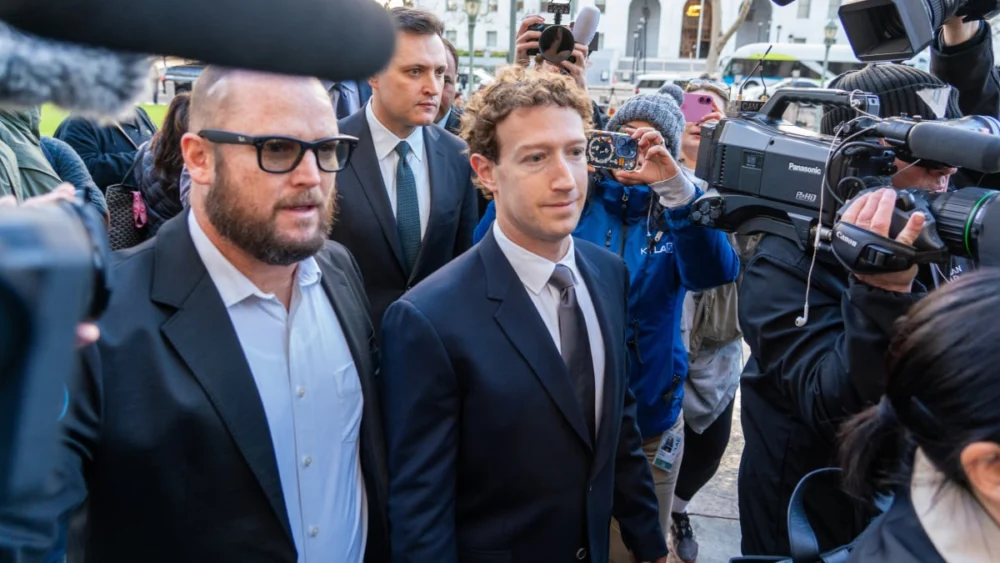
Meta Platforms Inc. Chief Executive Officer Mark Zuckerberg appeared in a Los Angeles courtroom today to provide sworn testimony before a jury, marking a pivotal moment in a landmark legal battle over the impact of social media on the mental health of minors. The proceedings represent the first time the tech billionaire has faced a jury trial regarding allegations that Facebook and Instagram were intentionally designed with addictive features that exploit the psychological vulnerabilities of children and teenagers. Zuckerberg’s appearance follows years of intense public scrutiny and legislative inquiries, shifting the battleground from the halls of Congress to a court of law where the company faces significant financial and reputational risks.
During his testimony, Zuckerberg defended Meta’s business practices and product design, asserting that the company has consistently prioritized user safety and well-being. He told the court that Meta has implemented rigorous measures to identify and remove underage users from its platforms, specifically Instagram. Under questioning, Zuckerberg emphasized that the company has pivoted its internal objectives toward improving the quality of the user experience rather than simply maximizing the duration of sessions. This defense seeks to counter the plaintiff’s central argument: that Meta’s revenue model, which relies heavily on advertising, creates an inherent incentive to keep young users engaged for as long as possible, regardless of the potential for psychological harm.
The trial is the first to emerge from a massive consolidation of more than 1,600 lawsuits filed by families and school districts across the United States. These plaintiffs allege that Meta, along with other tech giants like TikTok, Snapchat, and YouTube parent Google, knowingly deployed "product features" such as infinite scrolling, intermittent variable rewards, and intrusive notifications to trigger dopamine responses similar to those found in gambling. While TikTok and Snapchat recently reached settlements to exit this specific litigation in Los Angeles, Meta and Google continue to litigate, with Zuckerberg’s testimony serving as a high-stakes attempt to shield the company from a verdict that could redefine corporate liability in the digital age.
Zuckerberg Testifies in Front of Jury During Social Media Addiction Trial to Address Design Ethics
The cross-examination of Zuckerberg was led by Matthew Bergman, the founding attorney of the Social Media Victims Law Center. Bergman challenged the CEO on several fronts, including the effectiveness of Meta’s age verification protocols and the company’s internal research regarding teen mental health. The exchange grew tense as Bergman questioned Zuckerberg about his personal media coaching and his multi-billion-dollar compensation package, attempting to paint a picture of a leader more concerned with corporate growth than the safety of his youngest users.
Zuckerberg pushed back against the assertion that Meta’s algorithms are designed to "hook" users in a harmful manner. He argued that long-term business success is incompatible with a negative user experience. "If you do something that’s not good for people, maybe they’ll spend more time [on Instagram] short term, but if they’re not happy with it, they’re not going to use it over time," Zuckerberg testified. He further stated that he is not focused on maximizing the total amount of time people spend on the site each month, but rather on ensuring that the time spent is "meaningful."
This line of defense mirrors Meta’s long-standing public relations strategy, which focuses on "Time Well Spent"—a metric the company introduced years ago following internal and external criticism. However, the plaintiffs contend that this is a rhetorical shield used to mask the reality of algorithmic design. They point to internal documents, some of which were leaked by whistleblowers in previous years, suggesting that Meta executives were aware of the negative impacts Instagram had on body image and suicidal ideation among teenage girls but chose to downplay those findings to protect the platform’s growth.
The Legal Framework: Product Liability vs. Content Immunity
One of the most significant aspects of the social media addiction trial is the legal strategy employed by the plaintiffs to bypass Section 230 of the Communications Decency Act. For decades, this federal provision—and the broader Communications Act of 1934 it updated—has shielded internet companies from liability for the content posted by their users. By framing the case as a "product liability" matter rather than a "content" matter, the plaintiffs argue that the harm stems not from what people say on the apps, but from how the apps themselves are built.
The outcome of this trial could set a precedent for whether tech giants can be held accountable for the "defective design" of their software. If the jury finds that Instagram is an inherently dangerous product for minors, it could open the floodgates for thousands of additional lawsuits and force a fundamental redesign of how social media platforms operate. Legal experts suggest that a loss for Meta would likely lead to a transformation in the "attention economy," potentially ending features like auto-playing videos and algorithmically curated feeds for users under the age of 18.
Meta’s legal team has argued that the company is being unfairly blamed for a broad, societal mental health crisis that has many contributing factors. In a statement released shortly before the trial began, company officials argued that the specific plaintiff in this case—a 20-year-old woman who used the platforms as a teenager—had significant pre-existing mental health challenges that predated her social media use. They contend that the platform was a "substantial factor" in her life, but not the cause of her struggles, a distinction that remains a central point of contention for the jury.
Executive Testimonies and the Definition of Clinical Addiction
Zuckerberg’s appearance follows the testimony of Instagram CEO Adam Mosseri, who took the stand last week. Mosseri’s testimony was notable for his refusal to characterize social media usage patterns as a "clinical addiction." While he conceded that some users engage in "problematic use"—defined as using the app more than they feel good about—he argued that the term "addiction" is a medical diagnosis that does not accurately describe the relationship between teenagers and social media.
Mosseri also attempted to distance the company’s profit motives from its teen user base, claiming that Meta makes less money from teenagers than any other demographic. This argument is intended to undermine the theory that the company has a financial incentive to exploit children. However, critics and tech watchdogs argue that the value of teen users lies in their long-term "lifetime value" and the necessity of capturing the next generation of consumers to ensure the platform’s survival against competitors like TikTok.
The debate over "clinical addiction" is more than just a semantic disagreement; it is a core component of the legal battle. To win a product liability case, plaintiffs must often prove that the product caused a specific, identifiable injury. By reframing addiction as mere "overuse" or a "lifestyle choice," Meta’s executives are attempting to lower the legal stakes and shift the responsibility back onto parents and individual users.
Zuckerberg Testifies in Front of Jury During Social Media Addiction Trial Amid Calls for Legislative Reform
As the trial continues in Los Angeles, the proceedings are being closely watched by lawmakers in Washington, D.C. Tech oversight advocates hope the evidence presented in court will provide the momentum needed to pass the Kids Online Safety Act (KOSA), a bipartisan bill aimed at imposing a "duty of care" on social media companies. Sacha Haworth, executive director of The Tech Oversight Project, issued a scathing critique of Zuckerberg’s testimony, accusing the CEO of building a machine that exploited children for profit while ignoring the warnings of his own staff.
"What we’re seeing in that courtroom today is exactly what we’ve long known to be true—Mark Zuckerberg built a machine that exploited children for profit, and he knew it," Haworth said. She urged Congress to act immediately to hold Big Tech accountable, arguing that litigation alone is not enough to protect the public from the systemic risks posed by unregulated algorithms. The trial has effectively become a public forum for the "Big Tech on Trial" movement, highlighting the gap between corporate assurances and the lived experiences of families affected by digital harms.
The cultural impact of the trial is already being felt across the industry. Other platforms are reportedly reviewing their own safety features and "well-being" tools in anticipation of increased regulation or further litigation. The trial has also sparked a national conversation about the role of technology in the developing brain, with neuroscientists and psychologists providing expert testimony on how the "variable reward" systems used by Meta can disrupt the prefrontal cortex development in adolescents.
Future Implications and the Road Ahead for Meta
The Zuckerberg testimony marks the beginning of a long and complex deliberation process for the jury. As the head of one of the world’s most powerful corporations, Zuckerberg’s words carry immense weight, and his performance on the stand will likely influence the jury’s perception of Meta’s corporate character. If the jury finds Meta liable, the damages could reach into the billions, particularly if the court decides to award punitive damages to the plaintiffs.
Beyond the financial consequences, the trial represents a existential challenge to the business model that has made Meta a trillion-dollar company. For years, the tech industry has operated under the assumption that it was immune to the types of product liability suits that once transformed the tobacco and automotive industries. This trial suggests that the era of "move fast and break things" may finally be facing its day of reckoning in the American judicial system.
Regardless of the verdict, the social media addiction trial has already succeeded in pulling back the curtain on the internal decision-making processes of the world’s largest social network. The evidence presented—from internal emails to executive depositions—will likely serve as a roadmap for future litigation and a catalyst for a fundamental shift in how society regulates the digital platforms that have become an inescapable part of modern life. As the trial moves into its final phases, the eyes of the tech world remain fixed on the Los Angeles courtroom, waiting to see if Mark Zuckerberg and Meta will be held legally responsible for the "addiction" of a generation.