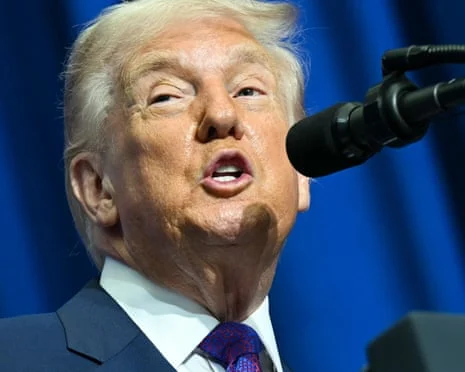
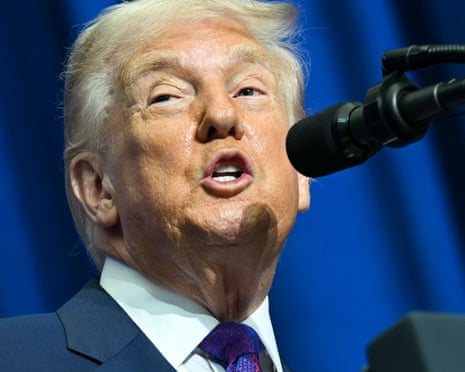
President Donald Trump issued a high-stakes ultimatum to Tehran on Thursday, demanding an immediate and permanent end to the Iranian nuclear program during the inaugural summit of the newly formed Board of Peace in Washington, D.C. Speaking before a delegation of international representatives at the recently renamed Donald J. Trump Institute of Peace, the president warned that a "meaningful deal" must be reached within the next 10 days to avert unspecified "bad things." The comments come as the United States significantly expands its military presence in the Middle East, amassing the largest concentration of air power in the region since the 2003 invasion of Iraq.
The president’s rhetoric signaled a pivot toward a more aggressive stance against the Islamic Republic, even as he praised the backchannel diplomatic efforts of special envoy Steve Witkoff and senior advisor Jared Kushner. Trump characterized Iran as a "hot spot" that remains the primary obstacle to a broader Middle East peace. He emphasized that the survival of his regional stability plan depends entirely on the denuclearization of Tehran, stating that peace is impossible as long as the country maintains its nuclear ambitions.
Escalating Tensions and the Ten-Day Ultimatum on Iran
The president’s insistence that Donald Trump repeats call for Iran to end nuclear program as world leaders gather for first Board of Peace meeting coincides with intelligence reports suggesting a 90% probability of U.S. strikes against Iranian targets. Trump remained elusive regarding specific military plans but suggested the window for a diplomatic resolution is closing rapidly. "We may have to take it a step further, or we may not," Trump told the gathered delegates. "You’re going to be finding out over the next probably 10 days."

The Pentagon has reportedly moved cutting-edge F-35 and F-22 fighter jets to the theater, while a second aircraft carrier equipped with electronic-warfare aircraft is currently en route. Military officials indicate that the current buildup provides the White House with the capacity for a sustained, multi-week air campaign. Targeted options presented to the president include strikes on nuclear and ballistic-missile facilities, as well as operations aimed at the Iranian political and military leadership and their regional proxies.
In response to the looming threat of conflict, a bipartisan group of lawmakers led by Representative Ro Khanna, a Democrat from California, and Representative Thomas Massie, a Republican from Kentucky, announced plans to introduce a war powers resolution. The legislation aims to force a vote on the House floor to prevent the administration from launching military action without explicit congressional approval. Khanna, who originally entered politics to oppose the Iraq War, vowed to block what he described as a potentially "disastrous" unilateral intervention.
The Board of Peace: A New Paradigm for Global Governance
The inaugural meeting of the Board of Peace served as a showcase for Trump’s alternative to traditional international diplomacy. The organization, which the president chairs, is envisioned as a "fee-paying members’ club" of nations dedicated to regional stability. Trump claimed the body would eventually "look over" the United Nations to ensure it "runs properly," suggesting that the Board of Peace could provide financial assistance to the UN if it requires help "money-wise."
While representatives from more than 45 countries were expected to attend, the summit highlighted a deepening rift between the United States and its traditional European allies. The United Kingdom, Germany, and France all declined invitations to join the board, expressing concerns that the organization undermines the authority of the United Nations Security Council. The Vatican also eschewed the meeting, wary of the board’s potential to usurp established international power structures.
The attendee list was dominated by Gulf nations and several leaders often described as authoritarians or strongmen. Among those present were Hungarian Prime Minister Viktor Orbán, whom Trump endorsed for his upcoming reelection, and Argentine President Javier Milei. Other participants included Azerbaijan’s Ilham Aliyev and representatives from Kazakhstan, Uzbekistan, and Turkey. Trump dismissed the absence of NATO allies, accusing them of "playing a little cute" while praising the "prestige" of those who chose to join his initiative.
Gaza Reconstruction and the International Stabilisation Force
A central component of the Board of Peace’s mandate is the oversight of the Gaza Strip following a fragile ceasefire agreement. Trump declared the war in Gaza "over," referring to ongoing skirmishes as "little flames." He confirmed that the United States would pledge $10 billion to the Board of Peace for reconstruction and security operations, adding to the $5 billion already pledged by other member states. However, the total $15 billion remains far short of the $70 billion the United Nations estimates is necessary to rebuild the devastated Palestinian territory.
Leaked contracting records reviewed by the Guardian reveal that the administration plans to build a massive 5,000-person military base in Gaza. Sprawling across 350 acres, the facility is designed as a permanent operating base for the International Stabilisation Force (ISF), a multinational military contingent composed of troops from board-member nations. The plans call for 26 armored watchtowers, bunkers, a small arms range, and extensive warehouses for military equipment, all encircled by barbed wire.
The reconstruction plan has faced criticism for its lack of Palestinian representation, as Israel holds a seat on the board while Palestinian officials do not. Furthermore, the "Yellow Line" established during the ceasefire allows Israeli troops to maintain control over more than half of the Gaza Strip. Unresolved issues such as the disarmament of Hamas, the total withdrawal of Israeli forces, and the logistics of humanitarian aid flow continue to threaten the stability of the region.
Congressional Pushback and the War Powers Resolution
The president’s $10 billion pledge to the Board of Peace has already sparked a legal and political firestorm on Capitol Hill. Senator Chris Murphy, a member of the Foreign Relations Committee, labeled the move "totally illegal," noting that the president has not sought the necessary congressional approval for such a massive appropriation of funds. Under the U.S. Constitution, the power of the purse resides with Congress, and any specific funding for the Board of Peace would require a vote on a formal appropriations bill.
The administration has not yet detailed how it intends to secure the funds or if it plans to bypass the standard legislative process. Trump defended the cost, arguing that $10 billion is a "very small number" when compared to the expense of active warfare, which he estimated at $5 billion per week. This justification has done little to appease critics who view the Board of Peace as an extension of the president’s personal foreign policy rather than a legitimate state-led initiative.
The Epstein Investigation and Domestic Political Repercussions
As Donald Trump repeats call for Iran to end nuclear program as world leaders gather for first Board of Peace meeting, his administration is also grappling with the domestic fallout from the arrest of Andrew Mountbatten-Windsor in the United Kingdom. Representative Robert Garcia, the top Democrat on the House Oversight Committee, called the arrest an "enormous step forward" in the pursuit of justice for survivors of the Jeffrey Epstein sex-trafficking ring.
The arrest has renewed calls for accountability within the Trump cabinet. Representative Ro Khanna has demanded the resignation of Commerce Secretary Howard Lutnick, who recently admitted to visiting Epstein’s private island in 2012. Although Lutnick claimed he severed ties with Epstein in 2005, his presence on the island four years after Epstein’s conviction for soliciting prostitution has fueled allegations of a "White House cover-up." Democrats on the Oversight Committee are pushing for further testimony from high-ranking officials regarding their historical ties to the disgraced financier.
Healthcare Leadership Consolidation and the CDC Appointment
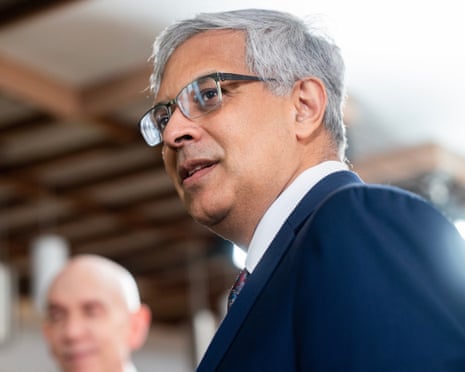
In a move that further consolidates power within the executive branch, the administration announced on Wednesday that Jay Bhattacharya, the current director of the National Institutes of Health (NIH), will also serve as the acting director of the Centers for Disease Control and Prevention (CDC). This unprecedented "dual role" makes Bhattacharya the fourth leader of the CDC in a single year, an agency that has been plagued by layoffs and budget cuts under the current administration.
Bhattacharya, a close ally of Health and Human Services Secretary Robert F. Kennedy Jr., has been a vocal critic of traditional public health mandates. His appointment has raised concerns among experts that the CDC will move to significantly alter the national vaccine schedule. Critics within the NIH and CDC have described Bhattacharya as an "ineffectual" leader who has largely ignored the daily operations of the agencies he oversees. Jenna Norton, an NIH program officer, suggested that Bhattacharya’s primary role is to serve as a figurehead for the administration’s broader agenda of dismantling federal health bureaucracies.
A New Era of Global Alliances
The events in Washington underscore a fundamental shift in American foreign policy. By bypassing traditional alliances and the United Nations in favor of the Board of Peace, the Trump administration is attempting to redraw the global diplomatic map. The focus on bilateral deals with authoritarian leaders and the use of substantial military posturing as a negotiating tool with Iran represents a departure from the multilateralism that has defined international relations for decades.
As the 10-day window for an Iranian "meaningful deal" begins to close, the international community remains on high alert. The combination of a massive military buildup, the construction of a permanent military presence in Gaza, and the sidelining of European allies suggests that the administration is prepared to act unilaterally to achieve its regional objectives. Whether the Board of Peace can deliver on its promise of stability or if it will instead serve as a catalyst for further conflict remains the central question facing world leaders today.