President Donald Trump has issued a 10-to-15-day ultimatum to the Iranian government to reach a comprehensive agreement regarding its nuclear activities, warning that the United States is prepared to launch military strikes if a deal is not finalized within that window. Speaking to reporters aboard Air Force One, the president characterized the timeframe as the "maximum" amount of time he is willing to allow for negotiations before pivoting toward more aggressive measures. The warning comes as the Pentagon continues to oversee the most significant mobilization of American military forces in the Middle East since the invasion of Iraq nearly a quarter-century ago.
The White House is currently evaluating a range of military options, varying from surgical, limited strikes to broader campaigns intended to dismantle Iran’s nuclear infrastructure. According to officials familiar with the discussions, a limited strike would likely focus on high-value government buildings or specific military installations. The strategic goal of such an operation would be to shock the Iranian leadership into returning to the negotiating table without triggering a regional conflagration. However, internal deliberations have also touched upon more expansive operations that could target the stability of the Iranian government itself, with the ultimate goal of permanently ending the country’s nuclear aspirations.
Military Buildup and the Option of Targeted Strikes
The current concentration of U.S. naval and air power in the region provides the commander-in-chief with a diverse array of tactical choices. The USS Abraham Lincoln carrier strike group has been stationed in the Arabian Sea for several weeks, supported by nine squadrons of advanced aircraft, including F-35 Lightning II stealth fighters and F/A-18 Super Hornets. Military analysts suggest that the Lincoln alone is capable of launching upwards of 125 bombing missions per day, providing the U.S. with the immediate capacity to strike Iranian territory.
Further complicating the regional security landscape is the movement of the USS Gerald R. Ford, the world’s largest aircraft carrier. The Ford was recently positioned in the Atlantic west of Morocco and is expected to transit the Strait of Gibraltar toward the eastern Mediterranean within days. The arrival of a second carrier strike group would effectively double the U.S. strike capacity, allowing for several hundred sorties per day. This level of aerial intensity would surpass the scale of most modern conflicts, providing a sustained capability that could be executed in coordination with Israeli forces.
In addition to carrier-based assets, the U.S. has deployed six E-3 Sentry AWACS (Airborne Warning and Control System) aircraft to Prince Sultan Air Base in Saudi Arabia. These planes, relocated from bases in the United States and Japan, are essential for real-time command and control, providing the necessary surveillance and communication links to manage a complex aerial campaign. The sheer scale of this deployment—the largest in 23 years—signals that the administration is preparing for scenarios far beyond mere deterrence.

Diplomatic Tensions and the Strategic Value of Diego Garcia
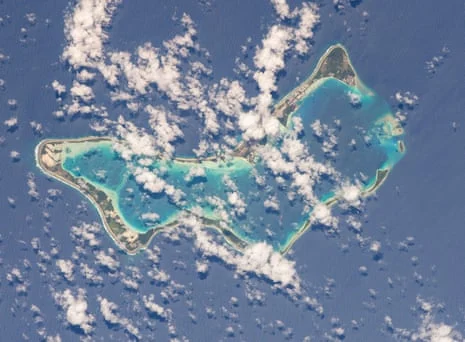
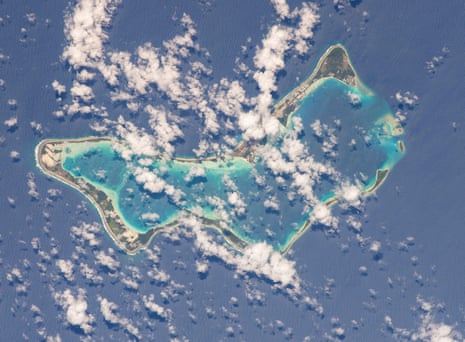
As the deadline for the Iran nuclear programme deal looms, U.S. Secretary of State Marco Rubio is scheduled to meet with British Foreign Minister Yvette Cooper to discuss escalating tensions over the Chagos Islands. The archipelago, which includes the vital U.S.-UK airbase at Diego Garcia, has become a flashpoint in the "Special Relationship" between Washington and London. Last year, British Prime Minister Keir Starmer agreed to transfer sovereignty of the islands to Mauritius while securing a 99-year lease for the continued operation of the base.
While the State Department initially expressed support for the Chagos accord, President Trump has recently reversed his stance, labeling the deal an act of "great stupidity." In a series of public statements, the president urged the United Kingdom not to cede control of the territory, arguing that the base is a critical asset for "eradicating a potential attack" from Iran. Under existing treaties, the U.S. must obtain British consent to launch offensive operations from Diego Garcia, a requirement that could complicate American military planning if the UK remains committed to its decolonization agreement with Mauritius.
Diego Garcia has historically served as a launchpad for long-range bombers during conflicts in the Middle East, including recent operations against Houthi rebels in Yemen. Its location in the Indian Ocean provides a secure, remote staging ground for heavy assets that are less vulnerable to Iranian retaliatory strikes than bases located within the Persian Gulf. The friction over the island’s sovereignty highlights the delicate balance the administration must strike between unilateral military action and the maintenance of essential global alliances.
Domestic Political Pressures and Extremist Alignments
The administration’s hawkish stance on Iran is unfolding against a backdrop of significant domestic political shifts. In Texas, the president has thrown his support behind Jace Yarbrough, a congressional candidate who has gained notoriety for his extremist positions. Federal Election Commission filings reveal that Yarbrough’s campaign is being fueled by a coalition of hard-right donors, including tech billionaire Peter Thiel and Thomas Klingenstein, chair of the Claremont Institute.
Yarbrough has been vocal about his rejection of traditional political decorum, stating in recent forums that he is "past trying to placate" those who view his views as oppressive. Sociology experts have noted that Yarbrough represents a militant faction within the broader political movement, one that seeks to fundamentally reshape American governance. The president’s endorsement of such figures suggests a tightening of the alliance between the White House and the most radical elements of the "Make America Great Again" movement, even as the country faces the prospect of a new foreign war.
Administrative Controversies and Personnel Scandals
While the president focuses on the 10-to-15-day window for a nuclear deal, his administration is grappling with a series of internal distractions and scandals. FBI Director Kash Patel has come under fire following reports that he used an agency jet to travel to Italy for the men’s ice hockey medal matches at the Olympics. The trip, which reportedly cost taxpayers approximately $75,000, has drawn criticism from budget hawks and political opponents who argue it represents a misuse of federal resources during a time of heightened international crisis.
Simultaneously, the Department of Labor is dealing with the fallout of sexual assault allegations involving the husband of Labor Secretary Lori Chavez-DeRemer. Reports indicate that the husband has been barred from the department’s Washington D.C. headquarters after at least two female staff members accused him of misconduct. These domestic controversies have created a sense of turbulence within the executive branch, even as the president asserts that he has "won affordability" for the American people and successfully addressed the cost-of-living crisis.
Strategic Implications of the 10 to 15 Days Deadline
The decision to impose a strict 10-to-15-day deadline for a nuclear deal reflects a "maximum pressure" strategy intended to force Tehran into a corner. By publicly tethering the timeline to the massive military buildup in the region, the administration is betting that the threat of an aerial bombing campaign will outweigh the Iranian regime’s resistance to new nuclear restrictions.
Critics of this approach warn that such ultimatums often leave little room for face-saving diplomacy, potentially backing the Iranian leadership into a position where they feel compelled to lash out. If the deadline passes without a breakthrough, the president will face the choice of following through on his military threats or risking a perceived loss of credibility. International observers are closely watching the movement of the U.S. carrier strike groups, as any further shift toward the Persian Gulf could indicate that the transition from diplomacy to kinetic action is imminent.
The next two weeks will likely determine the trajectory of U.S.-Iran relations for the foreseeable future. With a second carrier group approaching the region and the president’s rhetoric reaching a fever pitch, the window for a negotiated settlement is rapidly closing. The meeting between Secretary Rubio and Foreign Minister Cooper will be a key indicator of whether the U.S. can count on its closest ally if the "unfortunate" consequences the president promised eventually come to pass.