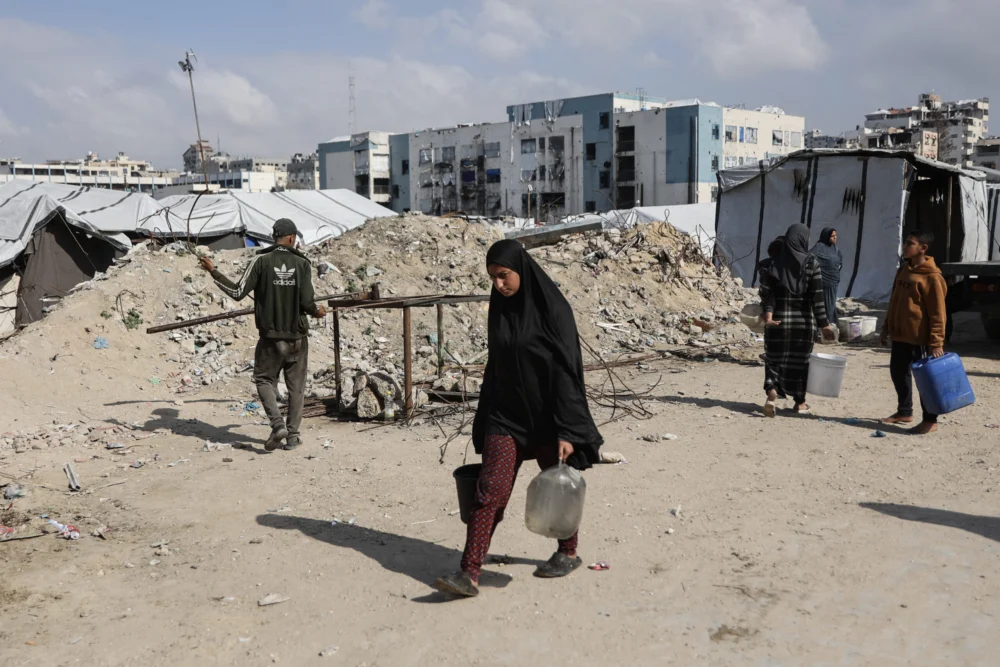
Israeli airstrikes on the third day of Ramadan have claimed the lives of at least two Palestinians in the Gaza Strip, marking a significant escalation and a renewed breach of a ceasefire agreement with Hamas that has been in effect for over four months. The deadly attacks, which occurred in the northern Jabalia camp and the Qizan an-Najjar area in southern Gaza, have raised the Palestinian death toll in Gaza since the ceasefire began to 614, with an additional 1,640 individuals wounded, according to reports from the Palestinian news agency Wafa.
These latest strikes underscore the persistent fragility of the truce, which was intended to usher in a period of relative calm and facilitate reconstruction efforts. The violence casts a long shadow over the ongoing diplomatic initiatives aimed at stabilizing the war-torn territory and raises serious questions about the commitment of all parties to upholding the agreed-upon terms.
Renewed Violence Amidst Peace Deliberations
The deadly airstrikes unfolded just two days after the inaugural meeting of the "Board of Peace," a U.S.-led initiative designed to address the complex challenges of reconstruction, security, and governance in Gaza. Convened by President Donald Trump, the board brought together international representatives to discuss a path forward for the devastated enclave.
During the meeting, President Trump announced substantial financial commitments for Gaza’s reconstruction, with nine countries pledging a collective $7 billion. This amount, added to an existing $10 billion contribution from the United States, represents a significant financial injection. However, the total falls considerably short of the estimated $70 billion required to fully rebuild the Palestinian territory, which has suffered extensive damage from years of conflict.
Security and Disarmament Hurdles
A key component of the proposed peace plan involves the establishment of an International Stabilization Force (ISF) to assume security responsibilities from Hamas. Five countries have pledged to contribute troops to this force, which is envisioned to eventually comprise 20,000 personnel. However, a critical unresolved issue remains the disarmament of Hamas, a prerequisite stipulated in the next phase of the deal.
Israeli Prime Minister Benjamin Netanyahu has consistently maintained that Hamas must disarm before any reconstruction efforts can commence. This stance was reiterated by a senior Netanyahu aide last week, who indicated Israel’s intention to issue Hamas a 60-day ultimatum to comply before potentially resuming military operations. This ultimatum was swiftly rejected by Hamas.
Hamas officials have declared their refusal to relinquish their weapons as long as Israel maintains its occupation of the Strip. They assert that any political dialogue concerning Gaza must begin with a complete cessation of hostilities. While expressing openness to the concept of a peacekeeping force, Hamas has outlined specific conditions for its deployment.
Hamas spokesperson Hazem Qassem stated on Friday that the group desires peacekeeping forces that would monitor the ceasefire, ensure its implementation, and act as a buffer between the Israeli army and the Palestinian population in Gaza. Crucially, Hamas insists that such forces should not interfere in the internal affairs of Gaza.
Skepticism and Lingering Aid Shortages
The proposed next stage of President Trump’s plan for Gaza includes the gradual withdrawal of the Israeli military and the deployment of the ISF. This phase also envisions a transitional Palestinian technocratic committee overseeing the day-to-day governance of the Strip. However, many Palestinians express deep skepticism regarding the feasibility and ultimate success of these initiatives.
Interviews conducted by Al Jazeera reveal a pervasive sentiment of doubt among Gazans, who point to the ongoing deadly Israeli attacks and the persistent shortages of essential aid as evidence of the plan’s potential shortcomings. These incidents undermine confidence in the commitment to a lasting peace and equitable recovery.
Awad al-Ghoul, a 70-year-old Palestinian displaced from Tal as-Sultan in southern Rafah, now residing in a tent in az-Zawayda, articulated this widespread frustration. He stated, "Israel kills, bombs, violates the ceasefire agreement daily and expands the buffer zone without anyone stopping it. So this project is a failure from the start and unclear in vision."
The Ceasefire Deal and its Evolving Interpretation
The ceasefire agreement, brokered more than four months ago, was intended to halt the cycle of violence that has plagued Gaza for decades. The terms of the deal, however, appear to be subject to differing interpretations and enforcement, leading to ongoing friction. The Israeli military’s acknowledgement of one of the Saturday attacks, claiming it killed a fighter who crossed into Israeli territory and posed an "immediate threat," highlights this divergence.
The army’s statement, asserting its intention to "continue to act to remove any immediate threat," suggests a continued proactive approach to security concerns along the demarcation line. This posture contrasts with the Palestinian expectation of a complete cessation of hostilities as a prerequisite for any meaningful progress.
Humanitarian Crisis and Reconstruction Challenges
The persistent violence exacerbates the already dire humanitarian situation in Gaza. Years of blockade and intermittent conflict have crippled the territory’s infrastructure and economy, leaving a significant portion of the population reliant on international aid. The ongoing hostilities further disrupt the delivery of essential supplies, including food, water, and medical provisions.
The reconstruction of Gaza is a monumental undertaking, requiring not only substantial financial resources but also a stable security environment and a clear political framework. The challenges in achieving consensus on disarmament and security arrangements cast a long shadow over the prospects for rebuilding homes, schools, and critical infrastructure.
International Pressure and Future Prospects
The international community faces a critical juncture in its efforts to bring lasting peace and stability to Gaza. The "Board of Peace" initiative represents a significant diplomatic push, but its success hinges on the willingness of all parties to compromise and adhere to agreed-upon principles. The continued violence, even during the holy month of Ramadan, serves as a stark reminder of the urgent need for de-escalation and a renewed commitment to dialogue.
The coming weeks and months will be crucial in determining whether the current peace efforts can overcome the deep-seated mistrust and the complex security challenges that have long defined the Israeli-Palestinian conflict. The fate of Gaza’s reconstruction and the well-being of its population remain inextricably linked to the ability of international actors and regional powers to forge a path towards a durable resolution. The ongoing cycle of violence and the unmet humanitarian needs in Gaza continue to demand urgent attention and sustained diplomatic engagement.