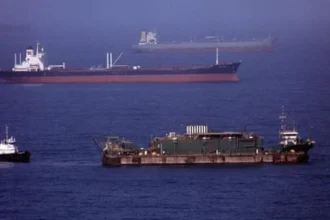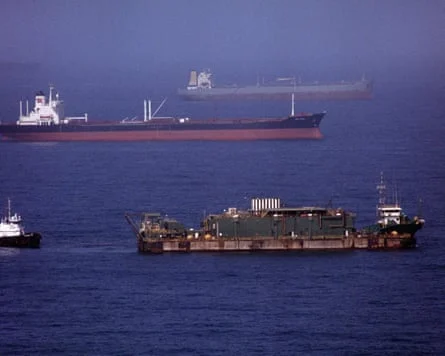
Tehran has signaled a strategic willingness to reduce the purity of its highly enriched uranium stockpile, a move viewed by international observers as a diplomatic gambit to stave off potential U.S. military strikes. Iranian officials confirmed this week that while the Islamic Republic refuses to export its current 300kg cache of 60% enriched uranium, it is prepared to down-blend the material to lower concentrations under the supervision of the International Atomic Energy Agency (IAEA). This proposal emerges at a critical juncture for the Iranian leadership, which is simultaneously facing a renewed wave of domestic unrest and a massive U.S. naval buildup in the Persian Gulf.
The offer to dilute the uranium stockpile is expected to form the centerpiece of a formal counterproposal to the administration of President Donald Trump. Washington has been weighing the possibility of limited military action against Iranian infrastructure, citing the rapid advancement of Tehran’s nuclear capabilities as a direct threat to regional stability. By offering to reduce the enrichment level of its most sensitive materials from near-weapons grade to 20% or below, Tehran appears to be seeking a middle ground that preserves its right to domestic enrichment while addressing the immediate "red line" of 90% weapons-grade purity.
Nuclear Brinkmanship and the 60% Threshold
The technical specifics of the Iranian proposal highlight the delicate nature of current negotiations. Iran currently holds approximately 300 kilograms of uranium enriched to 60%, a level that has no significant civilian application but places the country only a short technical step away from the 90% enrichment required for a nuclear warhead. Under the new proposal, this material would remain within Iranian borders but would be chemically processed to return it to a 20% enrichment level, which is typically used for medical research and the production of isotopes.
Foreign Minister Abbas Araghchi has been vocal in defending Iran’s position, asserting that the United States has not explicitly demanded a total cessation of enrichment activities. According to Araghchi, the ongoing discussions are focused on the "purity of the enrichment and the number of centrifuges" rather than a blanket ban on the program. This characterization, however, stands in stark contrast to the rhetoric emanating from the White House and the United States’ mission to the United Nations.
U.S. Ambassador to the UN Mike Waltz recently contradicted the Iranian narrative, stating firmly that the American objective remains "zero enrichment." This fundamental disagreement suggests that while Iran is willing to dilute uranium stockpile as fresh protests erupt, the gap between Tehran’s "right to enrich" and Washington’s "zero tolerance" policy remains a significant hurdle to any lasting diplomatic resolution.
Domestic Turmoil: Universities Become Battlegrounds
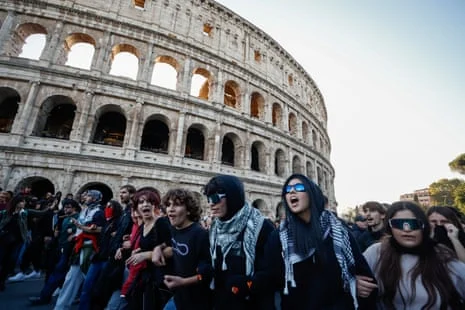
As the nuclear standoff intensifies on the global stage, the Iranian government is grappling with a resurgence of internal dissent. Protests have once again ignited at major academic institutions, including Mashhad University of Medical Sciences and several prominent universities in Tehran. These demonstrations followed a period of state-mandated closures intended to stifle earlier unrest, but the reopening of campuses appears to have provided a fresh catalyst for anti-government sentiment.
At Sharif University, a premier technical institution, students engaged in direct confrontations with campus security and local authorities. Witnesses reported chants of "Death to the dictator" and slogans calling for the end of clerical rule, such as "Until the mullah is shrouded, this homeland will not become a homeland." The university’s administration has responded with threats of further crackdowns, warning students that continued disruption would result in classes being moved back to an online-only format to prevent physical gatherings.
The timing of these protests is particularly sensitive for the Iranian leadership. The government is attempting to project an image of national unity and strength during its negotiations with the West, yet the vocal opposition from the country’s youth and intellectual elite suggests a deepening fracture within the social fabric. The authorities’ struggle to maintain order on campus reflects a broader challenge to the legitimacy of the current administration amidst ongoing economic hardship and political repression.
The Role of the IAEA and International Verification
Central to the success of any deal involving the dilution of uranium is the role of the IAEA. For the international community to accept Tehran’s offer, the verification process must be rigorous and transparent. Iranian sources have indicated that the proposed down-blending would occur under the strict supervision of UN nuclear inspectors, providing a layer of technical assurance that the material is indeed being rendered less dangerous.
However, the degree of access granted to the IAEA remains a point of contention. In previous years, Iran has limited inspector access to certain sites, citing national security concerns. If the current proposal is to be taken seriously by the Trump administration, Tehran will likely have to provide unprecedented transparency regarding its centrifuge facilities and enrichment history. Without such access, the promise to dilute the stockpile may be viewed in Washington as a stalling tactic rather than a sincere de-escalation.

There has also been significant international discussion regarding the possibility of Iran joining an overseas nuclear consortium or sending its stockpile to Russia for processing. Iranian diplomats have remained steadfast in their rejection of these ideas, insisting that no nuclear material will leave the country. This "red line" on domestic control underscores the nationalist sentiment tied to the nuclear program, which the government uses to rally support even as it faces internal opposition.
Global Reactions and the Diaspora Movement
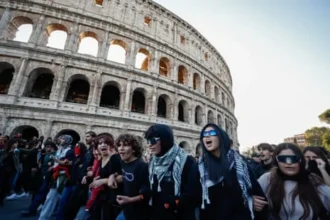
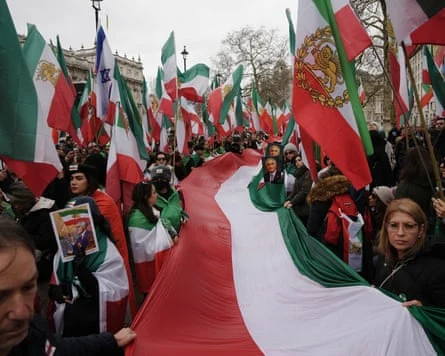
The volatility within Iran has resonated far beyond its borders, mobilizing the Iranian diaspora and human rights advocates worldwide. In London, an estimated 1,500 protesters marched from Whitehall to the Iranian embassy over the weekend, calling for the British government to sever diplomatic ties and close the mission. Many demonstrators carried portraits of Reza Pahlavi, the exiled crown prince of Iran, who has emerged as a symbolic figurehead for those seeking a transition to a secular democracy.
Participants in the London march emphasized that their goal is not just a change in nuclear policy, but a fundamental change in governance. "We are not a dictatorship, we don’t want a dictatorship, we just want a democracy," one protester noted, highlighting the disconnect between the regime’s diplomatic maneuvers and the aspirations of its people. These external pressures add another layer of complexity to the situation, as Western governments must balance their non-proliferation goals with the demands of activists calling for regime change.
Further complicating the international landscape is the upcoming meeting of the UN Human Rights Council in Geneva. The appointment of Afsaneh Nadipour, a former Iranian ambassador, to the council’s advisory committee has sparked outrage among rights groups. Nadipour is slated to provide input on women’s rights, a move critics describe as "absurd" given the Iranian government’s track record on the issue and its violent suppression of the "Woman, Life, Freedom" movement.
Strategic Implications and the Risk of Conflict
The current standoff carries immense stakes for regional security. Reza Nasri, a prominent Iranian lawyer with ties to the foreign ministry, warned that a military strike against Iran could have unintended consequences for the global non-proliferation regime. Nasri argued that if Iran is attacked while a diplomatic path remains open, other nations in the Middle East may conclude that nuclear weapons are the only viable deterrent against foreign intervention.
This "deterrence argument" is a recurring theme in Iranian strategic thinking. It suggests that the more the U.S. leans on military threats, the more the hardliners in Tehran feel justified in pursuing a nuclear breakout. Conversely, the Trump administration’s "maximum pressure" strategy is predicated on the belief that only the credible threat of force can compel Iran to make significant concessions.
As the U.S. naval buildup continues and the Iranian offer to dilute its uranium stockpile is analyzed in Washington, the window for a peaceful resolution appears narrow. The simultaneous eruption of protests within Iran adds an element of unpredictability; a government under siege at home may either become more desperate and aggressive or more willing to compromise to ensure its survival.
Future Outlook for Diplomacy
The coming days will be decisive as the details of Iran’s nuclear counterproposal are fully disclosed to the U.S. and its allies. The international community remains divided on whether Tehran’s willingness to dilute its stockpile represents a genuine shift in policy or a temporary maneuver to buy time. For the Iranian people, the nuclear negotiations are inextricably linked to their domestic struggles, as the lifting of sanctions remains the only clear path toward economic recovery.
Whether the Biden-era diplomacy can be reconciled with the Trump administration’s more confrontational approach remains to be seen. What is clear, however, is that the status quo is increasingly untenable. With 60% enriched uranium sitting in Iranian vaults and students chanting for change in the streets of Tehran, the convergence of nuclear brinkmanship and civil unrest has placed Iran at its most volatile crossroads in decades.
The outcome of this dual crisis will not only determine the future of Iran’s nuclear program but will also shape the geopolitical alignment of the Middle East for years to come. As the world watches the unfolding events in Tehran and Washington, the hope for a diplomatic breakthrough remains shadowed by the very real possibility of a broader escalation that could engulf the region.