Hulu’s post-apocalyptic drama Paradise has launched its second season, expanding its narrative scope significantly but struggling to maintain the cohesive storytelling that marked its debut, according to recent critical assessments. While the series, from This Is Us creator Dan Fogelman, continues to leverage its potent emotional appeal, critics note that this strength is increasingly overshadowed by a proliferation of plot holes, unresolved storylines, and a fragmented narrative structure. The new season attempts to broaden its world and introduce a multitude of new characters and settings, yet this ambition appears to have come at the cost of clarity and logical consistency, leading to a viewing experience that feels more sprawling than purposeful.
Background on Hulu’s Paradise
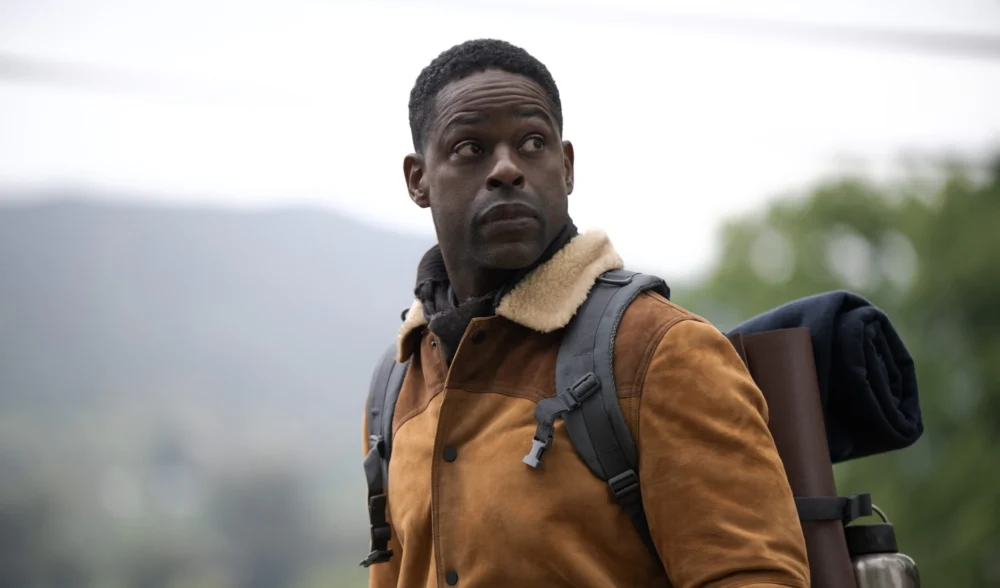
Paradise initially captivated audiences with its blend of character-driven drama and a compelling mystery set within a confined, post-apocalyptic bunker. The first season, lauded for its ability to provoke strong emotional responses, centered on Secret Service protagonist Xavier (Sterling K. Brown) and his investigation into the murder of President Cal Bradford (James Marsden). Anchored to a single, city-sized bunker underneath Colorado, the series effectively built tension and character depth within its limited setting. Its narrative momentum, driven by a clear central mystery, made for an "addictive" viewing experience, despite some critiques that it occasionally mistook sentimentality for profundity. The show’s creator, Dan Fogelman, renowned for his work on the emotionally resonant family drama This Is Us, brought his signature touch for eliciting tears and joy, a skill that was largely seen as the show’s "secret weapon" in its inaugural run.
The Shift to a Broader Canvas in Season 2
The conclusion of Paradise season one hinted at a dramatic shift, with Xavier preparing to venture into the perilous outside world. This development promised an expansion of narrative possibilities, raising questions about what he would encounter—his wife, Teri (Enuka Okuma), a desolate wasteland, or new allies and adversaries. Simultaneously, the fate of the bunker community he left behind remained a compelling unknown. The critical expectation was for Paradise to chart a new, equally engaging path forward.
However, the second season, comprising eight episodes (with seven provided for review), has reportedly eschewed a singular new direction in favor of a vastly decentralized narrative. The story now sprawls across thousands of miles in the present day, scattering existing characters on disjointed journeys and introducing a slew of new ones. Concurrently, the reliance on flashbacks has intensified, with these chronological excursions spanning dozens of years and further fragmenting the timeline. This ambitious expansion, while offering glimpses of the wider post-apocalyptic world, has been cited as a primary reason for the season’s perceived lack of focus and structural integrity.
Exploring the Expanded World: Initial Strengths
Despite the overarching critiques, the expanded scope of Paradise season two does present some compelling moments. The premiere episode, directed by Glenn Ficarra and John Requa, offers an extended look at life on the outside, particularly through the eyes of Annie (Shailene Woodley), a tour guide navigating the end times from Elvis’s Graceland. This segment is highlighted for its ability to establish the lonely rhythm of Annie’s existence before disrupting it with the arrival of a nomadic group of scavengers led by the charismatic Link (Thomas Doherty). Woodley’s performance is noted for its sensitive portrayal of Annie’s emotional journey from panic to resignation and ultimately to a bittersweet pleasure in renewed human interaction.
Further chapters introduce diverse groups, including doomsday preppers who form a found family over years spent in a basement, and orphaned children whose survival instincts have been sharpened at the cost of their innocence. These vignettes, at their most effective, evoke a haunting beauty reminiscent of acclaimed post-apocalyptic dramas like HBO’s The Last of Us, capturing the human spirit’s resilience amidst desolation, albeit without the same level of brutality. These individual narrative threads underscore the show’s continued ability to craft emotionally resonant character moments and explore the human condition in extreme circumstances.
Critiques of Narrative Cohesion and Logical Gaps
Yet, these isolated successes are increasingly undermined by a growing number of narrative inconsistencies and logical shortcomings. Critics point to seemingly minor, yet cumulatively impactful, plot holes that challenge viewer immersion. Examples cited include the implausibility of Graceland remaining unraided for three years post-apocalypse, a tech genius using a simple four-digit computer password, or an identification card lacking a name alongside a picture, thus defeating its purpose. While such "nitpicky details" might be overlooked in moments of high emotional impact—like Annie’s rediscovery of feeling alive or Xavier’s desperate search for Teri—their sheer accumulation begins to erode the show’s credibility.
The review suggests that, much like greenhouse gases under apocalyptic clouds, the "cumulative effect" of these inconsistencies "screws you." A few forgivable lapses transform into a significant threat to the season’s structural integrity, especially given its already shaky narrative foundations. This issue highlights a fundamental tension: the show’s desire to prioritize emotional experience over logical coherence, a strategy that proves less effective in a season that has abandoned the tight, mystery-driven plot of its predecessor.
Loss of Focus and Character Development Challenges
The newly expanded scale of Paradise season two is directly linked to a significant loss of narrative focus. Without a single, driving mystery to anchor the plot, various subplots struggle for air. Characters like Cal’s angsty son, Jeremy (Charlie Evans), leading a youth rebellion, are given so little development that their existence becomes forgettable. Similarly, compelling new characters like Annie are abruptly sidelined once their immediate narrative utility is exhausted, leaving viewers with a sense of underutilized potential. More screen time is reportedly dedicated to hinting at the enigmatic motives of characters like billionaire mastermind Sinatra (Julianne Nicholson) than to establishing a compelling reason for viewers to invest in her story.
The season’s overreliance on flashbacks is another significant point of contention. While flashbacks can provide crucial context and motivation, their excessive use in Paradise season two is seen as stalling the narrative momentum. Instead of enhancing an ongoing thriller, they transform the series into "a collection of backstories loosely connected by a shared present." This structural choice contributes to the feeling that the season is constantly in motion but "never actually seems to get anywhere," hindering the progression of the central story.
Furthermore, Fogelman’s famed ability to humanize even seemingly monstrous characters through tragic backstories, a trick successfully employed with season one’s Billy (Jon Beaver), falls flat in season two. An attempt to repeat this feat with a similarly shady female character reportedly only serves to make her seem more "alien." This specific critique extends to the broader treatment of female characters in the season, which is described as exhibiting a "nice guy chivalry" that, in certain lights, borders on condescension. This suggests a broader issue in character handling, particularly concerning gender dynamics within the sprawling new narrative.
Broader Implications for Streaming Dramas
The struggles of Paradise season two reflect a common challenge faced by ambitious streaming dramas. The pressure to "go bigger" and expand upon a successful first season can often lead to narrative bloat and a dilution of core strengths. While the freedom of streaming platforms allows for complex, multi-arc storytelling, it also demands rigorous adherence to internal logic and coherent plot development to prevent audience disengagement. The critical reception of Paradise highlights the delicate balance between satisfying viewer expectations for expansion and maintaining the foundational elements that made the series appealing in the first place.
The show’s inadvertent adoption of a storytelling philosophy—likened to Xavier’s son’s preference for train crashes over smooth rides—suggests a focus on dramatic collisions of characters and ideas rather than a clear, purposeful journey. This approach, while perhaps intended to create unpredictable excitement, has instead resulted in a narrative "rubble" of subplots and concepts, some salvageable and others less so. Whatever grander themes Paradise once aimed to explore, such as the greed of megalomaniacal billionaires or the complicity of powerful men, appear to have been lost amidst the narrative chaos.
Conclusion: A Collision of Ambition and Execution
Ultimately, Paradise season two stands as a testament to the risks inherent in dramatically broadening a narrative that once thrived on focus and containment. While the series continues to demonstrate its capacity for emotional depth and boasts a charismatic cast capable of delivering engrossing moments, these strengths are increasingly undermined by a fractured plot, logical inconsistencies, and a loss of clear direction. The ambition to create a vast, intricate post-apocalyptic world is evident, but the execution falls short, transforming what was once a smoothly running, albeit quirky, thriller into a collision of disparate elements. The result is a season that, despite its moments of poignant beauty and compelling performances, struggles to justify its expanded scope with a coherent and satisfying narrative arc.