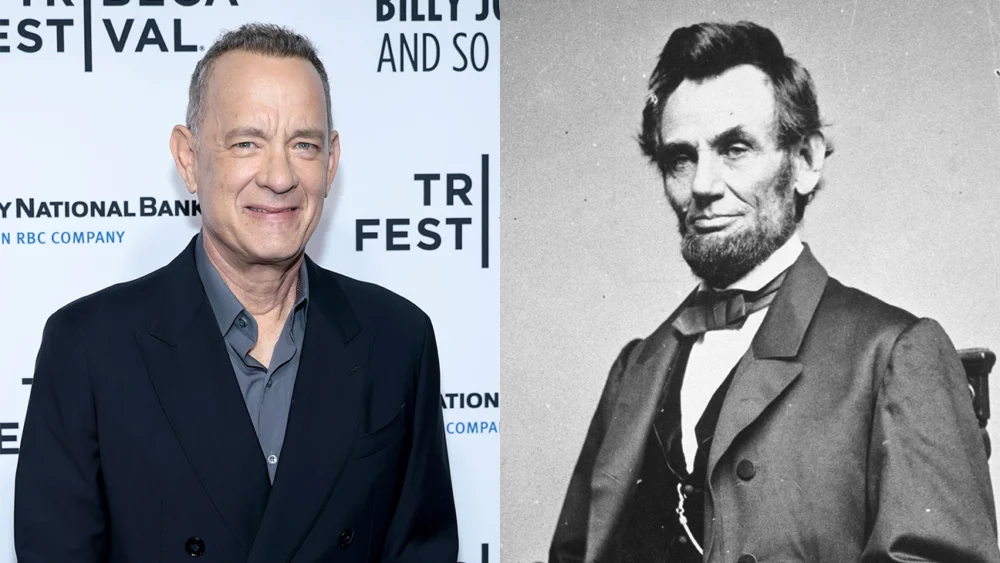
Veteran actor Tom Hanks is confirmed to embody the 16th U.S. President, Abraham Lincoln, in the highly anticipated feature film adaptation of George Saunders’ acclaimed, best-selling 2017 novel, Lincoln in the Bardo. The project, which blends live-action and stop-motion animation, is currently in production in London under the direction of Duke Johnson, known for his work on the Oscar-nominated Anomalisa.
Hanks Steps into Iconic Role
Tom Hanks, a two-time Academy Award winner and one of Hollywood’s most respected figures, is set to portray Abraham Lincoln in a live-action capacity, lending his considerable gravitas to the historical figure. Hanks has a long-standing reputation for portraying iconic American characters and historical figures, from astronaut Jim Lovell in Apollo 13 to Captain Richard Phillips in Captain Phillips, and most recently, Fred Rogers in A Beautiful Day in the Neighborhood. His selection for Lincoln signals a commitment to a nuanced and profound portrayal of a president grappling with immense personal sorrow amidst national crisis. The announcement, initially reported by Deadline, has generated significant buzz within the industry and among literary enthusiasts.
Saunders’ Acclaimed Novel Comes to Screen
Lincoln in the Bardo draws directly from George Saunders’ Booker Prize-winning novel, a work celebrated for its innovative narrative structure and profound exploration of grief, history, and the afterlife. Saunders himself has penned the screenplay, ensuring a direct translation of his unique literary vision to the cinematic medium. The novel centers on the real-life historical event of President Lincoln’s profound grief following the death of his 11-year-old son, Willie Lincoln, in February 1862, amidst the escalating American Civil War. In Saunders’ fictionalized account, the grieving Lincoln visits his son’s crypt in Oak Hill Cemetery, where he encounters a host of restless spirits inhabiting the liminal space known in Tibetan Buddhism as the "bardo," a transitional state between death and rebirth. These spirits, trapped by their earthly attachments, observe and comment on Lincoln’s sorrow, offering a kaleidoscopic view of humanity and mortality.
A Unique Cinematic Vision
The decision to adapt Lincoln in the Bardo as a hybrid of live-action and stop-motion animation points to an ambitious and creatively driven cinematic approach. This technique is particularly suited to the novel’s ethereal and multi-layered narrative, which features dozens of ghostly narrators and shifts in perspective.
-
The Director’s Distinctive Style: Duke Johnson, co-director of the critically acclaimed 2015 stop-motion animated film Anomalisa, brings a proven track record of using animation to explore complex adult themes with emotional depth and artistic sophistication. Anomalisa, co-directed with Charlie Kaufman, earned an Oscar nomination for Best Animated Feature, showcasing Johnson’s ability to craft poignant narratives through the intricate art of stop-motion. His involvement suggests a commitment to pushing the boundaries of storytelling through visual artistry, particularly in depicting the spectral inhabitants of the bardo.
-
Hybrid Medium for a Liminal Story: The blend of live-action for Hanks’ portrayal of Lincoln and stop-motion for the spectral realm allows for a stark visual contrast that can effectively convey the novel’s central tension between the tangible world of the living and the spectral existence of the deceased. This hybrid approach will enable the film to capture the novel’s surreal and philosophical atmosphere, presenting the "bardo" as a vividly imagined yet otherworldly space where spirits linger, observing and influencing the mortal plane. It promises a visually distinct experience that can bridge the historical realism of Lincoln’s grief with the fantastical elements of the afterlife.
Exploring Grief and History
The film promises to delve deep into the psychological and emotional toll of leadership during a time of national crisis, amplified by profound personal loss. Lincoln’s presidency was defined by the Civil War, a period of immense suffering and division. His personal grief over Willie’s death, a tragedy that struck at the heart of the First Family, offers a window into the private struggles of a public figure burdened by the weight of a nation.
-
The Historical Lincoln and Personal Tragedy: Abraham Lincoln experienced significant personal tragedies throughout his life, including the loss of three of his four sons. Willie Lincoln’s death in 1862 was particularly devastating, occurring while the Civil War raged and Lincoln was under immense pressure. Historical accounts describe Lincoln visiting his son’s grave multiple times, a poignant detail that forms the emotional core of Saunders’ novel and, by extension, the film adaptation. This humanizes Lincoln beyond the stoic leader, revealing a man deeply affected by personal sorrow, a theme Hanks is uniquely positioned to explore.
-
Thematic Resonance: Beyond the historical context, Lincoln in the Bardo explores universal themes of grief, mortality, love, and the enduring human connection. The concept of the "bardo"—a state of in-betweenness—serves as a powerful metaphor for unresolved issues and the lingering impact of life on the dead. The film is expected to resonate with audiences by examining how individuals cope with loss, the nature of memory, and the philosophical questions surrounding death and what comes after.
Production Underway in London
The production for Lincoln in the Bardo is currently underway in London, a hub for film production with extensive resources for both live-action and sophisticated animation techniques. The international location suggests a significant scale for the project, allowing access to diverse talent and specialized studios required for the intricate stop-motion components. The collaboration between the live-action and animation teams in one location will be crucial for seamlessly integrating the two distinct visual styles.
Hanks’ Enduring Legacy and Upcoming Slate
Tom Hanks’ involvement in Lincoln in the Bardo underscores his continued prominence and versatility in Hollywood. His recent projects showcase a range of roles, including The Phoenician Scheme, Here, and Freaky Tales. He is also set to reprise his iconic voice role as cowboy Woody in Pixar’s Toy Story 5, slated for release this summer from Disney, further cementing his status as a beloved voice actor. Additionally, Hanks stars in director Aaron Schneider’s forthcoming World War II drama Greyhound 2, indicating his continued commitment to historical and dramatic roles. His representation is managed by CAA and Greenberg Glusker.
Lincoln’s Persistent Cultural Presence
Abraham Lincoln remains an inexhaustible source of inspiration for storytellers across various media, underscoring his enduring legacy in American culture. In recent years, his story has seen a notable resurgence in popular culture. Hamish Linklater portrayed the commander-in-chief in the 2024 Apple TV+ series Manhunt, which explored the aftermath of Lincoln’s assassination. Concurrently, the Broadway play Oh, Mary!, a comedic examination of the politician’s personal life, garnered multiple Tony Awards last year, demonstrating the breadth of interpretations Lincoln’s story can accommodate. These diverse portrayals highlight the public’s continued fascination with Lincoln, his complexities, and his profound impact on American history and identity. Lincoln in the Bardo will join this rich tapestry of adaptations, offering a unique, genre-bending perspective on the revered president.
Anticipation Builds for a Poignant Adaptation
The confluence of Tom Hanks’ star power and dramatic depth, George Saunders’ critically acclaimed source material, and Duke Johnson’s innovative directorial vision positions Lincoln in the Bardo as a potentially landmark film. It promises to be a deeply moving and visually inventive exploration of one of America’s most revered leaders facing an unimaginable personal tragedy. The film is expected to challenge conventional historical dramas by weaving together factual events with a surreal, spiritual narrative, offering audiences a profound reflection on grief, history, and the human spirit’s resilience. As production continues, anticipation will undoubtedly grow for this ambitious project, which aims to bring a truly unique literary experience to the big screen.