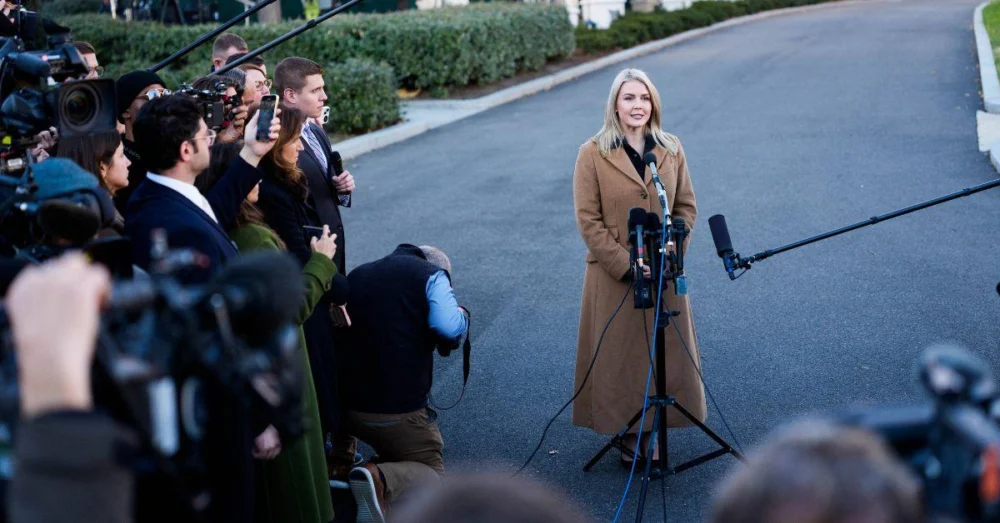
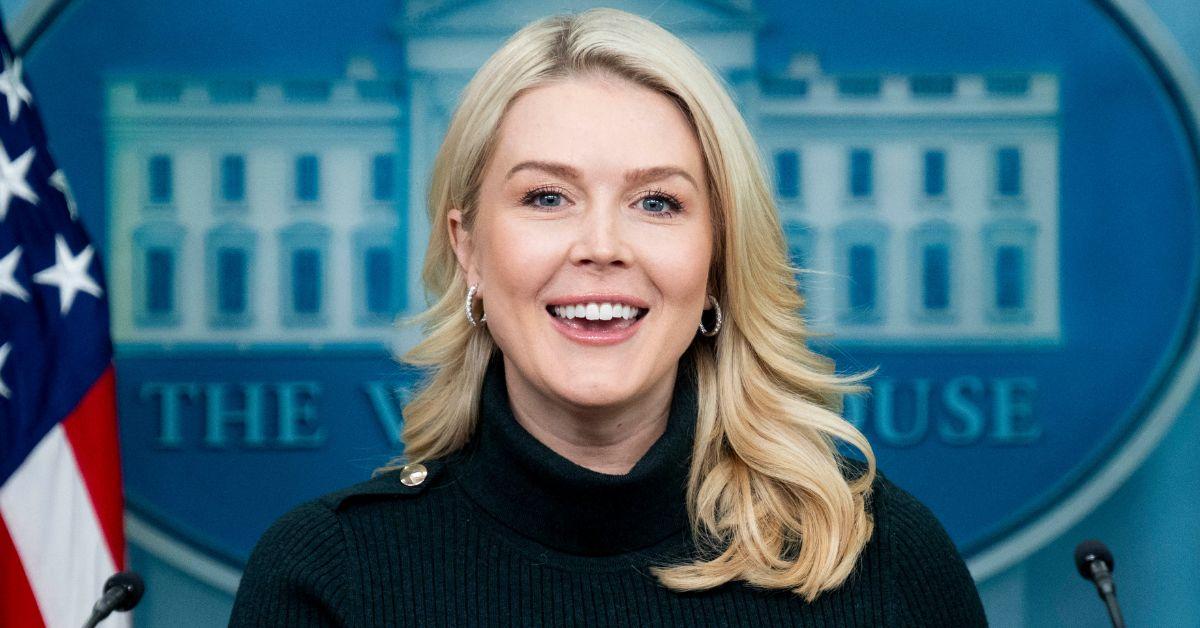
White House Press Secretary Karoline Leavitt has drawn significant criticism following a social media post on February 13 concerning detained immigrants. Her reposting of a CBS News article, which highlighted a record increase in voluntary departures as detained individuals reportedly lost hope of release or winning their court cases, ignited a fierce public debate over the ethics and impact of current immigration enforcement under the Trump administration.
The controversy centers on the perception of insensitivity conveyed by Leavitt’s engagement with the article, titled "Voluntary departures hit record high as detained immigrants lose hope of getting released or winning in court." Critics quickly condemned the post on X (formerly Twitter), viewing it as an endorsement of punitive measures that inflict severe psychological distress on migrants. The incident underscores the deep polarization surrounding immigration policies and the role of public officials in shaping public discourse.
Background of Immigration Enforcement and Policy
The Trump administration has consistently pursued a hardline stance on immigration, prioritizing border security and increased enforcement measures. This approach has included the construction of a border wall, expanded detention facilities, and stricter asylum regulations. Policies such as "zero tolerance" at the border, which led to family separations, previously sparked widespread condemnation from human rights organizations and international bodies. The administration’s rhetoric often frames undocumented immigration as a national security threat and an economic burden, advocating for aggressive deterrence tactics.
Immigrant detention centers, operated by Immigration and Customs Enforcement (ICE), have been a focal point of contention. Critics frequently cite reports of overcrowded conditions, inadequate medical care, and prolonged detention periods, which they argue violate fundamental human rights. The psychological impact of indefinite detention on individuals, many of whom are asylum seekers fleeing persecution, is a significant humanitarian concern. Supporters of the administration’s policies, however, argue that robust enforcement and detention are necessary to maintain the integrity of national borders and discourage illegal entry.
The CBS News Report and its Implications
The CBS News article reposted by Leavitt presented data indicating a substantial rise in voluntary departures among detained immigrants in 2025. The report detailed that 28 percent of completed immigration removal cases involving detained individuals ended in voluntary departure, a figure that surged to 38 percent by December of that year. This increase was directly attributed to the intensification of enforcement efforts and, critically, a growing sense of despair among detainees regarding their prospects for release or legal success in court.

Voluntary departure allows individuals to leave the U.S. at their own expense and potentially avoid a formal deportation order, which carries stricter penalties for future re-entry. While seemingly a less severe outcome than forced deportation, the report suggests that this decision is often made under duress, after individuals have endured months or even years in detention, depleting their resources and hope. The article’s findings add a critical layer to the ongoing discussion about the effectiveness and human cost of current immigration policies.
Public Outcry and Accusations of Inhumanity
Leavitt’s decision to amplify a report detailing immigrants’ loss of hope elicited immediate and furious backlash across social media platforms. Commenters accused her of demonstrating a profound lack of empathy and actively supporting inhumane practices. One user articulated the sentiment of many, stating, "So you aren’t deporting as you say, but purposely detaining them for long lengths to torture and break them? Demons walking this earth man, and they are running this country." This comment directly linked the prolonged detention to psychological warfare, suggesting a deliberate strategy to break the will of migrants.
Another commenter escalated the criticism, accusing the administration of operating "concentration camps," a term that carries profound historical weight and implies severe human rights abuses. Further criticisms questioned Leavitt’s personal morality, with one user asking, "You lack compassion and empathy [Karoline Leavitt]. Are you teaching or going to teach your kids to be sociopaths like you?" Such strong language reflects the intense emotional and moral dimensions of the debate, highlighting a deep societal schism over how the nation should treat those seeking entry or refuge. The accusations underscore a public perception that the administration’s policies prioritize deterrence over humanitarian concerns.

The Argument for Deterrence
In stark contrast to the widespread condemnation, a segment of social media users defended Leavitt’s post and the immigration policies it implicitly supported. These individuals viewed the rise in voluntary departures as a positive indicator of effective immigration deterrence. Comments such as "This is what winning looks like! Deterrence works," and "Finally, real deterrence working. Immigrants choosing to leave on their own," reflect a belief that harsh enforcement measures successfully discourage illegal immigration.
This perspective often emphasizes national sovereignty, the rule of law, and the perceived strain on resources caused by undocumented immigration. Proponents of deterrence argue that by making it more difficult and disheartening for migrants to remain in the U.S., future attempts at unauthorized entry will decrease, thereby securing the border and reducing the burden on public services. This viewpoint frames the despair of detained immigrants not as a tragedy, but as an unfortunate yet necessary consequence of policies designed to control migration flows.
Humanitarian Perspective and Personal Testimonies
The human toll of prolonged detention is a central theme in the debate. Vilma Palacios, a former detainee who spent six months in a Louisiana facility, provided a poignant testimony to the psychological impact of the system. She remarked, "It’s set up for every individual who is detained to get to the point where they’re just emotionally drained and exhausted through it all." Her words underscore the argument that the detention system, regardless of intent, effectively functions as a mechanism of psychological attrition, pushing individuals to self-deport out of sheer exhaustion and despair.
Such personal accounts lend a critical human dimension to the statistics and political arguments, reminding the public of the individual suffering behind the policy debates. These narratives are frequently cited by immigrant advocacy groups to highlight the urgent need for comprehensive immigration reform that prioritizes dignity and due process over punitive measures. The experience of losing hope in detention is not merely an anecdote but a systemic outcome for many navigating the complex and often opaque U.S. immigration legal system.
A Personal Complication: Leavitt’s Familial Ties
Adding a layer of personal complexity and perceived hypocrisy to Karoline Leavitt’s situation is her familial connection to an immigrant who faced detention. Her nephew’s mother, Bruna Caroline Ferreira, was previously detained by ICE while picking up her son from school. This incident, which garnered significant media attention, brought the realities of immigration enforcement uncomfortably close to Leavitt’s own family.
Following her release, Ferreira publicly criticized Leavitt in an interview with CNN, stating, "I think what I would have to say to Karoline is: Just because you went to a Catholic school doesn’t make you a good Catholic." This sharp rebuke implied a moral failing on Leavitt’s part, suggesting a disconnect between her public stance on immigration and the humanitarian values often associated with her stated faith, especially given her family’s direct experience with the detention system. This personal entanglement amplifies the outrage, as it highlights a perceived lack of empathy even when the issue directly impacts her own kin.
Broader Implications for Political Discourse and Public Trust
The incident involving Karoline Leavitt’s social media post reflects a broader trend in contemporary political communication where digital platforms serve as immediate battlegrounds for ideological conflicts. The role of a White House Press Secretary is to articulate and defend the administration’s policies, making their social media activity subject to intense scrutiny. Leavitt’s post, whether intended as a factual share or a subtle endorsement, was interpreted by many as a celebration of human despair, further eroding trust in government officials among immigrant communities and their allies.
This controversy contributes to a deeply polarized political landscape where immigration remains one of the most contentious issues. It forces a national conversation about the moral boundaries of immigration enforcement, the psychological impact of government policies, and the responsibility of public figures to communicate with sensitivity and awareness of humanitarian concerns. As the nation grapples with complex questions of border security, economic impact, and human rights, incidents like this underscore the profound divisions and the ongoing search for common ground in immigration policy.
The debate surrounding Karoline Leavitt’s social media activity is more than just an online spat; it is a microcosm of the intense ideological struggle over the future of immigration in the United States. It highlights the stark differences in how different segments of society view migrants and the government’s role in regulating their presence. The core question remains: at what human cost should national borders be secured, and how should public officials articulate policies that have profound impacts on individuals’ lives and hopes?