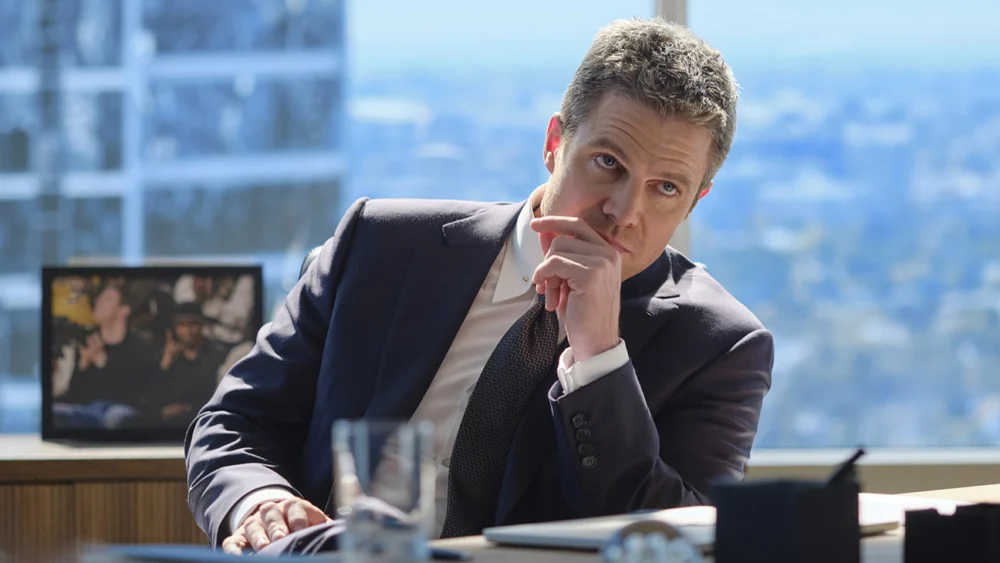
Stephen Amell, the actor who took the lead in NBC’s highly anticipated Suits L.A., has openly accepted personal responsibility for the series’ swift cancellation after just one season, stating unequivocally that the show "didn’t work" and ultimately wasn’t "good enough." This candid admission by Amell sheds light on the internal reflections surrounding the spin-off’s failure to resonate with audiences and secure a renewal, despite the immense popularity of its predecessor.
The Genesis of Suits L.A. Amidst Renewed Enthusiasm
Stephen Amell rose to prominence as the titular hero in The CW’s Arrow, a role that solidified his status as a leading man in network television. Following a successful eight-season run on Arrow and a subsequent turn in Starz’s wrestling drama Heels, Amell was cast as Ted Black, a former federal prosecutor from New York who relocates to Los Angeles to establish a new law firm specializing in entertainment law. This character was designed to anchor Suits L.A., a spin-off aiming to capitalize on the unexpected resurgence of the original Suits on streaming platforms like Netflix, where it found a massive new audience years after its initial run on USA Network.
The original Suits, which aired from 2011 to 2019, captivated viewers with its fast-paced dialogue, intricate legal cases, and compelling character dynamics, particularly the relationship between Harvey Specter and Mike Ross. Its renewed popularity in the streaming era demonstrated a significant appetite for the franchise, prompting NBCUniversal to greenlight a new iteration set on the West Coast. The premise of Suits L.A. introduced new characters and a fresh setting while attempting to maintain the signature style and legal drama that defined the original series. Expectations were high, not only from the network but also from a newly invigorated fan base eager for more from the Suits universe.
Amell’s Candid Self-Assessment on the Suits L.A. Cancellation
Amell recently appeared on the Inside of You with Michael Rosenbaum podcast, where he offered a remarkably frank assessment of the short-lived series. He articulated a profound sense of accountability for the show’s fate, stating, "Anything that ends not on your terms is a failure." More directly, he asserted, "The blame rests with me." This level of personal ownership from a lead actor is uncommon, particularly when discussing a project’s cancellation, which is often attributed to a multitude of factors beyond a single individual’s control.
The actor delved into his rationale, explaining that a lead performer has a responsibility to elevate the material and connect with the audience in a way that transcends any inherent flaws in the production. "Whatever problem you have with the show — because I think that there were issues — it’s my job to solve those, to smooth them over and to gloss them up with some type of performance or something that, tangible or otherwise, covers up those mistakes," Amell elaborated. He confessed that he felt he fell short in this regard, stating, "I didn’t do that."
Amell pinpointed his struggle with his character, Ted Black, as a significant factor. He admitted, "I didn’t find anything ultimately with Ted Black, that character, that translated, that smoothed those things over, that gave us a chance to keep going." This internal dissatisfaction with his own portrayal underscores a critical challenge in television — the elusive connection between a character and the audience, which often determines a show’s longevity. He also posited that if a show is successful, the lead typically receives a disproportionate amount of credit, and therefore, it is only fair that he bears a similar burden of responsibility when it fails. "I’m the lead of the series and it didn’t work," he concluded.
Behind the Scenes: Doubts and Creative Discrepancies
Amell also revealed that he was not alone in questioning the spin-off’s potential, even before its premiere. He recalled a conversation with Aaron Korsh, the creator of both the original Suits and Suits L.A., shortly after filming the pilot. According to Amell, Korsh expressed early doubts about the project. "When I saw the pilot of Suits L.A. — and this goes back to about a month after we finished shooting — I sat down with Aaron Korsh… and he was editing the pilot. He was like, ‘I don’t know if this is going to work,’” Amell recounted.
This sentiment from the creator points to potential underlying issues that extended beyond individual performances. Amell hinted at creative clashes, observing, "A lot of what he wanted to do seemed to run up against what the network wanted." While he refrained from speculating on the specifics of these disagreements, as he was not privy to the conversations, he noted, "It just seemed like what he wanted to do and what they wanted to do were different." Such creative friction between a showrunner’s vision and a network’s strategic direction is a common hurdle in television production and can significantly impact a show’s ultimate quality and coherence.
The network’s official stance on the Suits L.A. cancellation echoed some of these sentiments. Jeff Bader, NBC’s president of programming strategy, previously stated that the spin-off "had a very short run" because "it really just has not resonated the way we thought it would." He added that it was "not really showing the potential to grow for us in the future, unfortunately." This "resonance" factor, or lack thereof, is often the ultimate determinant for network executives deciding the fate of new series.
The Challenges of Spin-offs and Audience Resonance
The Suits L.A. cancellation highlights the inherent difficulties in launching spin-offs, especially those following a beloved and highly successful original series. While the initial brand recognition provides a built-in audience and marketing advantage, it also sets an extremely high bar for comparison. Fans of the original Suits had specific expectations, and meeting these while simultaneously forging a unique identity for the new show proved challenging.
The television landscape is littered with spin-offs that failed to capture the magic of their predecessors. For a new series to "resonate," it needs to find its own voice, characters that audiences can genuinely invest in, and compelling storylines that stand independently of the original. The pressure on lead actors in such projects is immense, as they are tasked with carrying the torch of a successful franchise while introducing a new protagonist who must be equally, if not more, magnetic than the beloved characters who came before. Amell’s reflection on his inability to make Ted Black "magnetic" or "charismatic" enough speaks directly to this critical aspect of a spin-off’s success.
The renewed popularity of the original Suits on streaming services further complicated the task for Suits L.A. While it demonstrated a robust fan base for the brand, it also meant that the new spin-off was launching into an environment where the original series was readily available and actively being re-watched. This created a direct comparison point, where the new show had to compete not just with other new programming, but with the very show it was spun off from, at its peak perceived quality.
Industry Implications and the Future of the Suits Franchise
The rapid cancellation of Suits L.A. sends a clear message within the television industry: even a powerful brand name and a popular lead actor are not guarantees of success. Relying solely on the "halo effect" of an established intellectual property without a strong, standalone concept and execution is a risky venture. Network decisions increasingly hinge on pilot performance and early audience engagement data, especially in a fragmented media landscape where viewers have an abundance of choices.
While Amell expressed that the cancellation was "tough" and that the team had hoped for another season to iron out issues, he ultimately concluded that "it’s also not anyone’s fault." This sentiment suggests an acceptance of the complex interplay of factors that contribute to a show’s success or failure, from creative vision and network strategy to individual performances and audience reception.
The series also starred Lex Scott Davis, Josh McDermitt, Bryan Greenberg, Rachelle Goulding, Maggie Grace, and Troy Winbush, all of whom contributed to the ensemble. Their efforts, alongside Amell’s, faced the daunting task of launching a new chapter in a beloved legal drama universe.
The question remains whether the Suits franchise will attempt another revival or spin-off in the future. The enduring popularity of the original series on streaming platforms indicates a persistent appetite for its unique brand of legal drama. However, the experience of Suits L.A. serves as a cautionary tale, emphasizing that replicating success requires more than just a familiar title; it demands a fresh, compelling narrative and characters that genuinely resonate with a contemporary audience. Stephen Amell’s candid self-blame underscores the immense pressure on lead actors to deliver that elusive spark that can transform a promising concept into a lasting television hit.