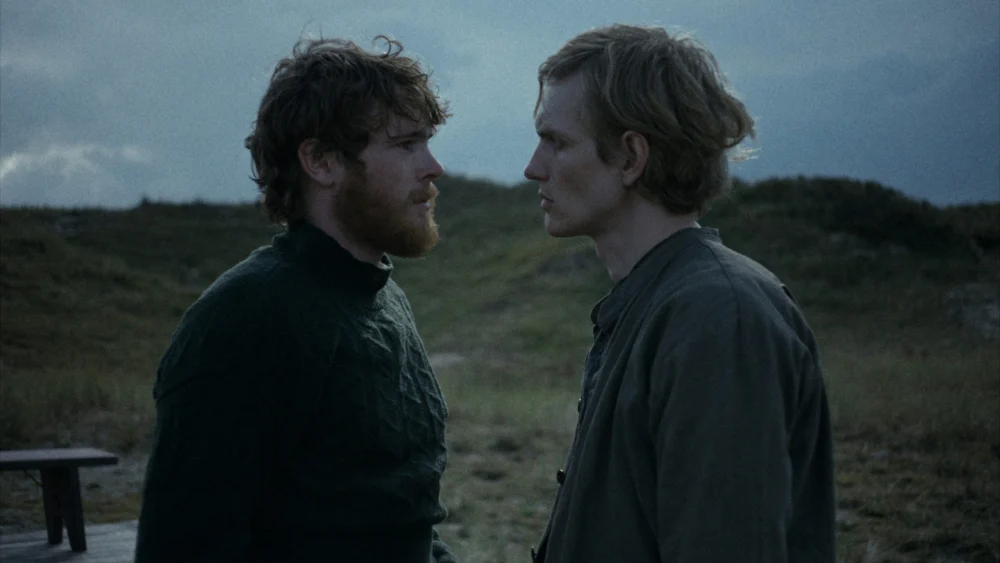
German writer-director Kai Stänicke’s feature film debut, Trial of Hein (original title Der Heimatlose), has captivated critics and audiences alike since its world premiere at the 76th Berlin Film Festival, earning significant acclaim and the prestigious Teddy Award jury honor, with an exclusive trailer now offering a first look at its unsettling narrative. The film, a poignant exploration of identity, memory, and the intricate dynamics of belonging, has been lauded as a compelling example of how the festival’s "Perspectives" section successfully spotlights emerging cinematic voices.
The Berlinale’s Bold New Voice
Kai Stänicke, previously recognized for his impactful short films such as Gay Goth Scene, Circle, and Pace, has made a remarkable transition into feature filmmaking with Trial of Hein. His previous works, often characterized by their distinctive visual style and nuanced character studies, hinted at a significant talent, but his debut feature has solidified his standing as a director with a unique vision. The leap from short-form storytelling, which demands precision and conciseness, to the expansive canvas of a feature film is a challenging one, yet Stänicke has navigated it with a maturity and depth rarely seen in a debut.
The 76th Berlin Film Festival, or Berlinale, stands as one of the world’s most venerable and influential film events, alongside Cannes and Venice. Renowned for its focus on arthouse cinema, political themes, and fostering new talent, the Berlinale provides an invaluable platform for films that push artistic boundaries. Trial of Hein premiered in the festival’s "Perspectives" section, often referred to as Perspektive Deutsches Kino, which is specifically dedicated to showcasing new German cinema and emerging filmmakers. This section is a crucial launchpad for directors, offering them international visibility and critical engagement at a pivotal stage in their careers. The film’s inclusion and subsequent acclaim within this competitive program underscore its artistic merit and potential for broader impact.
A Story of Return and Suspicion
At the heart of Trial of Hein lies a narrative steeped in mystery and psychological tension. The story centers on Hein, a man who returns to his remote North Sea island home after an absence of 14 years. His return is not a triumphant homecoming but rather an unsettling intrusion into a community that, despite its close-knit nature, seems to have forgotten or willfully disavowed him. The island, depicted as a solitary village, becomes a microcosm of societal judgment and the struggle for recognition.
Upon his arrival, Hein finds himself an outsider in the very place he believes he belongs. Even his closest childhood friend, Friedemann, exhibits a disconcerting distance, further isolating Hein and fueling the growing suspicion within the community. The core dramatic conflict escalates when the islanders, unable or unwilling to accept Hein’s claims of identity, convene a traditional village court. This archaic form of justice, steeped in local custom and collective memory, is tasked with determining whether Hein is genuinely who he says he is or an impostor attempting to infiltrate their insular world. The premise alone sets the stage for a compelling psychological drama, where personal truth collides with communal perception.
Unpacking the Teddy Award’s Significance
The Teddy Award, bestowed upon Trial of Hein, holds a significant place within the international film festival circuit. Established in 1987, it is an independent queer film award presented annually at the Berlin Film Festival, honoring films that address LGBTQ+ themes or feature queer characters. Over its nearly four-decade history, the Teddy Award has become a powerful symbol of recognition for cinematic excellence within the queer community, providing crucial visibility and support for LGBTQ+ filmmakers and narratives.
Winning the Teddy Award jury honor is more than just an accolade; it is a profound statement of artistic endorsement. It signals to the global film industry and audiences that Trial of Hein is not only a well-crafted film but also one that resonates deeply with themes of identity and belonging, often explored through a queer lens. Past recipients of the Teddy Award have frequently gone on to achieve wider international acclaim, securing distribution deals and solidifying their place in film history. For Trial of Hein, this award positions it as a significant work within contemporary queer cinema, aligning it with a legacy of groundbreaking films that challenge societal norms and celebrate diverse experiences. The award’s recognition highlights the film’s nuanced portrayal of an individual grappling with self-definition against the backdrop of a rigid community, themes that often echo the experiences of queer individuals seeking acceptance and understanding.
Thematic Depth: Memory, Identity, and Belonging
Trial of Hein delves into universal themes that resonate far beyond its specific setting. The central conflict—Hein’s recollections versus the community’s collective memory—serves as a powerful parable on the subjective nature of truth and the fragility of personal identity. The film intricately explores how memory is not a fixed archive but a fluid, often contradictory narrative shaped by individual experience, emotion, and communal influence. The disparate accounts of Hein’s youth, brought to light during the village court hearings, force both Hein and the audience to question the very fabric of his being.
The remote island setting acts as a potent metaphor for the insularity and resistance to change that can characterize tight-knit communities. It amplifies the tension between the individual’s desire for belonging and the restrictive, sometimes suffocating, demands of communal conformity. Hein’s struggle to reclaim his past and assert his identity becomes a fight against a collective consciousness that seeks to define him on its own terms. This dynamic reflects broader societal anxieties about authenticity in an increasingly interconnected yet paradoxically isolating world. The film suggests that true belonging is not merely a matter of physical presence but a complex interplay of shared history, mutual recognition, and acceptance.
Crafting the Narrative: Stänicke’s Vision
Kai Stänicke’s directorial approach in Trial of Hein appears to be one of meticulous world-building and psychological realism. Given his background in short films, which often require precise storytelling and strong visual communication, it is likely that Trial of Hein employs a similar focused intensity. The choice of a remote North Sea island as the primary setting is crucial, not merely as a backdrop but as an active participant in the narrative. The harsh, often desolate beauty of such an environment can mirror the emotional isolation of its characters and amplify the sense of foreboding and mystery.
The script, also penned by Stänicke, likely weaves a complex tapestry of flashbacks and present-day confrontations, slowly unraveling the layers of Hein’s past and the community’s collective trauma or prejudice. The "village court" itself is a brilliant narrative device, transforming a personal crisis into a public spectacle, forcing both Hein and the audience to confront uncomfortable truths about justice, memory, and the power of communal consensus. This structure promises a film that is not only emotionally resonant but also intellectually stimulating, inviting viewers to actively participate in Hein’s psychological journey.
Behind the Scenes: Production and Ensemble Cast
The realization of Trial of Hein is a testament to the collaborative spirit of independent filmmaking. The film was produced by Tamtam Film, a company known for its commitment to distinctive narratives, and co-produced by Lupa Film. Independent production houses like these are vital to the ecosystem of arthouse cinema, often taking risks on unconventional stories and emerging talents that larger studios might overlook. Their support allows visionary directors like Stänicke to bring their unique perspectives to the screen without undue commercial pressures.
The film boasts an impressive ensemble cast, led by Paul Boche in the titular role of Hein. Boche is tasked with embodying the profound alienation and desperate search for identity that defines his character, a demanding role that requires both vulnerability and resilience. Supporting him are a talented array of actors including Philip Günsch, Philip Froissant, Emilia Schüle, Jeanette Hain, Sebastian Blomberg, and Stephanie Amarell. Their collective performances are crucial in creating a believable and nuanced portrayal of the tight-knit, yet increasingly suspicious, island community.
Behind the camera, Florian Mag served as the cinematographer, responsible for translating Stänicke’s vision into striking visuals. The evocative description of "sights and sounds of the sea" from the trailer suggests Mag’s work will be instrumental in establishing the film’s atmospheric and enigmatic tone. Susanne Ocklitz handled the editing, a critical role in shaping the film’s pacing, narrative clarity, and emotional impact. The synergy between these key creative talents is essential for any film, particularly one that relies so heavily on mood and psychological tension.
Global Reach: International Sales and Distribution
The immediate critical success and award recognition for Trial of Hein at the Berlinale have already begun to pave its way onto the international stage. Heretic, a reputable company specializing in world sales for independent films, is handling the global distribution rights. The role of a sales agent is crucial for arthouse films, as they are responsible for pitching the film to international distributors, festival programmers, and streaming platforms. Their expertise helps to ensure that a film like Trial of Hein, with its specific thematic depth and artistic approach, finds its appropriate audience worldwide.
A strong sales agent can significantly influence a film’s trajectory, securing theatrical releases in key markets, facilitating its inclusion in other prestigious festivals, and negotiating streaming deals that make it accessible to a broader audience. The buzz generated at Berlinale, coupled with the Teddy Award, provides Heretic with substantial leverage, indicating that Trial of Hein is a film with both critical acclaim and significant market potential. This early momentum is vital for independent cinema, often determining whether a film can transcend its festival circuit origins to become a global cinematic event.
The Enigmatic Trailer: A Glimpse into the Unknown
The exclusive release of the official trailer for Trial of Hein offers the public its first tangible look into Stänicke’s enigmatic world. Trailers for arthouse films are meticulously crafted to convey mood, themes, and directorial vision without revealing too much of the plot. This particular trailer promises an immersive experience, highlighting the raw, elemental beauty of the North Sea landscape and its integral role in shaping the film’s atmosphere. The "sights and sounds of the sea" are not just background elements but seem to be active forces, reflecting the internal turmoil and external pressures faced by Hein.
The trailer is also described as being filled with "questions, accusations, and despair," signaling the film’s intense psychological drama. These elements are likely woven into intense character interactions and the unfolding mystery of Hein’s true identity. The final, intriguing comment that "things get really fishy" hints at a deeper, possibly darker layer to the narrative, suggesting that the film might venture into unexpected territory, perhaps even incorporating elements of folk horror or a more visceral exploration of human nature under duress. This calculated ambiguity in the trailer serves to build anticipation and intrigue, inviting viewers to "dive into the world of Trial of Hein" and unravel its mysteries for themselves.
Broader Cultural Resonance
The themes explored in Trial of Hein—memory, identity, and the dynamics of community—possess a timeless and universal resonance. In an increasingly complex globalized world, questions of where one truly belongs and who one fundamentally is have become more pertinent than ever. The film’s narrative, while specific to a remote island, mirrors broader societal debates about tradition versus progress, individual autonomy versus collective conformity, and the search for truth in an era of conflicting narratives.
The story’s focus on an individual being put on trial by his own community for his very existence can be seen as a powerful allegory for marginalized groups or individuals who find themselves challenging established norms. It speaks to the human need for recognition and the pain of being unseen or misidentified. By confronting these profound questions, Trial of Hein has the potential to spark significant cultural conversations, prompting audiences to reflect on their own definitions of home, belonging, and authenticity. It’s a film that asks us to consider not just what makes us who we are, but also what makes a community truly welcoming or truly restrictive.
Looking Ahead: The Future of ‘Trial of Hein’
With its successful debut at the Berlinale, critical acclaim, and a significant award under its belt, Trial of Hein is poised for an impactful journey. The immediate future will likely involve its presentation at other international film festivals, further solidifying its reputation and attracting additional distribution partners. The anticipation for its wider release, whether in cinemas or on streaming platforms, will be high, particularly among arthouse enthusiasts and those interested in thought-provoking psychological dramas.
Kai Stänicke’s feature film debut marks him as a director to watch, and the success of Trial of Hein will undoubtedly open doors for his future projects. The film’s ability to generate such strong reactions and engage with complex themes suggests it will leave a lasting impression on audiences and critics alike. As the enigmatic narrative of Hein’s return continues to unfold on screens worldwide, it promises to be a compelling and enduring work that challenges perceptions and explores the very essence of what it means to be human.