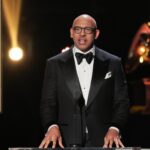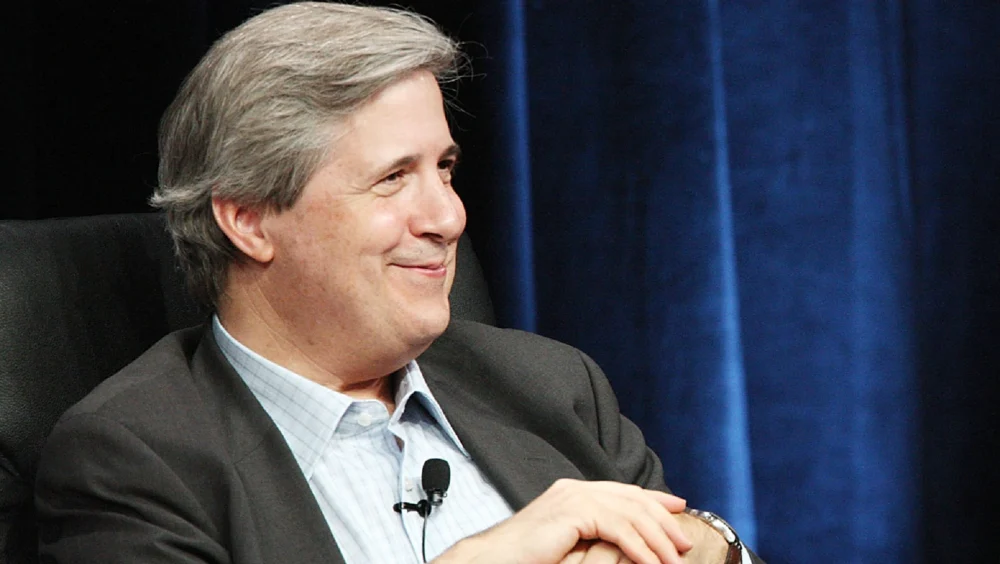
Gregory Orr, the prominent Warner Bros. heir and grandson of studio co-founder Jack Warner, has voiced profound apprehension regarding the proposed acquisition of Warner Bros. Discovery (WBD) by David Ellison’s Paramount and Skydance Media. Orr, a filmmaker himself, expressed a striking reversal of his initial stance, now advocating for a Netflix partnership, which he previously viewed with skepticism, as the superior path for the venerable Hollywood institution. His concerns center on Paramount’s financial stability, potential for job cuts, and its capacity to navigate the complex challenges facing the modern entertainment industry, sharply contrasting it with the perceived strengths of the streaming giant, Netflix.
A Legacy of Concern: The Warner Bros. Heir’s Perspective
The Warner Bros. heir, Gregory Orr, carries a deep personal connection to the studio’s legacy. His father, William T. Orr, served as head of TV at Warner Bros., and his mother, Joy Page, famously appeared in the studio’s classic film Casablanca. This familial heritage fuels his commitment to the company’s enduring health and creative output. Initially, Orr had expressed reservations about any sale of WBD, preferring the studio to maintain its independence. However, as the landscape of potential suitors shifted, his perspective evolved, leading him to champion Netflix as the ideal partner, a dramatic pivot from his earlier stance.
Orr’s shift in opinion underscores the high stakes involved in the ongoing consolidation within the media industry. He contends that Netflix offers a robust financial foundation, extensive global reach, and a demonstrated willingness to adapt its business model, including a renewed commitment to theatrical exhibition. This flexibility, he argues, is crucial for a studio like Warner Bros. Discovery, which grapples with unprecedented technological shifts and competitive pressures.
The Netflix Opportunity: A "Good Marriage" Unfulfilled
For Orr, the Netflix proposition represented a "good marriage" for Warner Bros. Discovery. He points to Netflix’s substantial global streaming infrastructure, considerable cash reserves, and consistent income streams as critical advantages. While he initially found Netflix’s original offer of $27.75 per share somewhat underwhelming—joking that it was merely 25 cents more than what the Warner brothers received for their shares in 1956—he grew to appreciate the strategic value of such a partnership.
Orr believes Netflix’s scale and innovation would empower Warner Bros. to not only survive but thrive as a "storied creator and distributor of world-class entertainment." He highlighted Netflix CEO Ted Sarandos’s public statements indicating a greater openness to theatrical releases, a significant shift from previous policies that had been a point of contention for many in Hollywood. This adaptability, Orr suggests, signals a forward-thinking approach necessary to protect intellectual property and artistic integrity in an evolving market.
Alarms Sounded Over Paramount’s Bid
In stark contrast to his support for Netflix, Orr has issued a scathing critique of the current $111 billion bid from Paramount and Skydance, valuing WBD at $31 per share. He dismisses the proposed merger as a "shotgun wedding with your dumb cousin," fearing dire consequences for the combined entity. His primary concern revolves around Paramount’s financial posture and David Ellison’s operational history.
Orr argues that Paramount brings "very little in global streaming or cash reserves or income" when compared to Netflix. He is particularly alarmed by Ellison’s track record of layoffs and the potential for "downsizing and consolidation" at Warner Bros. Discovery, driven by Paramount’s "high debt." Ellison has publicly stated intentions to achieve $3 billion in cost synergies between Skydance Media, known for producing hits like Top Gun: Maverick, and Paramount, which encompasses a vast array of assets including CBS, Paramount Pictures, Nickelodeon, BET, and Comedy Central. Orr interprets these cost-cutting ambitions as a direct threat to the workforce and operational integrity of Warner Bros.
Historical Resilience Versus Future Uncertainty
The concerns articulated by the Warner Bros. heir are rooted in the studio’s long and often tumultuous history. Warner Bros. has, throughout its existence, confronted and overcome a remarkable array of existential threats. From early litigation battles with Thomas Edison’s patent empire to the initial skepticism surrounding synchronized sound, the studio consistently adapted. Orr recounts how his maternal grandfather, silent film actor Don Alvarado, saw his career curtailed by the advent of sound, forcing him to transition to assistant directing.
The studio also endured a Depression-era buyout offer from Paramount itself, faced antisemitism from financial institutions, battled moral crusaders over film content, and resisted political intimidation from the U.S. Senate for its anti-Nazi films during World War II and later from the House of Representatives during the Red Scare. Even its first departure from family ownership in 1956 was a hostile takeover. Orr sees these historical precedents as crucial lessons, emphasizing the need for a "well-funded champion" capable of fending off continuous challenges to free expression and navigating new threats like artificial intelligence and competing digital platforms. He questions whether Ellison possesses the "backbone" required for such a defense.
The Political Undercurrents of Media Mergers
Beyond financial and operational considerations, Orr points to the often-overlooked political dimensions influencing major media acquisitions. He suggests that President Trump’s administration played a role in shaping the viability of these deals along partisan lines. Republican Attorneys General had previously weighed in negatively against a Netflix-WBD merger, contributing to a perceived "partisan slant" from the U.S. government.
Orr references Netflix CEO Ted Sarandos’s testimony before Congress, underscoring the constant scrutiny the industry faces from "culture warriors" like Senator Ted Cruz. In contrast, Orr implies that the Ellison family’s perceived alignment with the current administration may have strategically benefited their bid, highlighting how corporate savvy in navigating political currents can impact high-stakes business decisions. This intersection of media, business, and politics adds another layer of complexity to the future of Warner Bros. Discovery.
Industry Evolution and the Audience as the Ultimate Jury
The broader implications of this potential merger extend to the entire entertainment industry. Orr acknowledges that the industry is in a perpetual state of flux, driven by technological advancements and evolving audience preferences. He notes that the fundamental principle remains: "filmmakers want to make films, and companies want to monetize them for profit." The ultimate "jury," he asserts, has always been the audience, demanding adaptation from Hollywood rather than resistance to change.
In an era of "merger mania," where streaming platforms and content creators vie for dominance, the choice of ownership for Warner Bros. Discovery carries significant weight. Orr warns that while audiences currently benefit from a diverse array of choices, the "uncharted future from technology and global competitors" poses a real threat to all major players, including Warner Bros., Netflix, and Paramount. He advocates for leadership that understands the imperative to innovate and engage with changing market dynamics.
Preserving a Cinematic Legacy
Ultimately, Gregory Orr’s advocacy stems from a desire to preserve the spirit and legacy of Warner Bros., a company built by his grandfather and great-uncles. He believes that Jack Warner and his brothers, while astute businessmen, also operated with a "social conscience" and a commitment to quality. Orr’s focus today is not merely on sentimentality but on ensuring the company’s future viability—not just for its legendary catalog of films and television shows, but for the untold stories yet to be created.
As the industry continues its rapid transformation, the fate of Warner Bros. Discovery under new ownership will serve as a bellwether for the broader entertainment landscape. Orr’s strong reservations about the Paramount bid underscore a critical debate within Hollywood: how to balance financial imperatives with creative integrity and historical legacy in an increasingly complex and politically charged environment. The decision will not only reshape one of Hollywood’s most iconic studios but also potentially redefine the future of content creation and distribution for a global audience.