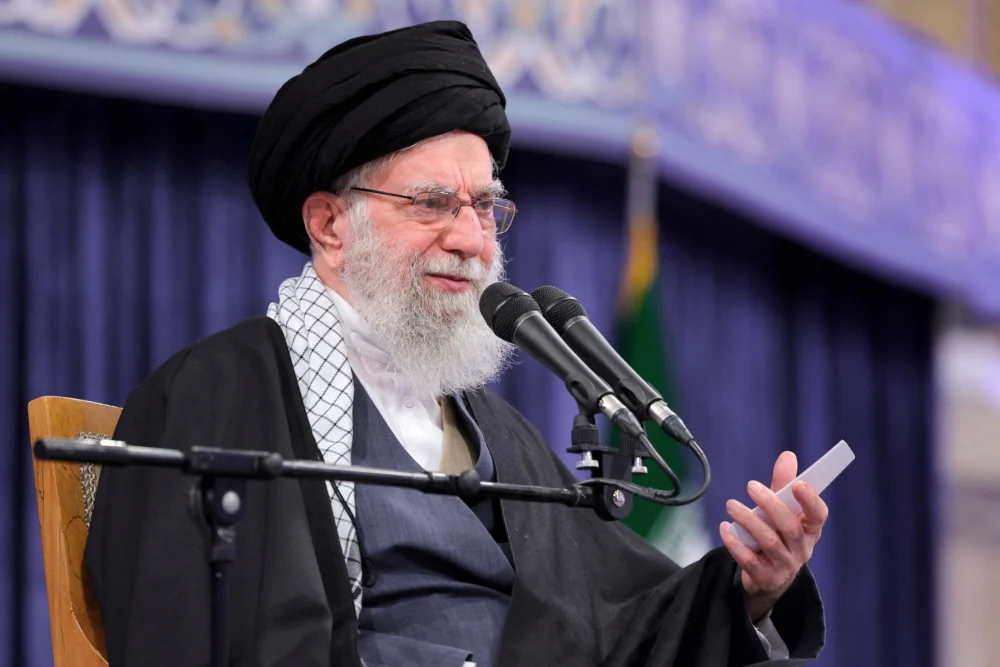
Reports emerging from Israeli media and corroborated by a senior Israeli official suggest that Iran’s Supreme Leader, Ayatollah Ali Khamenei, has been killed in coordinated US-Israeli strikes. The claims, which surfaced early Saturday, have sent shockwaves through the international community, though official confirmation from Tehran remains elusive.
Escalating Tensions and Conflicting Narratives
The unfolding situation presents a starkly divided narrative, with Israeli sources asserting Khamenei’s demise and Iranian state media pushing back with claims of his continued leadership. Israeli Prime Minister Benjamin Netanyahu, in a public statement, indicated "growing signs" pointing to Khamenei’s death as a direct consequence of the joint US-Israeli military operations launched over the weekend.
A senior Israeli official, speaking anonymously to Reuters, further elaborated on these assertions, stating that Khamenei’s body had reportedly been located. This claim, if substantiated, would represent a significant escalation in the ongoing regional conflict.
However, Iranian news agencies Tasnim and Mehr offered a contradictory account. They reported that Supreme Leader Khamenei remained "steadfast and firm in commanding the field," directly refuting the claims of his death. This stark divergence highlights the information war being waged alongside the kinetic military exchanges.
Tehran Denies, Cites "Mental Warfare"
In what appeared to be a swift response to the mounting reports, the head of public relations at Khamenei’s office issued a statement accusing unnamed adversaries of engaging in "mental warfare." This official urged vigilance among the populace, suggesting that enemy propaganda aimed to sow confusion and doubt. The statement, disseminated through Iranian state media, signaled Tehran’s intent to control the narrative domestically.
Tohid Asadi, reporting from Tehran for Al Jazeera, confirmed the absence of official confirmation from the Iranian government regarding the Supreme Leader’s status. This lack of definitive word from the highest levels of the Iranian regime has fueled speculation and uncertainty.
Earlier, Iranian Foreign Minister Abbas Araghchi had communicated with NBC News, stating that, to his knowledge, Supreme Leader Khamenei and other senior Iranian officials were in good health. This statement, made prior to the most recent reports, adds another layer of complexity to the evolving situation.
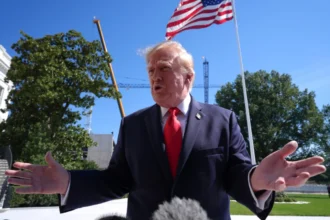
US President Donald Trump, when questioned by NBC News in an interview, indicated that he believed the reports of Khamenei’s death were accurate, lending credence to the Israeli claims from the American perspective.
Saturday’s Strikes: Scale and Objectives
The reported US-Israeli strikes on Saturday were extensive, targeting 24 provinces across Iran. Iranian media, citing the Red Crescent, reported a tragic toll of at least 201 fatalities as a result of these operations. The scale of the attacks suggests a deliberate and significant military action aimed at disrupting Iranian leadership and capabilities.
Iran, in response to the perceived aggression, launched a series of retaliatory attacks. These counter-strikes reportedly targeted Israeli assets and US military installations throughout the Middle East, indicating a rapid and forceful response from Tehran.
Prime Minister Netanyahu, in his address, characterized the military operations as a success, stating that numerous "senior figures" had been "eliminated." He further asserted that commanders within the Revolutionary Guards and senior officials involved in Iran’s nuclear program were among those killed. Netanyahu vowed that these operations would continue, underscoring Israel’s commitment to dismantling perceived threats.
Background: The Iran-Israel Shadow War
The alleged killing of Ayatollah Ali Khamenei occurs against a backdrop of years of escalating tensions and a covert shadow war between Iran and Israel, often involving the United States. This protracted conflict has played out through proxy battles, cyberattacks, assassinations, and sabotage operations across the region.
Ayatollah Ali Khamenei, who has been Iran’s Supreme Leader since 1989, is the ultimate authority in the country, wielding significant influence over all branches of government and the military. His leadership has been characterized by a strong anti-Israel and anti-US stance, shaping Iran’s foreign policy and regional ambitions.
Israel has long viewed Iran’s nuclear program and its regional network of proxies as existential threats. The Iranian Revolutionary Guards Corps (IRGC) and its Quds Force have been central to Iran’s foreign policy, supporting groups like Hezbollah in Lebanon, Hamas in Gaza, and various militias in Syria and Iraq.
The US, under successive administrations, has maintained a policy of countering Iran’s influence and has been a staunch ally of Israel. President Trump’s administration, in particular, pursued a policy of "maximum pressure" against Iran, including the withdrawal from the Iran nuclear deal and the imposition of stringent sanctions.
Potential Ramifications and Regional Instability
The death of Supreme Leader Khamenei, if confirmed, would have profound and far-reaching consequences for Iran and the wider Middle East. It would create an immediate leadership vacuum, potentially triggering an internal power struggle within Iran. The succession process for the Supreme Leader is a complex and sensitive affair, involving the Assembly of Experts.
The elimination of key figures within the IRGC and the nuclear program, as claimed by Israel, could significantly disrupt Iran’s military capabilities and its long-term strategic objectives. This could lead to a period of introspection and potential re-evaluation of Iran’s regional posture.
Conversely, such a significant blow could also incite a more aggressive and unpredictable response from Iran, potentially leading to a wider regional conflagration. The existing proxy networks could be activated to retaliate against Israeli and US interests, escalating existing conflicts and igniting new ones.
International Reactions and Diplomatic Scramble
The international community is likely to be closely monitoring the situation, with a flurry of diplomatic activity expected. Nations with influence in the region, including Russia, China, and European powers, would likely call for de-escalation and restraint.
The United States, as a key player in the alleged strikes, would face intense scrutiny regarding its role and its objectives. The potential for miscalculation and unintended escalation would be a primary concern for global powers.
The United Nations Security Council could convene an emergency session to address the escalating crisis, with calls for an immediate ceasefire and a return to diplomatic channels. However, the deep divisions among major powers regarding Iran could complicate any coordinated international response.
Economic and Social Impact
Beyond the geopolitical ramifications, the conflict’s impact on regional economies and global markets would be significant. Oil prices could surge amid fears of supply disruptions, and international trade could be further impacted by increased instability.
For the Iranian populace, the news of the Supreme Leader’s death, if confirmed, would bring a period of immense uncertainty and potential upheaval. The existing economic hardships, exacerbated by sanctions, could worsen, leading to increased social unrest. The government’s response to such a crisis would be critical in determining the internal stability of the nation.
The Path Forward: Uncertainty and Risk
The coming days and weeks will be crucial in determining the trajectory of this rapidly evolving crisis. The conflicting reports and the absence of definitive confirmation from Tehran create an atmosphere of profound uncertainty.
The world watches with bated breath as the potential consequences of these alleged US-Israeli attacks unfold. The possibility of a decisive shift in the regional power balance, or a catastrophic descent into wider conflict, hangs precariously in the balance. The rhetoric from both sides suggests a willingness to escalate, making de-escalation and a return to dialogue an urgent, albeit challenging, necessity. The absence of clear, verifiable information from Iran underscores the volatile nature of the situation, leaving the international community to navigate a landscape fraught with speculation and potential peril.