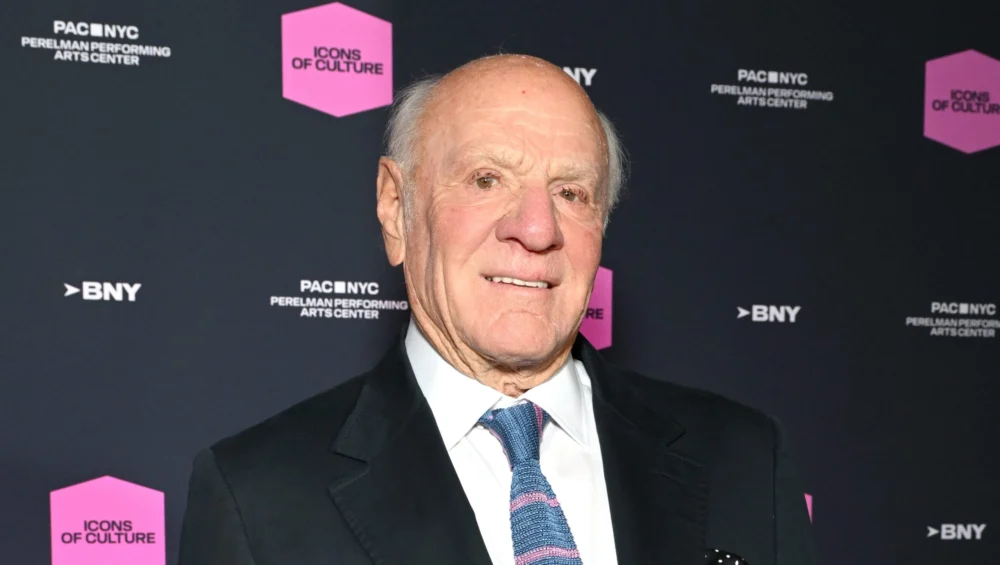
In a moment that injected an unexpected dose of pointed candor into the annual Producers Guild of America (PGA) Awards, veteran media titan Barry Diller delivered a series of sharp criticisms targeting Paramount CEO David Ellison, disgraced former moguls Harvey Weinstein and Les Moonves, and even the guild itself. Diller’s remarks, made while introducing Milestone Award recipient Jason Blum, elicited audible gasps and laughter from the industry-heavy audience, setting a provocative tone for the evening’s celebrations. His commentary went beyond a typical introduction, delving into issues of industry leadership, past controversies, and the very nature of cinematic production in the modern era.
A Veteran’s Unvarnished Critique
Barry Diller, a formidable figure in Hollywood with a career spanning leadership roles at Paramount Pictures, 20th Century Fox, and as chairman of IAC, used his platform to deliver an unfiltered assessment of the industry’s landscape. Known for his directness, Diller did not shy away from controversy, leveraging the occasion to voice long-held observations and challenge contemporary narratives. His presence at the PGA Awards, a prominent event in the entertainment calendar, lent significant weight to his pronouncements, immediately drawing attention across the industry.
The "Stunt Pilot" Barb: A Swipe at Paramount’s Leadership
A particularly notable dig was aimed at David Ellison, the current chairman and CEO of Paramount Pictures, whom Diller referred to dismissively as a "stunt pilot." Diller’s rhetorical question, "Samuel Goldwyn, Adolph Zukor, Jack Warner — What would Jack Warner do to know he’d been succeeded by a stunt pilot?" sparked an immediate reaction from the crowd. Ellison, recognized for his background as a licensed pilot in various aviation disciplines, including aerobatics, has recently been at the center of news regarding a potential mega-merger between Paramount Global and Warner Bros. Discovery.
This pointed comment from Diller, a former head of Paramount himself, was widely interpreted as a direct challenge to Ellison’s leadership and pedigree within the studio system. It invoked a lineage of foundational Hollywood moguls like Jack Warner, the legendary founder of Warner Bros. Studios, contrasting their deep industry roots with Ellison’s more recent ascendancy and unconventional background. The timing of the remark, amid high-stakes merger negotiations that could reshape a major studio, amplified its impact, suggesting a veteran’s skepticism about the direction and leadership of contemporary Hollywood institutions.
Recalling Disgraced Honorees: A Challenge to the PGA’s Legacy
Diller’s critique extended beyond current leadership, reaching into the PGA’s own history of honoring controversial figures. He drew a stark contrast between legendary producers like Cecil B. DeMille and Walt Disney, and the current honoree Jason Blum, by stating, "Cecil B. DeMille, Disney, and now Blum: Not the most obvious succession, but then you also gave this award to Harvey Weinstein and Les Moonves. So there’s that." This statement served as a blunt reminder of the guild’s past decisions to bestow prestigious awards upon individuals later implicated in egregious misconduct.
Harvey Weinstein, the disgraced co-founder of Miramax and The Weinstein Company, was a towering figure in Hollywood before numerous allegations of sexual assault and harassment led to his downfall and imprisonment. Similarly, Les Moonves, the former chairman and CEO of CBS Corporation, resigned amidst multiple accusations of sexual assault and harassment. Diller’s invocation of their names was a deliberate act, forcing a public reckoning with the industry’s past failures to hold powerful figures accountable and questioning the criteria by which such honors are bestowed. It implicitly challenged the PGA to reflect on its role in perpetuating a culture that, for years, enabled such behavior.
Championing the Honoree: Jason Blum’s Maverick Path
Amidst his critical commentary, Diller also delivered a heartfelt and insightful tribute to Jason Blum, the founder and CEO of Blumhouse Productions. Diller highlighted Blum’s distinctive business model and his significant impact on the film industry, particularly through his innovative approach to low-budget filmmaking. Blumhouse is renowned for its highly successful horror franchises, including Paranormal Activity, Insidious, The Black Phone, and The Purge, all of which have redefined profitability in genre cinema.
Diller affectionately characterized Blum’s approach as "cheapness," not as an insult, but as a "defining attribute" and a strategic genius. He drew a parallel between Blum and early cinematic pioneers like DeMille, noting that both made successful films for remarkably low budgets, albeit nearly a century apart. Paranormal Activity, for instance, famously cost a mere $15,000 to produce but grossed nearly $200 million worldwide, exemplifying Blum’s ability to turn minimal investment into massive returns. This model allows for significant creative freedom for directors and often results in high-concept, high-impact films that resonate with audiences.
From Miramax to Mogul: Blum’s Independence and Focus
Diller further elaborated on Blum’s career trajectory, noting their long-standing friendship and offering a wry observation about Blum’s early professional experiences. He alluded to Blum’s tenure as an executive for Bob and Harvey Weinstein at Miramax, a period Diller described with a veiled jab: "How he found his groove after that is anyone’s guess, but he sure did find it." This comment underscored the stark contrast between the environment at Miramax, particularly under Harvey Weinstein, and the independent, artist-centric ethos Blum cultivated at Blumhouse, which he founded in 2000 after a stint as an independent producer at Paramount.
Diller praised Blum for making "300 films made on the lowest pay scales in film history" while simultaneously "helping artists tell stories and helping them make a lot of money." He lauded Blum’s rare intensity and focus in an industry frequently distracted by "shiny objects" — bigger budgets, prestigious awards campaigns, or fleeting franchise opportunities. Diller positioned Blum as a "Renaissance man" whose unwavering will, perseverance, honesty, and honor have allowed him to carve out a unique and profoundly successful niche in Hollywood. This dedication to a clear vision, particularly in the horror genre, has allowed Blumhouse to consistently deliver commercial and often critical hits.
The Future of Production: Blum on Human Creativity vs. AI
Upon accepting his Milestone Award, Jason Blum lightened the mood with a joke about Diller’s presence, acknowledging his long-time friend and mentor who "changed my life is a lot of ways." However, Blum quickly pivoted to a serious and timely topic: the burgeoning role of artificial intelligence (AI) in film production and the irreplaceable value of human creativity. His speech provided a counter-narrative to the growing discourse about AI’s potential to automate creative processes within the entertainment industry.
Blum challenged the notion that machines and algorithms could effectively predict success or dictate creative choices. He asserted, "We’re living at this time where machines are very confident that they can pick what will work, that algorithms can tell us everything we’ve ever watched and what we should watch next, and AI can tell us what to stream in the mood we’re in next Tuesday. But what machines can’t do?" To illustrate his point, Blum cited the success of Heated Rivalry, a low-budget gay hockey romance with no established stars. He posited that "If you would ask an algorithm a few months ago to predict a low-budget gay hockey romance with zero known stars, I promise you the algorithm would have been like, ‘Do not make that show.’"
Blum’s example powerfully underscored the argument that human producers, with their unique tastes, passions, and intuition, are essential for identifying and nurturing stories that defy algorithmic logic but resonate deeply with audiences. He emphasized that Heated Rivalry "needed us. It needed producers," highlighting the human element of risk-taking, vision, and belief in unconventional narratives that machines simply cannot replicate. His speech served as a rallying cry for the continued importance of the producer’s craft in an increasingly data-driven and technology-reliant industry, advocating for the irreplaceable value of human discernment and creative courage.
Industry Reactions and Broader Implications
Barry Diller’s audacious remarks at the PGA Awards are expected to reverberate throughout Hollywood, sparking discussions about leadership, ethics, and the industry’s evolving values. His direct criticism of David Ellison, particularly in the context of ongoing merger talks, could potentially strain relationships and influence perceptions of Paramount’s current direction. Such public commentary from a figure of Diller’s stature is rarely accidental and often signals deeper currents of concern or dissatisfaction within the elite echelons of the entertainment world.
Moreover, Diller’s decision to revisit the past honors bestowed upon Harvey Weinstein and Les Moonves serves as a stark reminder of the industry’s ongoing struggle with accountability and its journey toward a more ethical future post-#MeToo. It prompts a renewed examination of how industry accolades are awarded and the responsibility of organizations like the PGA to uphold integrity. This public shaming, even if indirect, reinforces the idea that the industry is still grappling with its past and that the rehabilitation of its image requires confronting uncomfortable truths.
Jason Blum’s acceptance speech, on the other hand, provided a forward-looking perspective, offering a compelling argument for the enduring relevance of human intuition and creativity in the age of artificial intelligence. His success with Blumhouse Productions already stands as a testament to the power of a unique vision, often outside the traditional studio system’s big-budget mandates. His remarks are likely to bolster the confidence of independent filmmakers and producers who believe in the power of original, unquantifiable stories. The dialogue ignited by both Diller and Blum underscores a pivotal moment for Hollywood, as it navigates complex questions of leadership, ethics, and technological transformation, all while striving to maintain its creative essence.