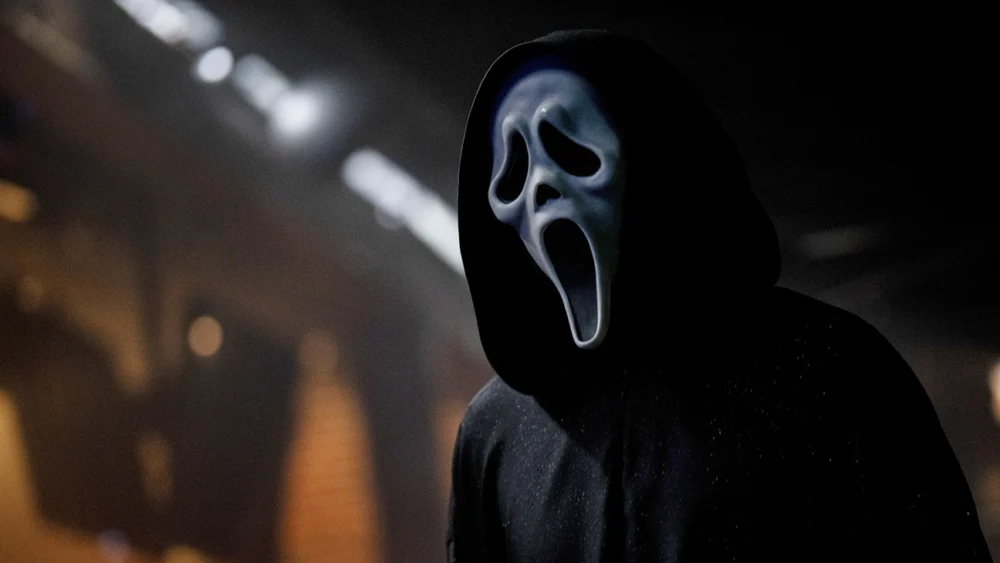
Scream 7 has shattered box office expectations, delivering a franchise-best $64.1 million domestically and an additional $33.1 million overseas, culminating in a formidable $97.2 million global opening weekend for Paramount Pictures. This monumental debut not only establishes a new benchmark for the long-running horror series but also marks the biggest launch for any horror title released in February in North America and stands as the highest-grossing debut of 2025 to date, unadjusted for inflation.
The impressive financial performance arrives amidst a period of significant corporate movement for Paramount, with the studio experiencing a wave of positive developments. The film’s Thursday previews alone garnered $7.8 million, contributing to Friday’s $28.8 million haul, coincidentally as news broke regarding David Ellison’s Paramount-Skydance venture receiving a green light to acquire Warner Bros. Discovery. This potential merger, poised to be the largest leveraged buyout in history, has sent ripples through Hollywood, particularly after Netflix withdrew from contention, further solidifying Paramount’s strategic position. The industry anticipates this consolidation will reduce the number of major legacy studios from five to four, inevitably leading to substantial layoffs across film, television, and corporate divisions.
A Franchise Reborn: The Success of Scream 7
The runaway success of Scream 7 underscores the enduring appeal and often "review-proof" nature of the horror genre. Despite a lukewarm critical reception, reflected in a series-low 33 percent score on Rotten Tomatoes, the film resonated strongly with its target demographic. Audience feedback painted a more favorable picture, with a 78 percent Rotten Tomatoes audience score and a B- CinemaScore, which is considered a commendable grade for a horror movie, consistent with the performance of previous installments in the Scream saga.
Demographic analysis further highlighted the film’s broad appeal. The audience split between male and female moviegoers was remarkably narrow, and the turnout was notably diverse across various age groups. Gen Zers and younger Millennials flocked to theaters in significant numbers, demonstrating the franchise’s continued ability to attract a youthful viewership. This robust demographic engagement is a key factor in the film’s unexpected box office dominance.
Navigating Production Challenges and Strategic Marketing
The journey to the screen for Scream 7 was not without its complexities. While the project was initially inherited by Paramount Pictures co-chairs Dana Goldberg and Josh Greenstein, their leadership, coupled with the strategic acumen of newly appointed marketing head Josh Goldstine, proved instrumental in guiding the film to its successful launch. Spyglass Media fully produced the slasher pic, with Paramount providing co-financing for half of the net $45 million budget.
Initial projections from Paramount had pegged the opening weekend at a more conservative $40 million, which would still have marked the year’s best three-day launch. Industry tracking from the National Research Group was slightly more bullish, forecasting $45 million. However, Scream 7 significantly outpaced these estimates, surpassing the previous franchise record holder, Scream VI, which opened to $44.4 million in March 2023.
A strategic advantage for Scream 7 was its unprecedented theatrical distribution, marking the first installment in the series to play in IMAX. The film also secured bookings across all other premium large formats. Collectively, these enhanced viewing experiences accounted for a substantial 40 percent of the film’s gross revenue. This allocation of premium screens to a horror title is somewhat unusual but was facilitated by a relatively sparse pipeline of event studio products scheduled for 2026, allowing Scream 7 to capitalize on the availability.
Casting Controversies and Triumphant Returns
The production of Scream 7 was characterized by a mix of anticipated returns and notable departures. A significant "coup" for the filmmakers was securing the return of Neve Campbell in her iconic role as Sidney Prescott, a character absent from the previous installment. Kevin Williamson, the acclaimed writer of the original Scream, Scream 2, and Scream 4, stepped into the director’s chair for this seventh chapter. The narrative sees Sidney returning to a small town with her daughter, Isabel May, whose character is named Tatum—a poignant nod to Rose McGowan’s character, who met a brutal end in the 1996 original film. Together, they confront a new iteration of the relentless Ghostface killer, with Sidney imparting crucial survival rules to her daughter.
However, the film also faced high-profile casting controversies. Melissa Barrera, a breakout star from the revival films Scream (2022) and Scream VI, was dismissed from Scream 7 due to social media posts regarding the Israel-Hamas conflict. Jenna Ortega, another prominent figure from the recent films, had already voluntarily exited the project prior to Barrera’s firing, though her departure was not publicly confirmed until later. Christopher Landon, initially slated to direct the horror sequel, also withdrew amid intense fan backlash following Barrera’s firing, although it was widely clarified that he was not responsible for the actress’s termination.
Despite these challenges, the film managed to assemble a compelling cast, blending new talent with beloved franchise veterans. Courteney Cox reprised her role as the tenacious reporter Gale Weathers, completing a reunion of the original legacy trio alongside Campbell and David Arquette, who returned as Dewey Riley. In a surprising move, Matthew Lillard, one of the original Ghostface killers, returned as Stu Macher, alongside Scott Foley, who played Scream 3‘s Ghostface, Roman Bridger—Sidney’s half-brother. Siblings Chad and Mindy, portrayed by Mason Gooding and Jasmin Savoy Brown, also rejoined the ensemble, ensuring continuity for fans of the recent installments.
The marketing campaign for Scream 7 played a crucial role in its strong opening. An initial trailer released in October captivated audiences by focusing on Ghostface’s pursuit of Sidney and Tatum, showcasing Sidney’s efforts to prepare her daughter for survival. A subsequent advertisement during the Super Bowl further amplified anticipation, underscoring the high stakes and the franchise’s significance to Paramount’s new leadership.
The Wider Box Office Landscape
Beyond the dominant performance of Scream 7, the weekend’s box office saw a mix of holdovers and new entries. Sony Pictures Animated’s GOAT secured a second-place finish, projected to gross between $11 million and $12 million. Warner Bros.’ Wuthering Heights followed, aiming for $7 million to $8 million in its third weekend, finally pulling ahead of its animated competitor.
A tight race characterized the next tier of films, with four titles estimated to earn in the $3 million to $3.5 million range. This group included the new concert documentary Twenty Pilots: I Can’t Believe This is My Life, which debuted in over 770 cinemas, including select IMAX runs. Amazon MGM’s holdover Crime 101 continued its theatrical run, alongside Lionsgate’s I Can Only Imagine 2. Also in this competitive bracket was Neon’s EPiC: Elvis Presley in Concert, directed by Baz Luhrmann.
Luhrmann’s concert film, a follow-up to his acclaimed biopic Elvis starring Austin Butler, expanded nationwide after a robust $3.3 million opening from 325 IMAX runs a week prior. Now playing in 1,608 locations, EPiC: Elvis Presley in Concert garnered an exceptional A+ CinemaScore from audiences on Friday, building on its already glowing critical reviews. Its strong performance further diversified the weekend’s offerings, providing an alternative to the horror juggernaut.
The resounding success of Scream 7 not only injects significant vitality into the early 2025 box office but also provides a major boost to Paramount Pictures amidst a transformative period. The horror film’s record-breaking opening, coupled with the studio’s strategic corporate maneuvers, positions Paramount on a strong trajectory for the foreseeable future, demonstrating the power of a beloved franchise to transcend critical opinion and draw audiences en masse.