CNN anchor Jake Tapper delivered a pointed on-air rebuke to White House Press Secretary Karoline Leavitt after she accused his colleague, Kaitlan Collins, of biased reporting during a contentious White House press briefing. The incident, which quickly escalated into a debate over journalistic integrity and political motivations, saw Tapper defend CNN’s long-standing commitment to factual reporting and honoring fallen service members. The confrontation underscores persistent tensions between the current administration and major news outlets, particularly regarding coverage perceived as critical of the president.
The Heated Exchange at the White House Briefing
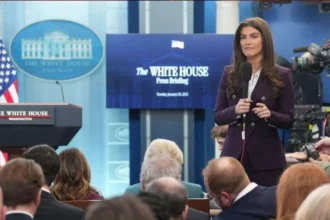
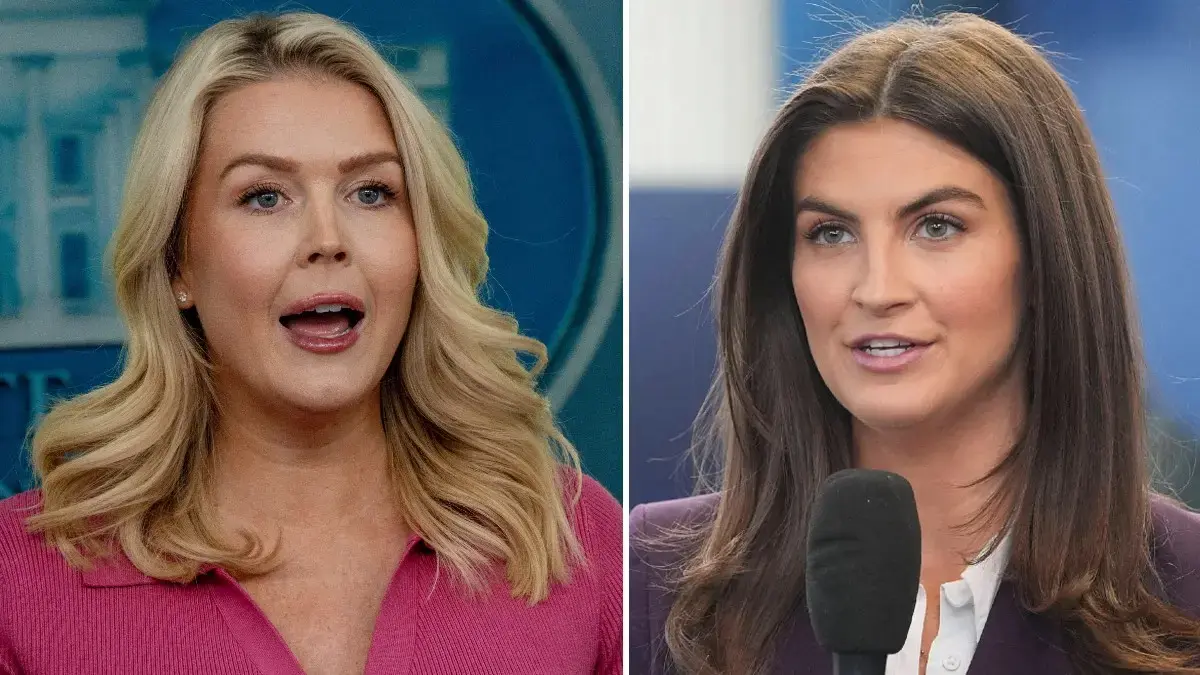
The controversy began during a White House press briefing on Tuesday, March 4, when CNN correspondent Kaitlan Collins questioned recent remarks made by Defense Secretary Pete Hegseth. Collins’ line of inquiry focused on the administration’s military strikes in Iran and the broader implications for U.S. foreign policy. In response, Press Secretary Karoline Leavitt interjected, accusing Collins of being "disingenuous" in her questioning. Leavitt then reiterated Hegseth’s earlier assertion that media coverage of U.S. troop casualties was primarily intended to undermine the president.
Leavitt’s remarks were direct and confrontational, aiming to discredit Collins’ journalistic intentions. She emphatically declared, "That’s a fact," when pressed on her claim about the media’s motivations. This bold assertion, presented as an undeniable truth, immediately drew attention and set the stage for further debate within media circles. The exchange highlighted the combative atmosphere that often characterizes interactions between White House press secretaries and journalists from outlets frequently targeted by administration criticism.
Tapper’s On-Air Rebuke of Leavitt’s Claims
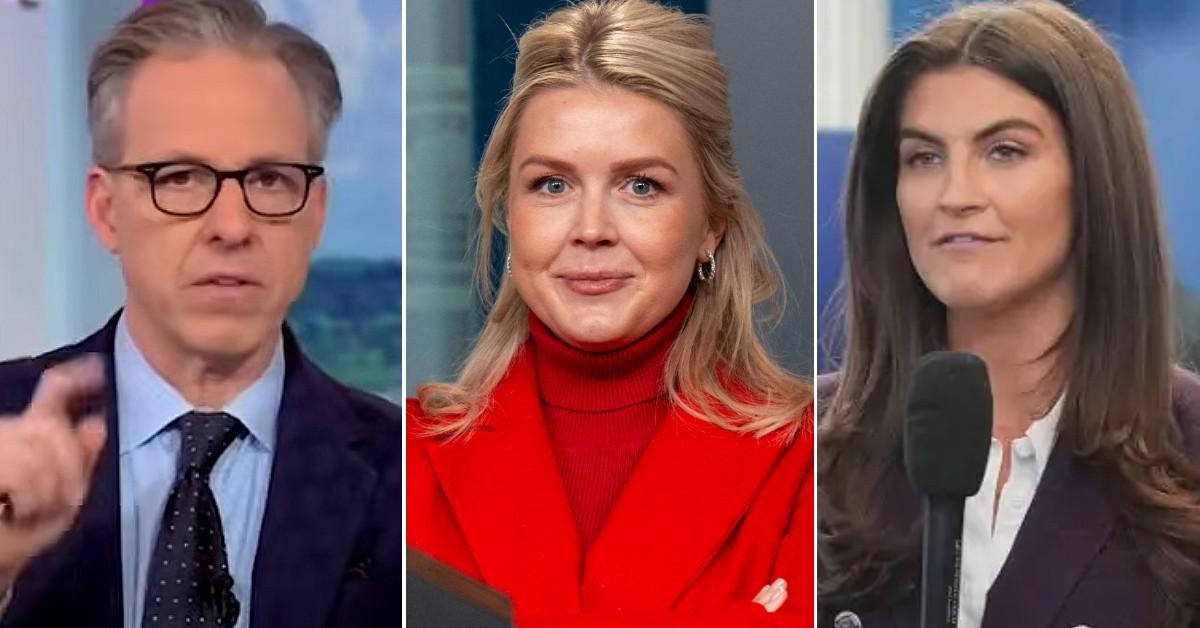
Two days later, on Thursday, March 5, Jake Tapper addressed the incident directly during his CNN program, The Lead. Tapper played a clip of the acrimonious exchange, then meticulously dissected Leavitt’s "fact" claim. He firmly corrected Leavitt, stating, "Actually, that’s not a fact. It’s an opinion, and it’s not particularly relevant to the question of whether we only honor fallen veterans because we wanna make Trump look bad." His commentary served as a robust defense of Collins and a broader assertion of journalistic independence.
Tapper further emphasized the transparency of Hegseth’s original statement, noting that the Defense Secretary "was crystal clear on what he was saying." By highlighting this, Tapper implied that Leavitt was attempting to reframe or bolster a subjective viewpoint as objective truth, a tactic Tapper clearly deemed inappropriate for a White House Press Secretary. His methodical rebuttal aimed to distinguish between verifiable facts and politically motivated interpretations, a crucial distinction in news reporting.
The Broader Landscape of Media Relations and Political Discourse
The clash between Karoline Leavitt and Kaitlan Collins, followed by Jake Tapper’s strong defense, is emblematic of the fraught relationship between the current political administration and many mainstream media organizations. Accusations of media bias have become a recurring theme in political rhetoric, often used by officials to deflect difficult questions or discredit critical reporting. This strategy aims to erode public trust in news outlets, thereby diminishing the impact of potentially unfavorable coverage.
For journalists like Collins, the challenge lies in maintaining professional decorum while pressing for answers on behalf of the public, even when faced with personal attacks or sweeping generalizations about their profession. The role of a White House Press Secretary, traditionally a conduit of information, has increasingly involved navigating and often shaping political narratives, sometimes by directly challenging the legitimacy of the press corps. This dynamic creates an environment where briefings can quickly devolve into ideological skirmishes rather than straightforward information dissemination.
Previous Encounters and Recurring Themes
This recent confrontation is not an isolated incident but rather fits into a pattern of interactions involving Karoline Leavitt, Jake Tapper, and Kaitlan Collins. Leavitt has consistently articulated the administration’s viewpoint that mainstream media outlets, particularly CNN, exhibit an inherent bias against the president. She has often framed their reporting as a deliberate attempt to undermine the administration’s agenda and image.

Earlier in 2026, Tapper had publicly called out Leavitt for her defense of a notable mix-up where the president repeatedly referred to "Iceland" instead of "Greenland." Tapper highlighted this as an example of the administration’s press team attempting to rationalize or obscure verifiable errors. Furthermore, Jake Tapper has a documented history of defending Kaitlan Collins from personal attacks. In late 2025, he criticized the president for labeling Collins as "stupid and nasty," underscoring a consistent stance against what he perceives as unfair and unprofessional treatment of journalists. These repeated instances illustrate a foundational disagreement over the role of the press and the appropriate conduct of public officials when engaging with reporters.
Implications for Press Freedom and Public Trust
Such high-profile clashes carry significant implications for the perception of press freedom and public trust in both governmental institutions and news media. When a White House Press Secretary dismisses critical questions as "disingenuous" or labels objective coverage as politically motivated, it can sow seeds of doubt among the public regarding the media’s intentions. This, in turn, can make it harder for citizens to distinguish between factual reporting and political spin.
The bedrock of a healthy democracy relies on a free and independent press that can hold power accountable without fear of undue reprisal or character assassination. Tapper’s robust defense of CNN’s reporting practices, particularly his emphasis on differentiating fact from opinion and detailing the network’s consistent coverage across multiple administrations, serves as a reaffirmation of journalistic principles. His remarks aim to educate viewers on the standards of reporting and to counter narratives that seek to delegitimize legitimate inquiry.

Analysis of Rhetoric and Accountability
The language used in these exchanges is critical. Leavitt’s declaration that "The press does want to make the president look bad," and "Especially you, and especially CNN," followed by her claim that it is an "objectionable fact," reveals a calculated rhetorical strategy. By personalizing the attack and asserting an "objectionable fact" (a phrase itself open to interpretation), she attempted to shut down further questioning and paint the network as an adversary. This approach shifts the focus from the substance of the policy or statement being questioned to the perceived motives of the questioner.
Tapper’s response, grounded in an appeal to verifiable history and the basic definition of "fact" versus "opinion," directly challenged this rhetorical maneuver. His insistence on accountability for claims made by public officials underscores the journalistic imperative to verify information, regardless of who is delivering it. This battle over language and definition is central to the broader struggle for narrative control in the political arena.
The Role of CNN and its Journalists
CNN, as a prominent global news organization, often finds itself at the forefront of these media-government tensions. Its anchors and correspondents, including Jake Tapper and Kaitlan Collins, are highly visible figures whose interactions with political leaders are scrutinized by millions. Tapper, known for his direct interviewing style and commitment to challenging misinformation, has become a vocal advocate for journalistic integrity. Collins, a seasoned White House correspondent, is tasked with reporting on the administration and often engaging directly with its representatives in challenging environments.
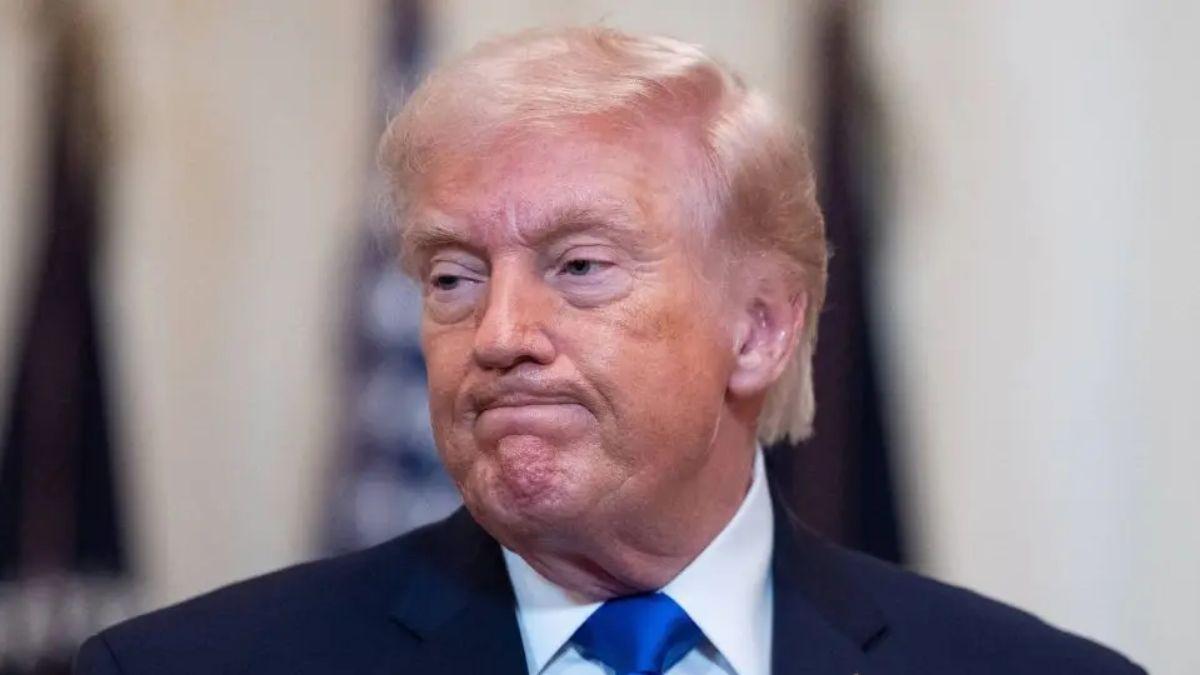
The network’s history of covering military conflicts and honoring service members, as highlighted by Tapper, is a significant point of pride and journalistic duty. Tapper’s argument that CNN has consistently reported on fallen veterans under diverse administrations—from George W. Bush and Barack Obama to Donald Trump and Joe Biden—aimed to dismantle the specific accusation of partisan motivation in their coverage. He emphasized that the only discernible difference in recent years has been the "petulant complain[ts]" from defense secretaries about such coverage, rather than any shift in CNN’s editorial approach.
Future Dynamics in the Press Briefing Room
The recent clash serves as a potent indicator of the ongoing friction that will likely define future interactions within the White House press briefing room. The incident highlights a deepening divide, where the administration appears increasingly willing to engage in direct, often personal, confrontations with journalists it deems hostile. This strategy forces reporters to not only cover policy but also to defend the very legitimacy of their questions and their profession.
As the political climate remains charged, these exchanges are likely to become more frequent and perhaps more intense. The battle for narrative control, central to modern politics, will continue to play out in real-time, with journalists striving to uphold standards of objectivity and public officials seeking to manage perception. The outcome of these ongoing skirmishes will significantly influence how the public consumes news and understands the actions of its government.