Bengaluru, India – In a seismic shift for Indian politics, the nation’s last bastion of left-wing governance has fallen, marking the end of an era that has spanned over half a century. Early results from the Kerala state assembly elections indicate a decisive victory for the United Democratic Front (UDF), led by the national opposition Congress party, ousting the incumbent Left Democratic Front (LDF). This outcome extinguishes the final flame of a democratically elected communist government in India, a political force that once held significant sway on the national stage and in several key states.
The defeat in Kerala is particularly symbolic. The southern state holds the distinction of being the first place in the world to establish a democratically elected communist government in 1957. For decades, it has served as the bedrock of left-wing ideology in India, a vibrant experiment in governance that has now seemingly concluded its run. The political landscape of India, long accustomed to the presence of at least one left-ruled state since 1977, will now navigate a territory devoid of such representation.
The Fading Influence of India’s Left
The decline of the left in India has been a gradual but persistent trend, accelerating in recent years. The once-formidable Left Front, an alliance of communist parties, saw its national parliamentary presence dwindle from 62 seats in the 2004 general election to a mere eight seats in the most recent polls. This dramatic reduction underscores a broader erosion of support and influence across the country.
Historically, the left’s strength was concentrated in specific regions. West Bengal, a Left Front stronghold, saw its decades-long rule (1977-2011) ended by the Trinamool Congress. Tripura, another significant redoubt, transitioned from left governance in 2018 to the Bharatiya Janata Party (BJP). These shifts, coupled with the recent developments in Kerala, paint a stark picture of the left’s diminishing electoral footprint.
Political scientists attribute this decline to a confluence of factors. Experts point to the left’s historical limitations in addressing the complexities of caste and gender, issues that have become increasingly central to the Indian political discourse. Furthermore, the liberalization of the Indian economy in the 1990s fundamentally altered the socio-economic landscape, posing challenges that the traditional left frameworks struggled to adapt to.
Rahul Verma, a political scientist and fellow at the Centre for Policy Research in New Delhi, noted the strategic limitations of the left’s outreach. "Their presence in the Hindi-speaking belt [primarily in North India] was largely limited to industrial areas, which declined with the decline of trade union politics," Verma explained. This geographical and ideological constraint has hampered their ability to broaden their appeal beyond established pockets of influence.
Kerala’s Left Legacy and the Shifting Tides
The history of the left in Kerala is deeply intertwined with the state’s socio-political evolution. The inaugural communist government, led by the iconic EMS Namboodiripad, enacted pioneering land and educational reforms in the late 1950s. These progressive measures, however, triggered significant opposition from the Congress party and religious institutions, leading to the controversial dismissal of the government by the central administration under Prime Minister Jawaharlal Nehru.
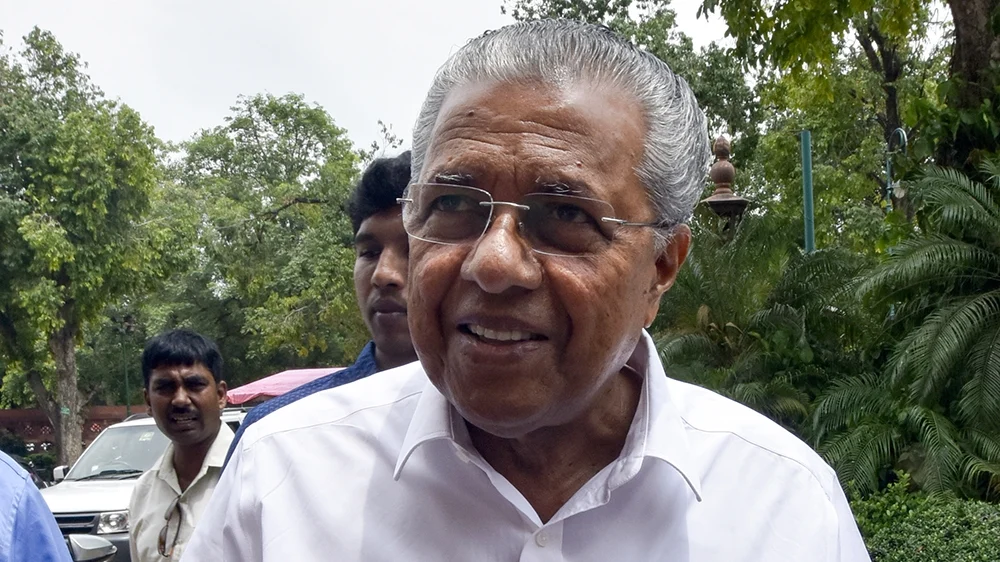
Despite an initial setback in subsequent elections, the Communist Party of India (CPI) and its various factions regrouped, forming alliances that have largely alternated power with the Congress-led UDF in Kerala since the 1970s. The outgoing LDF government, under Chief Minister Pinarayi Vijayan, had garnered praise for its robust handling of the COVID-19 pandemic, implementing stringent containment strategies that were lauded as a model for other states.
Vijayan’s administration also focused on infrastructure development and welfare programs, notably declaring Kerala free from extreme poverty following its four-year Extreme Poverty Alleviation Project. This achievement, a first for an Indian state, highlighted the LDF’s commitment to social security and addressing the needs of vulnerable populations. In a May 2020 interview, Vijayan detailed efforts to support millions of elderly, differently-abled, and widowed citizens with financial aid.
However, despite these policy successes, the LDF’s credibility in Kerala has faced scrutiny in recent years. Harish Vasudevan, an independent social activist and lawyer, observed a shift in the party’s approach. "In Kerala, the LDF had always played their rebel role against the power abuse. But in the last five years, the party started speaking in the language of power," Vasudevan commented. This perceived departure from its anti-establishment roots may have alienated some traditional voters, leading them to cast votes against the LDF as a form of protest.
The Nuclear Deal: A Turning Point?
A pivotal moment that foreshadowed the left’s diminishing national influence occurred in August 2007. Then-Prime Minister Manmohan Singh’s government was navigating a crucial civil nuclear agreement with the United States. The deal promised access to nuclear fuel and technology in exchange for enhanced international oversight of India’s nuclear facilities.
The primary obstacle to this landmark accord was the staunch opposition from India’s communist parties. Suspicious of American intentions and wary of perceived encroachments on national sovereignty, the Left Front, with its substantial bloc of 62 seats in the lower house of parliament, held the power to make or break the government. Their threat to withdraw support loomed large over the Singh administration.
Ultimately, Prime Minister Singh managed to secure the necessary parliamentary backing from other parties, pushing the nuclear deal through despite the communists’ objections. While this maneuver showcased the government’s political acumen, it also starkly illustrated the left’s waning ability to dictate national policy. That moment, nearly two decades ago, is now viewed as a high-water mark for the political left’s leverage in India.
The Road Ahead: Challenges and Potential Revival
The electoral rout in Kerala raises critical questions about the future of left-wing politics in India. Political analysts suggest that the left must undertake a significant restructuring to remain relevant in the evolving political landscape. The party’s inability to adapt to the changing nature of capitalism, particularly after economic liberalization, and its limited engagement with pressing issues like caste and gender have been identified as significant impediments.
Rajarshi Dasgupta, an assistant professor at the Centre for Political Studies at Jawaharlal Nehru University, highlighted the need for greater ideological flexibility. "The larger reason for their limited outreach is, in my opinion, their incapacity to address questions of caste and gender, and the changing nature of capitalism, especially after liberalization," Dasgupta stated.
Despite the current challenges, some observers see a potential for the left to re-emerge, albeit in a transformed capacity. The growing disparities between the rich and the poor, and the increasing corporate-centric nature of national financial policies, present an ideological vacuum that the left could potentially fill. Vasudevan noted that even outside of power, the left’s role as a vocal opposition force remains crucial.
"The gap between the rich and poor is increasing, financial policies of the country are getting corporate-centric. The left has a role to play to balance this out by giving due benefits to the unorganized working class in the country," Vasudevan articulated.
The global resurgence of socialist democratic movements offers a glimmer of hope. Dasgupta believes that the persistent issues of wealth inequality and jobless growth, which mainstream parties often sidestep, could create fertile ground for a revitalized left. However, this revival hinges on the ability of these parties to shed their 20th-century communist image and embrace a social democratic ethos that resonates with the realities of 21st-century India. The challenge lies in reinventing themselves to address contemporary concerns effectively, moving beyond historical dogma to forge a new path.